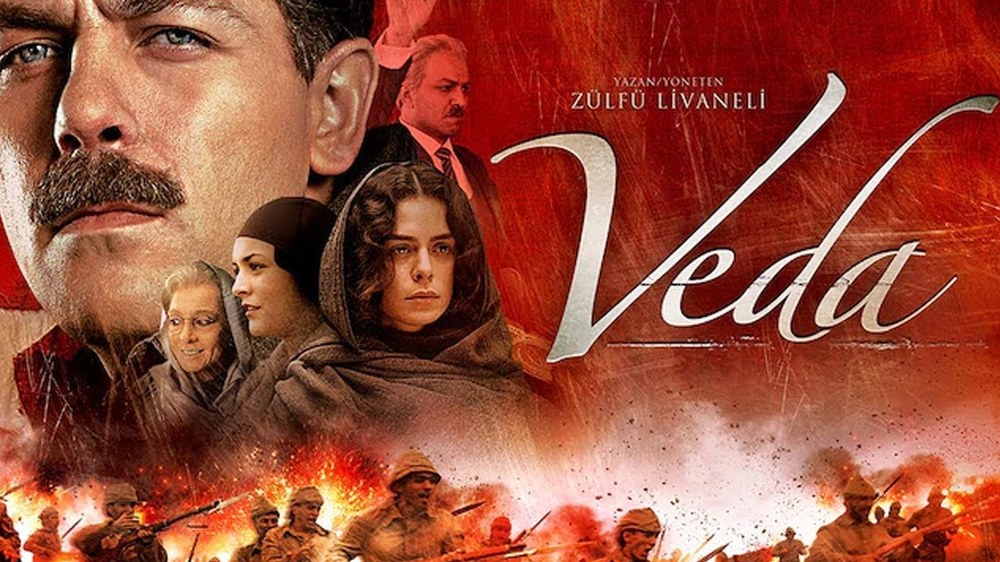
Farewell (Veda)

Farewell (Veda) (translated)

Movie · 2010 · 18 people

Released in Turkey on February 26, 2010, Veda ("Farewell") is a biographical drama written and directed by Zülfü Livaneli. It portrays the life of Mustafa Kemal Atatürk (1881-1938), founder and first president of the Republic, drawing on the memoirs of his close friend Salih Bozok. It was among the highest-grossing Turkish films of 2010 and drew attention for its large budget.

The backbone of the story is the friendship between Atatürk and Bozok. Beginning in childhood in Salonika, it turns first into comradeship in arms and, with the republic, into a half-century brotherhood in pursuit of the same ideals. Bozok is the narrator: in the last hours of his own life he writes a farewell letter to his son and goes back over the turning points of Atatürk's life. That framing gives the film momentum. Sinan Tuzcu plays Atatürk, with Serhat Kılıç, Dolunay Soysert, Ezgi Mola and Özge Özpirinçci in the cast. It is also the story of the commander of a generation that defied death to save the homeland.

Livaneli also composed the score, taking on the project after a long break from feature films. Critics found the cinematography, sets and costumes accomplished. It was the first of two Atatürk films that arrived that spring.

DirectorZülfü Livaneli
Farewell (Veda) Farewell (Veda) Farewell (Veda)

Reactions

You can pick up to 3 reactions.

Cast

Through different eyes

AI-assisted editorial takes written from different viewer perspectives. They are not reader reviews; those are below.

History & Society Lens Asks about the period, the social background and what the work reflects.

Veda builds Atatürk's life not through an official historical narrative but through the memoirs of his close friend Salih Bozok, which offers a chance to look at a great historical figure from a human closeness. A friendship that began in childhood in Salonika and became comradeship in arms, then, with the Republic, a brotherhood marching toward shared ideals, lets the fate of a generation be read through the bond between two people. Fitting a life of more than fifty years into one feature does mean passing quickly over some periods, and the perspective stays limited to one friend's recollections; those seeking historical completeness should bear that in mind. This story of friendship and loyalty is thought-provoking for anyone curious about the Republic's founding generation.

Cinephile Looks at script, editing and directing choices; keeps a distance from formula films.

In Veda, Zülfü Livaneli wears three hats at once: writer, director and composer. Anchoring the story in the memories of Salih Bozok, writing a farewell letter to his son in the last hours of his life, is a smart frame that gives the flashbacks a natural motivation. The cinematography, sets and costumes, as critics also noted, do justice to the large budget. But the memoir frame can at times push the film into an episodic structure that lines up turning points one after another, and in some stretches the dramatic tension lags behind the historical weight. Given the heavy expectations such a role carries, Sinan Tuzcu's measured take on Atatürk is an understandable choice. A solid but cautious example of biographical cinema.

Family Viewer Asks whether the whole household can watch it; cares about humor and heart.

Veda tells Atatürk's life through the eyes of his close friend Salih Bozok. It is a good opportunity to teach children about Atatürk and the founding of the Republic. The sense of friendship and loyalty is very strong. Because the war years are part of the story, though, some scenes may be heavy for young children. Suitable from around middle-school age, watched together with the grown-ups.

Reviews (0)

Log in Log in to write a review.

Comments