Anxiety (Endişe)

Anxiety (Endişe) (translated)

Movie · 1974 · 15 people

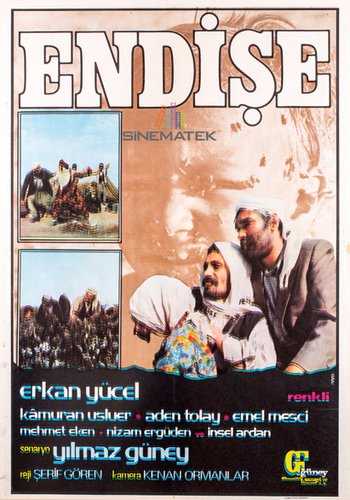
The 1974 Turkish drama Endişe (Anxiety) was written by Yılmaz Güney and made under his own company, Güney Film, with Güney and Süha Pelitözü as producers. It reached cinemas on January 1, 1975, was shot in colour and runs 76 to 79 minutes depending on the listing. Its directing credit hides a well-known story: Güney began shooting but was arrested after an incident in Yumurtalık, Adana, and his assistant and close friend Şerif Gören directed the rest.

The story takes place in Çukurova, where Cevher (Erkan Yücel) works the cotton fields with his family. Because of a blood feud, his pursuers give him a choice: pay the blood price within forty-five days or be killed. The farm's workers strike over their conditions. Cevher joins briefly, but as his deadline shrinks he returns to work. Meanwhile the farmer Osman asks for Cevher's daughter Beyaz; Cevher refuses the old, ill-natured man's large bride price, but time is running out. Kamran Usluer plays Ramazan 'Remo', Ayşe Emel Mesçi plays Aliye and Nizam Ergüden plays Osman; Güney appears as a cotton worker.

The film won several awards at the 12th Golden Orange Film Festival in 1975, including Best Film, Best Screenplay and Best Director.

DirectorYılmaz Güney, Şerif Gören
Production companyGüney Film

Reactions

You can pick up to 3 reactions.

Cast
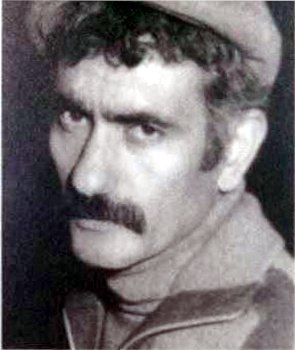
Yılmaz Güney Yılmaz Güney Actor · died at 47 Erkan Yücel Kamran Usluer Kamran Usluer Actor · died at 67 Remo Adem Tolay Ayşe Emel Mesçi Nizam Ergüden Actor · died at 70 Osman Mehmet Eken İnsel Ardan Yaşar Gökoğlu Ahmet Bayrak Elçi Mehmet Şehmuz Cemal Necla Ali Erdoğan Esenboğa Ayton Sert

Through different eyes

Yeşilçam Nostalgic A viewer raised on the classics, looking for warm storytelling and strong acting.

Written by Yılmaz Güney, Endişe is far from Yeşilçam's smiling face: it is a cinema of soil and sweat. A father caught in the cotton fields of Çukurova between a blood feud and his daughter's future turns not into the tears of old-style melodrama but into a heavy silence. The forty-five-day deadline runs through the story like a ticking clock. That shooting was cut short and Şerif Gören took over adds a sorrow of its own. For those who love the serious face of our classics, a work not to be missed.

History & Society Lens Asks about the period, the social background and what the work reflects.

Endişe's strength lies in setting one family's drama inside the labour relations of Çukurova. Placing the farmworkers' strike next to Cevher's personal debt, the film shows plainly the conflict between solidarity and survival: as his deadline shrinks, Cevher turning his back on the strike is presented not as a moral failing but as a choice forced by poverty. Traditional institutions such as the blood feud and the bride price work as extensions of economic pressure; the large sum offered for Beyaz shows a daughter's fate turning into a bargaining chip. One of the clearest examples of 1970s political cinema questioning the social order head-on.

Cinephile Looks at script, editing and directing choices; keeps a distance from formula films.

It is hard to judge Endişe without considering how it was made: Güney started the shoot and Şerif Gören finished it, so the film comes from two hands. In my view this shows at times in the storytelling; the strike is set up as a strong theme, but within the short running time it returns to Cevher's personal dead end before it has deepened enough. Even so, the script's countdown structure is an effective engine of tension, and the field locations give it a plain, realistic visual language. Winning best film, screenplay and director at the Golden Orange suggests this interrupted production still managed a coherent cinematic voice.

These are not reader reviews: they are short editorial takes written from different viewer perspectives with AI assistance. Reader reviews are below.

Reviews (0)

Log in Log in to write a review.

Comments