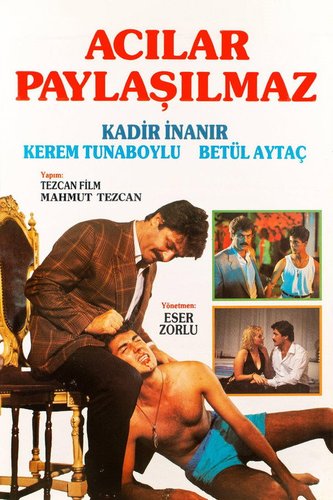
Pain Cannot Be Shared (Acılar Paylaşılmaz)

Pain Cannot Be Shared (Acılar Paylaşılmaz) (translated)

Movie · 1989 · 8 people

In 1989 Eser Zorlu directed Acılar Paylaşılmaz, a Turkish film. It deals with the distance between a gay young man and his father, and is an experimental psychological drama; it was shot in colour on 35 mm and runs 76 minutes. Yasemen Zorlu wrote the screenplay and Mahmut Tezcan produced it for Tezcan Film. The music is by Oğuz Abadan, the cinematography by Salih Dikişçi and the editing by Sedat Karadeniz.

The story turns on a father and son who meet again after years apart. Sinan grew up without his father after his parents separated, and now tries to get to know Erdoğan, a criminal defence lawyer. Erdoğan's discovery that his son is gay widens the gap between them; filled with regret, the father looks for a way to be a parent to his son after all. Kadir İnanır, Kerem Tunaboylu and Betül Aytaç head the cast as Erdoğan, Sinan and Mine. Osman Gidişoğlu is Halil, Günay Güner is Latif Yılmaz and Kaçar Korkmaz is Aykut. The film is remembered as one of the early works of Turkish cinema to touch on a gay theme.

Some of the actors were voiced afterwards: Müdrike Coşansu voiced Betül Aytaç and Yaman Okay voiced Günay Güner. The title translates into English as Pain cannot be shared.

DirectorEser Zorlu
Production companyTezcan Film

Reactions

You can pick up to 3 reactions.

Cast
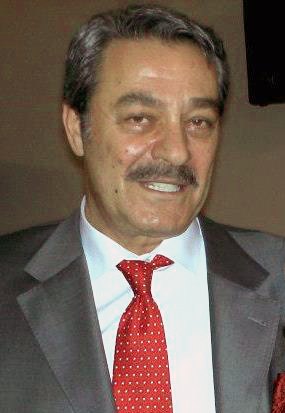
Kadir İnanır Kadir İnanır Film actor · died at 77 Erdoğan Kerem Tunaboylu Betül Aytaç Osman Gidişoğlu Günay Güner Kaçar Korkmaz Müdrike Coşansu Yaman Okay Yaman Okay Actor · died at 41
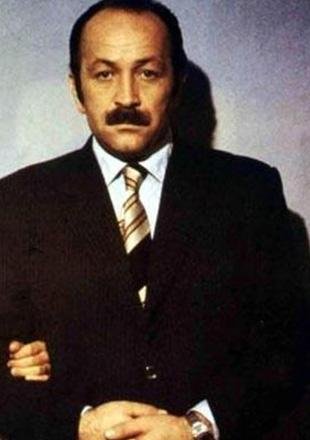
Also in the cast: Osman Gidişoğlu Halil
Through different eyes

History & Society Lens Asks about the period, the social background and what the work reflects.

In the Turkey of 1989, bringing homosexuality to the screen as a family matter was a rare step, which is why the film is remembered as one of Turkish cinema's early works to touch on the theme. What stands out is that it frames the subject not as a debate about identity but through the rift between a father and a son. A young man raised without his father after a separation and trying to know him years later, a regret that comes late: these were troubles the audience of the day would recognise. Homosexuality is thus framed not as something from outside but as a test within the family. Seen from today that frame may look narrow, but for its time it was a meaningful opening.

Cinephile Looks at script, editing and directing choices; keeps a distance from formula films.

What makes Acılar Paylaşılmaz interesting is Eser Zorlu pushing the family melodrama of the day towards a psychological, experimental register. Yasemen Zorlu's script places the dramatic weight not on big events but on the silent distance between father and son, a choice that demands careful direction of actors and patient editing. There is a question mark here: some performers were voiced afterwards by others. That was routine in Turkish cinema of the period, but in an inward-looking drama that depends so much on the unity of face and voice, it risks draining part of the performance. For a film with experimental ambitions, that technical compromise can widen the gap between intention and result.

Yeşilçam Nostalgic A viewer raised on the classics, looking for warm storytelling and strong acting.

Yeşilçam's father-and-son stories were usually built on a longing for forgiveness and reunion; Acılar Paylaşılmaz opens that same emotional vein onto a subject the screen of those years barely spoke of. Its moral centre is not a father who judges but one who feels regret and looks for a way to be a father to his son after all, the kind of lesson in humanity the old masters loved. Still, an eye that looks for the warmth of the classics, their flowing storytelling and music that carries the feeling, may find an experimental narrative rather distant. This is a film that speaks to the mind before the heart.

These are not reader reviews: they are short editorial takes written from different viewer perspectives with AI assistance. Reader reviews are below.

Reviews (0)

Log in Log in to write a review.

Comments