The Passenger (Yolcu)

The Passenger (Yolcu)

Movie · 1994 · 6 people

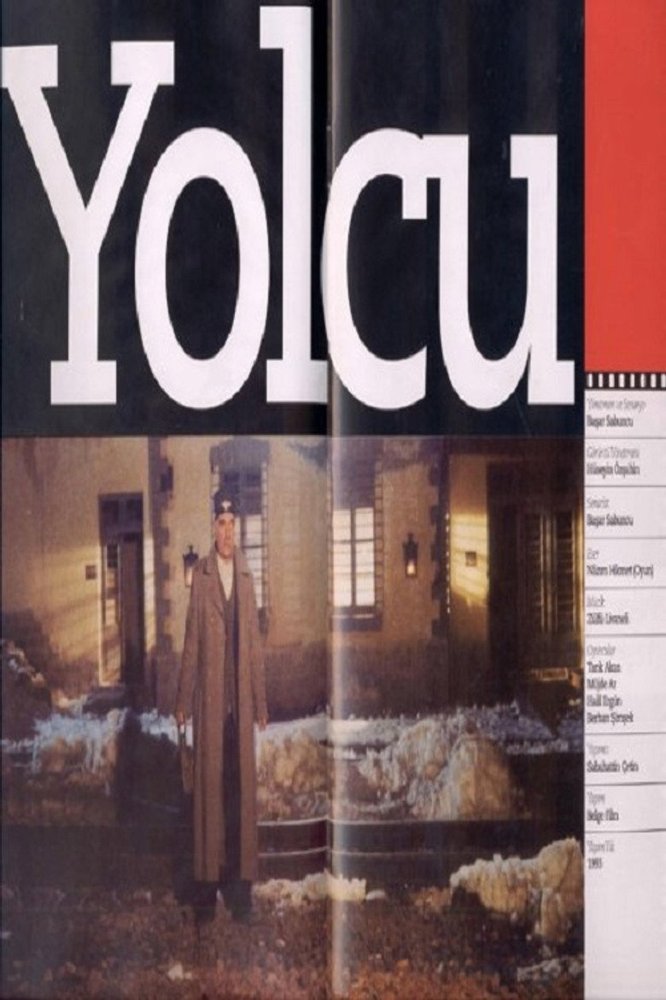
Başar Sabuncu wrote and directed the 1994 Turkish colour film Yolcu (The Passenger). Adapted from a play by Nazım Hikmet Ran, it was shot on 35 mm. Sabahattin Çetin produced it, with Belge Film and TRT both involved in the production. It is filed with the historical and military films that deal with the Kuvay-ı Milliye, the national forces, and the Turkish soldier.

The story takes place in the harsh winter of 1921 at a small railway station in the middle of an empty, snow-covered plain, where trains keep coming and going. Events develop around three people who have shut their windows on the world and live almost in isolation. Tarık Akan plays the switchman, Halil Ergün the station master and Müjde Ar the station master's wife. Berhan Şimşek appears as a Kuvay-ı Milliye fighter, alongside Alev Sayın, Mehmet Esen, Devrim Parscan, Ayşegül Gökçe and Ümit Ziya Işık.

Hüseyin Özşahin was the cinematographer, and Şafak Film handled the laboratory work and film preparation. In the dubbing credits Mustafa Alabora voices Tarık Akan, with Rıdvan Çelebi and Mustafa Aslan as dubbing directors.

DirectorBaşar Sabuncu
Production companyBelge Film, TRT

Reactions

You can pick up to 3 reactions.

Cast

Also in the cast: Alev Sayın, Devrim Parscan, Ayşegül Gökçe, Ümit Ziya Işık
Through different eyes

Yeşilçam Nostalgic A viewer raised on the classics, looking for warm storytelling and strong acting.

Born of a Nazım Hikmet play, this film chooses to tell the years of the War of Independence not from the battlefield but from a small station in the middle of a snowy plain, and to my mind that is its finest touch. A place where trains never stop passing while the three people inside have shut their doors on the world is one of those spare, poetic settings the old masters loved. Unlike the crowded heroics of many classic war films, this set-up lends itself to letting history be heard in the silence of ordinary people. For anyone ready to sit patiently with a slow, inward-looking period piece, it is a stop worth making.

Cinephile Looks at script, editing and directing choices; keeps a distance from formula films.

The classic risk of bringing a single-set play to the screen is on the table here as well: three characters, a closed-in station and a narrow plot can easily trap the camera in a stage layout. Sabuncu wrote the script himself, which makes the question of how far he freed the adaptation from the stage all the more pressing. The film's strongest cinematic asset is the location itself: an empty snowy plain and trains that never stop passing are ideal for building a visual counterpoint to the stillness inside. In my view, how well that counterpoint is used decides whether the film shakes off the smell of the stage. Having the lead speak in someone else's voice, meanwhile, is a choice that detaches part of the performance from the actor and may strike today's viewers as odd.

History & Society Lens Asks about the period, the social background and what the work reflects.

The film places the war years not on great battlefields but at a railway station, and I think that is a meaningful choice: the line stands both for the road to the front and for the last link to the outside world. Looking, in the harshness of the winter of 1921, at how ordinary people such as a switchman, a station master and his wife live on the edge of a war is a dimension that textbook history often skips. The presence of a Kuvay-ı Milliye fighter also suggests that this closed-off world cannot stay outside history. For anyone who wants to see the national struggle less as a heroic epic than as a matter of inner lives, it is a thought-provoking example.

These are not reader reviews: they are short editorial takes written from different viewer perspectives with AI assistance. Reader reviews are below.

Reviews (0)

Log in Log in to write a review.

Comments