My New Partner

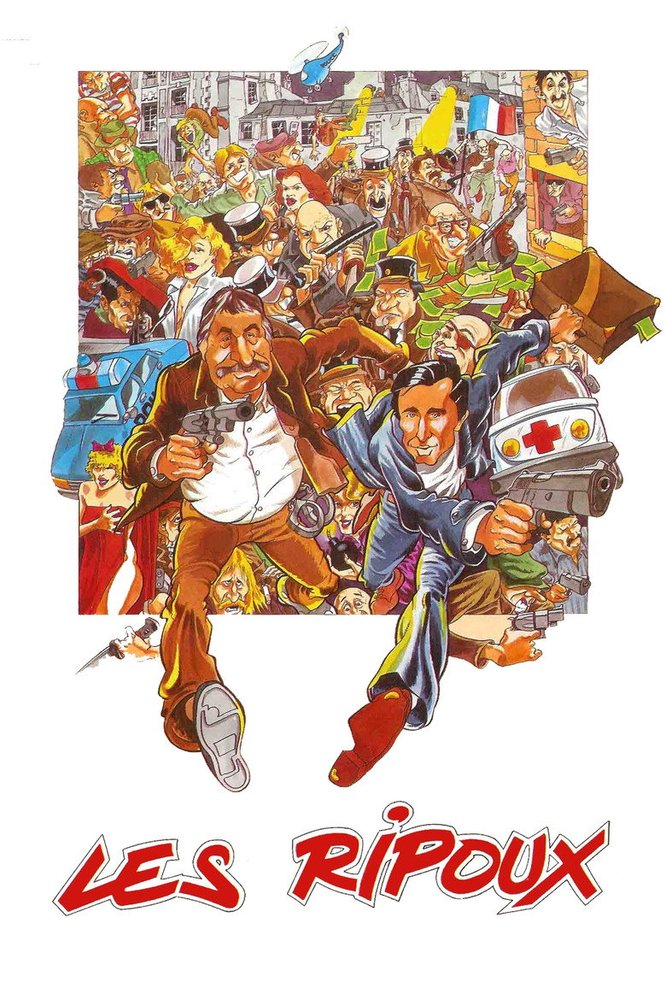
My New Partner (Les Ripoux)

Movie · 1984 · 15 people

Claude Zidi directed My New Partner, known in France as Les Ripoux, a 1984 French film. It mixes crime comedy with the buddy-film formula and stars Philippe Noiret and Thierry Lhermitte. It drew about 5.8 million viewers in France and took three awards at the 10th César ceremony in 1985: Best Film, Best Director and Best Editing. It reached Germany as Die Bestechlichen and Russia as Otkroyte, politsiya!, where it played in Soviet cinemas from June 1986.

The story is set in Paris. Inspector René Boirond (Philippe Noiret) is a lazy, corrupt cop who lets small-time criminals on his beat carry on in exchange for kickbacks. His routine is upset when he is given a new partner, François Lesbuche (Thierry Lhermitte), an idealistic, law-abiding recruit fresh out of police school. Boirond tries to give the newcomer a taste for the easy life and bring him over to his side, even teaching him verlan, the French slang that reverses syllables. His plan works far better than expected. The cast also includes Régine Zylberberg, Julien Guiomar, Grace de Capitani, Guy Kerner and Henri Attal.

The title word "ripou" is verlan for "pourri", meaning rotten. The film runs about 107 minutes, and Zidi co-wrote its screenplay with Didier Kaminka. Two sequels followed: Ripoux contre Ripoux (1990) and Ripoux 3 (2003).

DirectorClaude Zidi

Reactions

You can pick up to 3 reactions.

Cast

Only cast members with a profile on this site are listed.

Guy Kerner Actor · died at 62 Henri Attal Henri Attal Actor · died at 67 Philippe Noiret Thierry Lhermitte Régine Julien Guiomar Abbes Zahmani Albert Simono Cheik Doukouré Claude Brosset François Cadet Georges Montillier Grace de Capitani Hélène Hily Jacques Ciron

Through different eyes

Cinephile Looks at script, editing and directing choices; keeps a distance from formula films.

Claude Zidi builds the buddy-film formula in reverse: instead of the familiar pattern in which the honest cop straightens out his crooked partner, here it is the rot that wins out. That reversal lifts the film from a routine police gag into a sardonic morality play. The friction between lazy experience and eager inexperience drives the double act and gives the dialogue its rhythm. The César for editing is a fair hint about the pacing. Its weak side, in my view, is that the small-time crooks and the neighbourhood never become more than a backdrop for the two cops' game; the film is reluctant to ask what corruption costs and keeps its irony at a safe distance.

History & Society Lens Asks about the period, the social background and what the work reflects.

By portraying police corruption not with anger but as an everyday trade, the film says something interesting about the Paris of its day: petty bribery looks like an economy the neighbourhood has quietly accepted. The idealistic young cop being drawn into that system is a sharp observation about how institutions reshape individuals. Teaching the new partner verlan, the street slang that flips syllables, is telling too; language becomes the key to entering the system. On the other hand the film makes no effort to keep corruption from looking likeable, and some viewers may find that lightness an uncomfortable kind of tolerance.

Family Viewer Asks whether the whole household can watch it; cares about humour and heart.

It is a police comedy, but it is about a cop on the take leading his new partner astray. In other words, a bad example sits at the heart of the story and the film makes it look like fun. Adults and older teenagers will get the irony and laugh freely. For younger children the message may be muddled, because the film gives no clear answer about who is in the right. Better suited to viewers past their early teens.

These are not reader reviews: they are short editorial takes written from different viewer perspectives with AI assistance. Reader reviews are below.

Reviews (0)

Log in Log in to write a review.

Comments