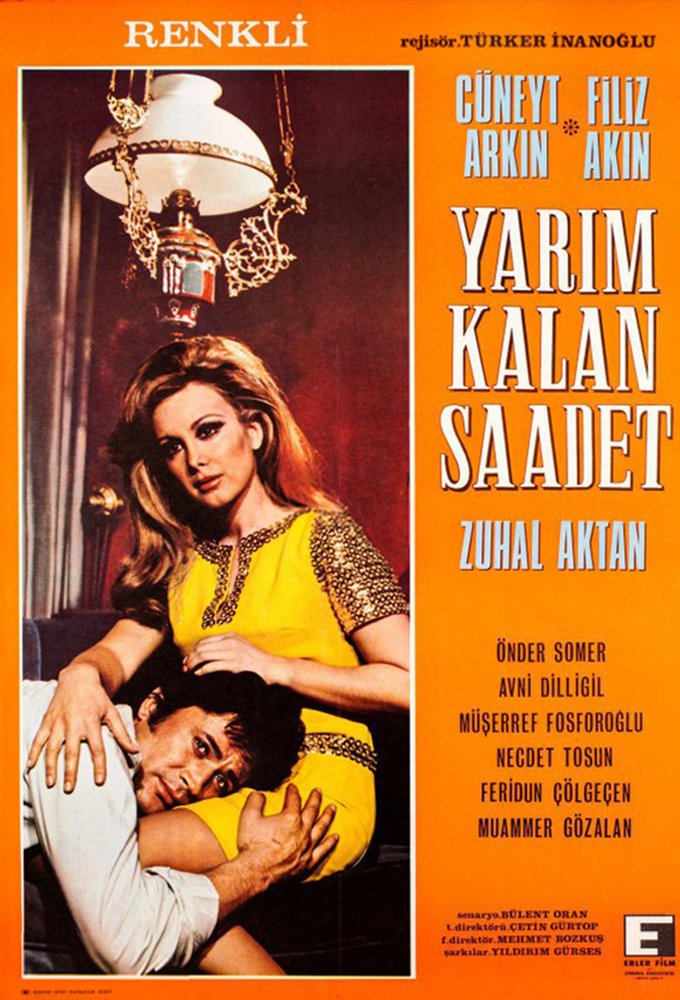
Unfinished Happiness (Yarım Kalan Saadet)

Unfinished Happiness (Yarım Kalan Saadet) (translated)

Movie · 1970 · 9 people

Türker İnanoğlu directed the 1970 Turkish melodrama Yarım Kalan Saadet ("Unfinished Happiness"). An emotional drama with musical elements, it has a screenplay by Bülent Oran and is produced under Erler Film by İnanoğlu and Missasiye. It remakes the Indian film Saathi, itself adapted from the Tamil Palum Pazhamum. In colour, it runs about 90 minutes.

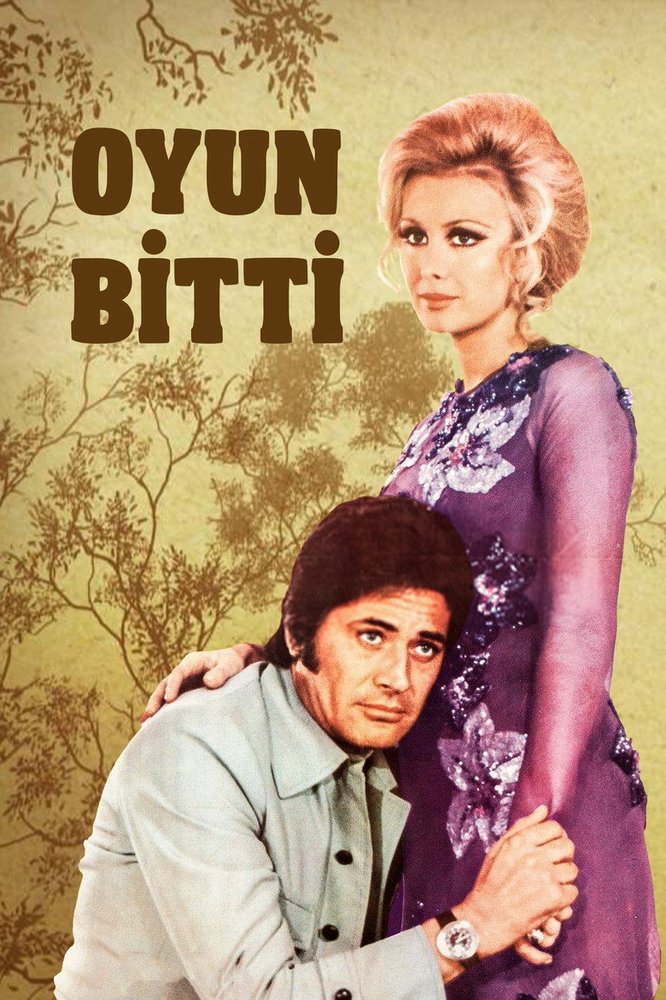
At its centre is Ekrem (Cüneyt Arkın), a famous singer who lost his father young and grew up with his uncle. At a hospital benefit concert he meets the kind-hearted Fatoş (Filiz Akın) and falls for her. But his uncle's daughter Jale (Zuhal Aktan) secretly loves him. Bound by a debt of loyalty to his uncle, Ekrem agrees to marry Jale, and his manager Fuat talks Fatoş into leaving. On her way to İzmir, Fatoş misses her plane while phoning to hear his voice once more; when it crashes, Ekrem believes she is dead and, in despair, marries Jale. A car accident then blinds him, and Fatoş enters his household disguised as a nurse named Gül. Önder Somer and Avni Dilligil are also in the cast.

Çetin Gürtop was the cinematographer and Yıldırım Gürses is credited with the songs. The actors were dubbed afterwards: Abdurrahman Palay voices Cüneyt Arkın and Jeyan Mahfi Tözüm voices Filiz Akın.

DirectorTürker İnanoğlu
Production companyErler Film

Reactions

You can pick up to 3 reactions.

Cast

Cüneyt Arkın Cüneyt Arkın Actor · died at 84 Ekrem Filiz Akın Filiz Akın Film actor · died at 82 Fatoş Zuhal Aktan Önder Somer Avni Dilligil Müşerref Çapın Feridun Çölgeçen Necdet Tosun Actor · died at 48 Mehmet Büyükgüngör

Through different eyes

Yeşilçam Nostalgic A viewer raised on the classics, looking for warm storytelling and strong acting.

Seeing Cüneyt Arkın and Filiz Akın in the same melodrama is an invitation in itself for Yeşilçam lovers. This Bülent Oran story gathers all the favourite ingredients of the era: a debt of loyalty, sacrifice and love that cannot be fulfilled. In my view it is Yıldırım Gürses's songs that carry the film's emotion most. The voices of Abdurrahman Palay and Jeyan Mahfi Tözüm bring back the familiar ring of old films too; the dubbing that may feel strange to today's viewers is, for a generation raised on these films, an inseparable part of them.

Cinephile Looks at script, editing and directing choices; keeps a distance from formula films.

The film's most interesting feature is its family tree: it remakes the Indian film Saathi, which itself was adapted from the Tamil Palum Pazhamum. That chain is a good case study in how Yeşilçam took melodrama templates from other cinemas and localised them at the time. The script, however, lines up turn after turn, a plane crash, a car accident, blindness, a disguise, and so generates its drama from the machinery of the plot rather than from the characters. Each new coincidence weakens the one before, and the emotional peaks become mechanical. It works if you accept the genre's contract; if you don't, the relationships stay in the shadow of the devices built to test them.

Family Viewer Asks whether the whole household can watch it; cares about humour and heart.

A melodrama of the familiar, much-loved kind for the older generation. But the story is quite heavy: a plane crash, a car accident, blindness and heartbreak come one after another. It may be too sad and confusing for young children. Teenagers may find the intense sentimentality of old films strange. Better suited to watching with grandparents, chatting about old films along the way.

These are not reader reviews: they are short editorial takes written from different viewer perspectives with AI assistance. Reader reviews are below.

Reviews (0)

Log in Log in to write a review.

Comments