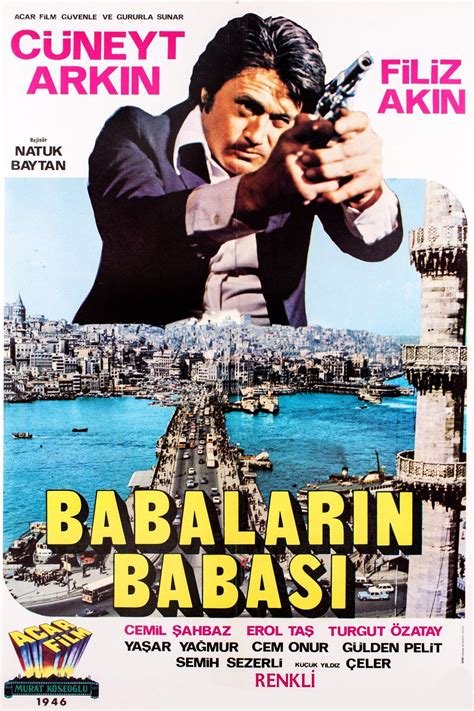
Father of Fathers (Babaların Babası)

Father of Fathers (Babaların Babası) (translated)

Movie · 1975 · 6 people

Turkish film Babaların Babası ("Father of Fathers") dates from 1975 and was directed by Natuk Baytan. Combining adventure, comedy and action, it tells the story of a love that defies the years. The screenplay is by Erdoğan Tünaş, the producer was Murat Köseoğlu and the production company Acar Film. Shot in colour and running about 88 minutes, it stars Cüneyt Arkın and Filiz Akın.

At its centre is Nermin (Filiz Akın), a beautiful and successful businesswoman who separated long ago from her philandering husband Murat (Cüneyt Arkın) and raised their three children alone. Her two sons and her son-in-law have followed in their father's footsteps, so the whole family's burden still falls on her. Strong as she is, she has never stopped loving Murat, from whom she has heard nothing for fifteen years. When her grandson Ömer is kidnapped for ransom, she has no one else to turn to, and her only recourse is to find Murat. After all those years, their paths cross again.

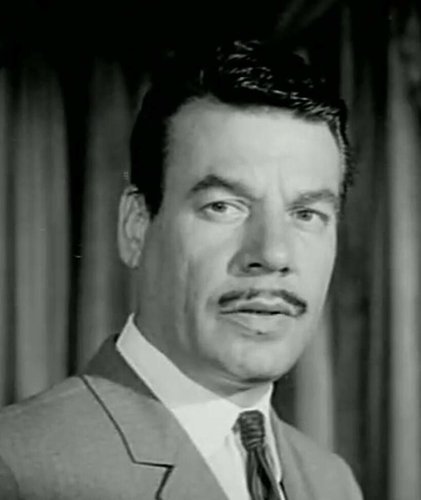
Murat is billed in the cast list as "Beşiktaşlı Murat Yılmaz". Cemil Şahbaz plays Tarık, Erol Taş plays Uyuz Aliço and Celen Tandoğan plays Ömer. Fehmi Eryılmaz was the director of photography.

DirectorNatuk Baytan
Production companyAcar Film

Reactions

You can pick up to 3 reactions.

Cast

Through different eyes

Yeşilçam Nostalgic A viewer raised on the classics, looking for warm storytelling and strong acting.

This takes Yeşilçam's favourite ingredient, a love that defies the years, and seats it at the same table as adventure and comedy. A story that brings Cüneyt Arkın and Filiz Akın face to face again after fifteen years apart is an invitation in itself for viewers of that generation. In my view the film's real heart is not the kidnapping plot but Nermin's love, which survives all her disappointment. Still, a structure that swings between comedy, action and emotional drama can at times push that warm core into the shade.

History & Society Lens Asks about the period, the social background and what the work reflects.

What stands out in it as a period piece is that it puts at its centre a successful businesswoman who raised three children on her own. For the mid-seventies, that means a woman carrying both the home and the business. Yet the story still needs the man who has been absent for years to solve the crisis, and that is exactly where the film's modernity hits its limit. Having both sons and the son-in-law carry on the father's philandering also presents male irresponsibility as a trait handed down the generations, something to laugh off. Seen today, what the film says about the family and gender roles of its time is more interesting than the adventure it tells.

Family Viewer Asks whether the whole household can watch it; cares about humour and heart.

At heart it is a family story: a mother, her children and a kidnapped grandson. The comic touches may make the grown-ups laugh. But a child kidnapped for ransom, along with the film's action side, could frighten little ones. The philandering of the father and sons is also played as a forgivable joke, so it is worth a word or two when watching with teenagers. Fine entertainment for teens and adults.

These are not reader reviews: they are short editorial takes written from different viewer perspectives with AI assistance. Reader reviews are below.

Reviews (0)

Log in Log in to write a review.

Comments