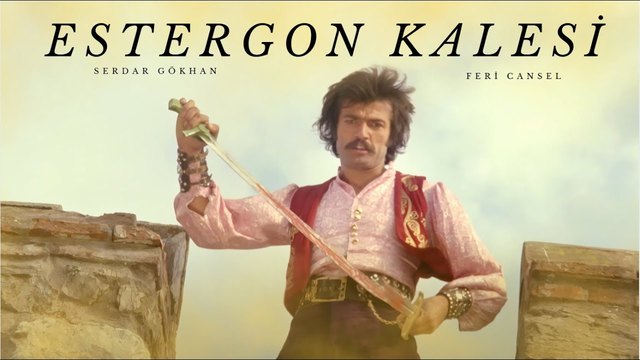
Estergon Kalesi

Esztergom Castle (Estergon Kalesi) (translated)

Movie · 1950 · 4 people

The Turkish adventure film Estergon Kalesi, in black and white, was made in 1950. Directed by Vedat Örfi Bengü, it rests on a work by Yavuz Sanemoğlu, which Fikri Rutkay adapted for the screen. Fuat Rutkay produced it for Halk Film; Cezmi Ar shot it, and Sadettin Kaynak and Kadri Şençalar composed the music. Rumelian folk songs are a prominent element; the songs are sung by Perihan Altındağ Sözeri and Ahmet Üstün.

The story is set in the Ottoman period around the fortress of Esztergom. Kocabey, Canbey and their companions, on their way to the castle, stop at an inn in hostile country. A band of brigands lodging there plans a night raid on them, but the innkeeper's daughter Nadya refuses the help the brigands demand of her and warns the guests, and the attack comes to nothing. Nadya later learns of an assault being prepared on the fortress and tells the commander. Drawn to Canbey, she wants only to stay in the castle. Kocabey also secretly loves her, but seeing his brother's state he asks the commander to have them wed. Nadya embraces Islam, takes the name Nadiye and marries Canbey.

In the film's second half the fortress comes under siege. Food and ammunition run out, and the commander's wish to let women, children and the elderly leave is refused. The women prefer to die at the hands of their own men rather than fall to the enemy. Seven years later the fortress is besieged again, this time by Turkish forces, and the commander repeats the proposal. Can Bey and his friends object, but Lala Mehmet Paşa makes the decision. The cast includes Cahit Irgat, Hulusi Kentmen, Ahmet Üstün, Necla İz and Feridun Çölgeçen.

DirectorVedat Örfi Bengü
Production companyHalk Film

Reactions

You can pick up to 3 reactions.
Cast

Through different eyes

Yeşilçam Nostalgic A viewer raised on the classics, looking for warm storytelling and strong acting.

Estergon Kalesi is a precious keepsake from the early years of Turkish cinema. What keeps it alive today, in my view, is its Rumelian folk songs: the music of Sadettin Kaynak and Kadri Şençalar, joined by the voices of Perihan Altındağ Sözeri and Ahmet Üstün, gives the story a feeling all its own. Heroism, loyalty and sacrifice are told in the sincere, direct language of the old films. A modern eye will notice the technical shortcomings, but it is quite possible to love this film in spite of them.

Action & Thriller Fan Puts pace, tension and set pieces first; little patience for slow drama.

An inn raid, a fortress under siege, food and ammo running out: on paper it is a full-on adventure. But the first half goes to a love-and-marriage storyline, and the siege only starts in the second half. By today's standards the momentum arrives late. Anyone curious about an old-school heroic tale can still be patient for the siege part.

History & Society Lens Asks about the period, the social background and what the work reflects.

The film tells the story of Esztergom, one of the Ottoman frontier fortresses in Hungary, through the historical outlook of 1950s Turkey. Nadya embracing Islam and taking the name Nadiye, or the women in the siege preferring death at the hands of their own men to falling into enemy hands, reflect a notion of honour and sacrifice familiar from the storytelling of the period. Today's viewers may find these parts troubling; it is striking that the women's fate is decided not by them but by commanders and by Lala Mehmed Pasha. The film is interesting less as a historical record than as a mirror of how its own era looked at history.

These are not reader reviews: they are short editorial takes written from different viewer perspectives with AI assistance. Reader reviews are below.

Reviews (0)

Log in Log in to write a review.

Comments