Murtaza

Murtaza

Movie · 1965 · 15 people

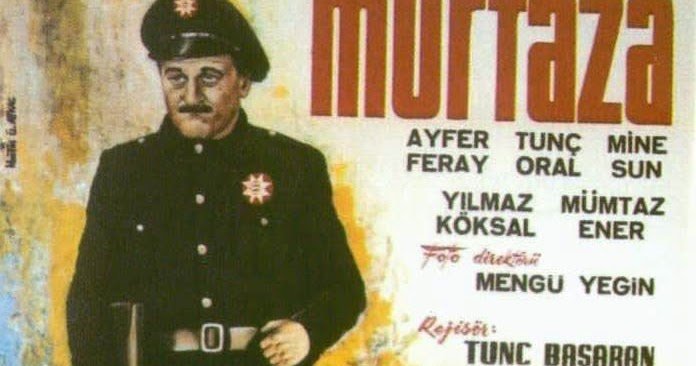
Orhan Kemal's novel of the same name received its first Yeşilçam adaptation in Murtaza, a Turkish drama shot in black and white in 1965. Tunç Başaran directed from a screenplay by Recep Ekicigil. It was made by Artist Film and produced by Eşref Ekicigil and Recep Ekicigil. Mengü Yeğin shot it and Turgut İnangiray edited; it runs about 101 minutes.

Müşfik Kenter plays Murtaza, a Rumelian immigrant and neighbourhood night watchman, proud of his shiny buttons, bandolier and whistle. He lets no thief slip past and scolds houses with lights on late. He lives in a poor shanty house with his wife Zümrüt (Ayfer Feray) and their children. The neighbours, worn down by his zeal, complain to the commissioner, who finds him a job as a control supervisor at a weaving factory. There his love of discipline turns the workers, and fellow supervisor Nuh, against him. At home, his eldest daughter Selma (Mine Sun) loves Ahmet (Tunç Oral), and Murtaza's rigid insistence on rules puts his family through a hard test.

Muammer Gözalan plays the commissioner and Mümtaz Ener plays Nuh. The film is a character portrait of honesty, duty and fanaticism seen through a poor 1960s neighbourhood and its factory.

DirectorTunç Başaran
Production companyArtist Film

Reactions

You can pick up to 3 reactions.

Cast
Through different eyes

Yeşilçam Nostalgic A viewer raised on the classics, looking for warm storytelling and strong acting.

Orhan Kemal's world, steeped in love for people, reached Yeşilçam for the first time with this film, and that alone earns Murtaza a special place on the classics shelf. For an eye raised on literature, its most precious quality is the way it joins the comic and the pitiful in a single character. This watchman, who worships his duty along with his shiny buttons and whistle, sits somewhere between raising a smile and giving you pause. The plainness of the black-and-white images suits the poor neighbourhood beautifully. Today's audience may find it slow, but it is a portrait that gives a lot to those who are patient.

History & Society Lens Asks about the period, the social background and what the work reflects.

Murtaza lets you read the triangle of migration, shanty housing and the factory in 1960s Turkey through a single character. A Rumelian immigrant watchman clinging so tightly to authority can also be read as the story of a man who turns his duty into an identity to hold on in a new life. His standing against the workers at the factory shows how people who share the same poverty become estranged from each other through supervision. At home, the father who meets his daughter's love with rules paints a familiar picture of authority within the family in that period. The film tells all this without preaching, inside the character's own consistency.

Cinephile Looks at script, editing and directing choices; keeps a distance from formula films.

The risk in bringing a character defined by a single passion like Murtaza's to the screen is obvious: he can easily turn into a caricature or get stuck on one trait. In my view Başaran's adaptation does not entirely avoid that risk. The script builds new conflicts by carrying the watchman's zeal into the factory and the home, but at times it struggles to add a new layer to him, and the same trait becomes a repeating motif. The black-and-white photography, on the other hand, renders the poor neighbourhood with an unadorned, realistic texture. The post-synchronised sound leaves a slight distance between performance and voice. Even so, the film manages to carry its literary source's question about honesty and bigotry from scene to scene.

These are not reader reviews: they are short editorial takes written from different viewer perspectives with AI assistance. Reader reviews are below.

Reviews (0)

Log in Log in to write a review.

Comments