Mold (Küf)

Mold (Küf)

Movie · 2012 · 5 people

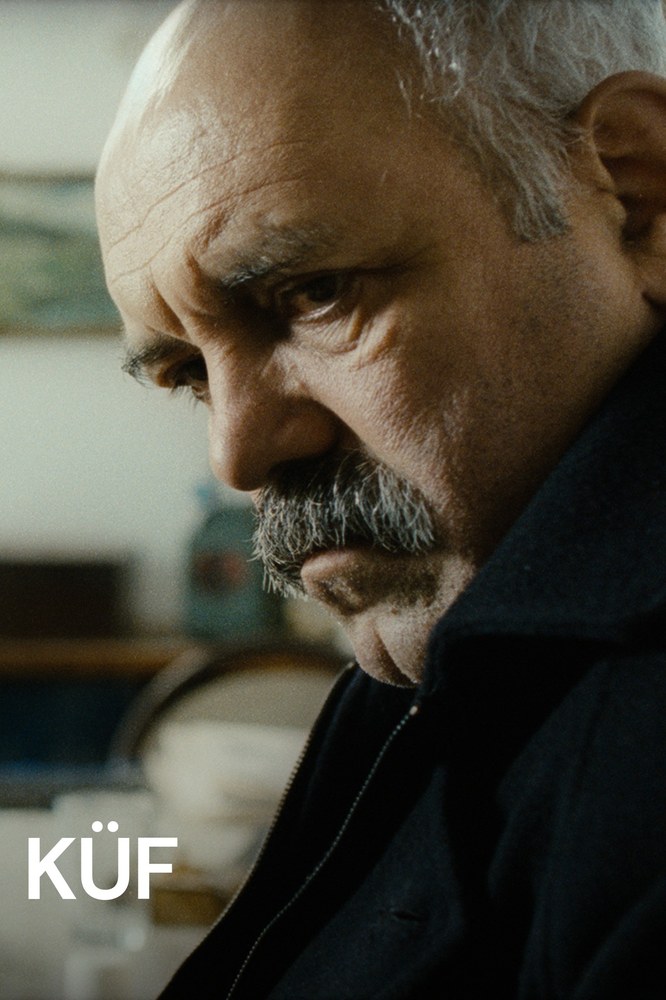
Waiting for a missing son is at the heart of Küf (Mold), a Turkish-German drama written and directed by Ali Aydın. His first feature, it dates from 2012. Yeni Sinemacılık and Motiva Film produced it, and it reached Turkish cinemas in 2013. Ercan Kesal takes the lead, with Muhammet Uzuner, Tansu Biçer and Orçun Koray Kaygusuz.

The story centers on Basri, a lonely railway track watchman. His only son Seyfi was detained as a student eighteen years ago and has not been heard of since; six years later Basri's wife died too. Withdrawing from society, he never gives up hope, writing petitions at the start and middle of each month for eighteen years. The railway he walks daily is the backdrop to a tale of hope and conscience.

The film had its world premiere in the International Film Critics' Week of the 69th Venice Film Festival and won the Lion of the Future, which carried 100,000 dollars to be shared by producer and director. Nanni Moretti saw it there and had his distribution company Sacher Film buy it. Küf also won the Silver Alexander in Thessaloniki and the Golden Apple at the Frankfurt Turkish Film Festival. Murat Tuncel was cinematographer.

DirectorAli Aydın
Production companyYeni Sinemacılık, Motiva Film
Mold (Küf) Mold (Küf) Mold (Küf)

Reactions

You can pick up to 3 reactions.

Cast

Through different eyes

AI-assisted editorial takes written from different viewer perspectives. They are not reader reviews; those are below.

History & Society Lens Asks about the period, the social background and what the work reflects.

Küf follows a father who has waited eighteen years for a son taken into custody and never heard from again, turning the silent wait of the families of the disappeared into a personal story. Basri's petitions, written at the start and middle of every month, make the helplessness of an individual facing institutions that never answer into a concrete routine. His job as a lone railway track guard makes his withdrawal from society visible too. Instead of drowning the subject in slogans, the film treats it as a matter of hope and conscience, which makes it an important testimony about recent times. Go in knowing it carries a heavy weight.

Cinephile Looks at script, editing and directing choices; keeps a distance from formula films.

A bold start for Ali Aydın's first feature: writing and directing it himself, he dares to stretch a wait that looks uneventful from the outside into a whole film. The railway lines Basri inspects on foot every day give Murat Tuncel's camera ideal material to turn into the story's real stage. Ercan Kesal's lead is the kind of role carried more by the face than by words, and that sort of restraint puts a great deal on an actor's shoulders. Coming home from Venice Critics' Week with the Lion of the Future, plus the prizes in Thessaloniki and Frankfurt, shows how closely the film speaks the language of festival cinema. That is also my reservation: a style built on repeated daily routine may shut out part of the audience. The film owns that repetition as a choice and makes no secret of it.

Yeşilçam Nostalgic A viewer raised on the classics, looking for warm storytelling and strong acting.

A father waiting for his child is one of the oldest and deepest themes in our cinema; Yeşilçam usually told that pain loudly, through tears. Küf chooses to tell it in silence, almost in a whisper. An eye raised on the classics should not look for full-blown melodrama here, and the plainness may feel strange at first. But Basri, folding eighteen years of hope into petitions, gets under your skin in Ercan Kesal's hands. Perhaps not a warm film, but its moral center is rock solid.

Reviews (0)

Log in Log in to write a review.

Comments