Cemo

Cemo

Movie · 1972 · 6 people

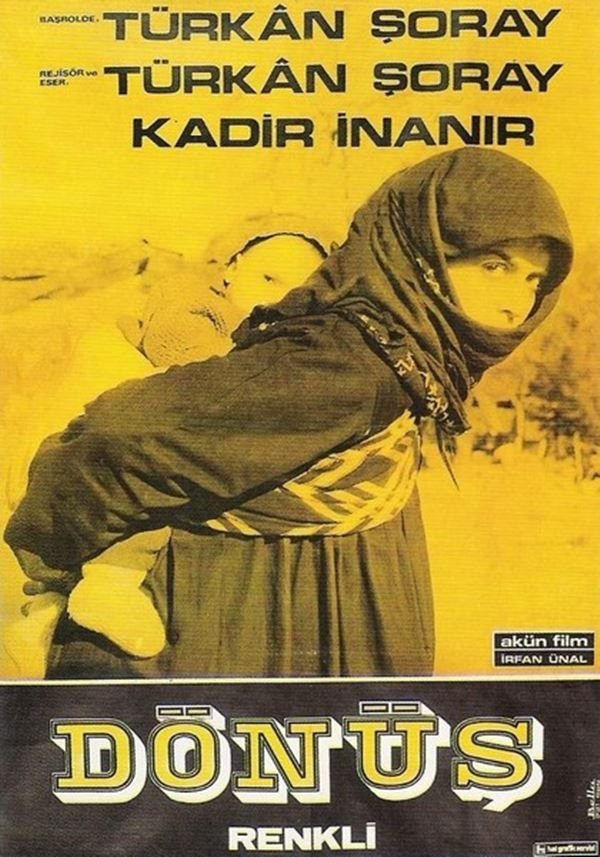
Kemal Bilbaşar's novel of the same name provided the basis for Cemo, a 1972 Turkish film. Directed by Atıf Yılmaz, it is a drama joining an emotional love story to a historical atmosphere, counted among the films set in Elazığ. Bringing together two big names of Yeşilçam, Türkân Şoray and Fikret Hakan, it premiered on 1 December 1972 and runs 91 minutes.

The story centres on the love of two young people. Memo (Fikret Hakan) is a famous bell-maker who falls for Cemo (Türkân Şoray), a miller's daughter he meets by a stream. Asking the miller for her hand, he learns that any suitor must defeat her in a fight. Memo beats the young woman and earns the right to marry, but happiness is short-lived: the ruthless Solikoğlu (Bilâl İnci), who wants Cemo for himself, will not leave the couple alone. Also cast: Tuncer Necmioğlu (Cano), Mümtaz Ener (an Ottoman pasha), Aliye Rona (Memo's mother), Danyal Topatan (Haydaro) and Melda Sözen (Senem).

Ayşe Şasa wrote the screenplay, Çetin Tunca shot it and Yalçın Tura composed the music. İrfan Ünal produced it for Akün Film. Many of the cast were dubbed: Nevin Akkaya voiced Türkân Şoray, Abdurrahman Palay voiced Fikret Hakan and Can Kurt Toron Karacaoğlu voiced Bilâl İnci.

DirectorAtıf Yılmaz
Production companyAkün Film

Reactions

You can pick up to 3 reactions.

Cast

Through different eyes

Yeşilçam Nostalgic A viewer raised on the classics, looking for warm storytelling and strong acting.

Seeing Türkân Şoray and Fikret Hakan in the same frame is like going back to Yeşilçam's brightest days. Working from Kemal Bilbaşar's novel, Atıf Yılmaz tells of love, honour and standing up to a tyrant in plain terms. Cemo is no girl who gives in easily; whoever wants to marry her must first beat her in a fight. Yalçın Tura's music carries the air of Elazığ into the film. The dubbing practice may sound strange to modern ears, but Şoray speaking with Nevin Akkaya's voice feels familiar to anyone who knows the cinema of that era. A brave love story that smells of the soil.

History & Society Lens Asks about the period, the social background and what the work reflects.

Cemo is set in Elazığ, in a historical provincial world that also includes an Ottoman pasha. Drawn from Kemal Bilbaşar's novel, the story shows how marriage, power and honour intertwine in rural Anatolia. The miller's condition that any suitor must beat his daughter in a fight is presented as an intriguing custom that both tests the woman and makes her strong. The cruel Solikoğlu refusing to leave the couple alone speaks of the pressure local strongmen put on ordinary lives. The film handles these themes within a romantic frame; rather than documenting the social reality of the period, it interprets it in the manner of a folk tale.

Cinephile Looks at script, editing and directing choices; keeps a distance from formula films.

Atıf Yılmaz's Cemo stands where literary adaptation meets Yeşilçam melodrama. Ayşe Şasa's script tries to preserve the novel's historical texture, and Çetin Tunca's cinematography gives the provincial locations real weight. Yet the dubbing practice common at the time is the film's weakest link: hearing Şoray, Hakan and İnci speak in other people's voices puts an invisible distance between the performances and the dialogue. A villain drawn as plainly from the start as the cruel Solikoğlu also leans the drama on a familiar mould. Still, the 91-minute running time is tidy, the story never sprawls, and the intensity in Şoray's gaze is enough to carry the film whatever voice comes out of her mouth.

These are not reader reviews: they are short editorial takes written from different viewer perspectives with AI assistance. Reader reviews are below.

Reviews (0)

Log in Log in to write a review.

Comments