
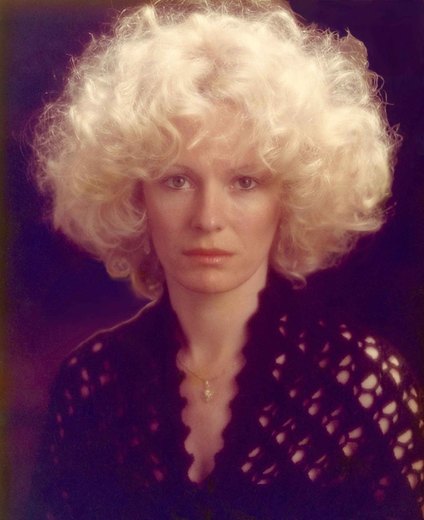
Delphine Seyrig
Actor · died at 58
Profile
| Age | died at 58 |
|---|---|
| Birth date | April 10, 1932 |
| Birthplace | Beyrut |
| Died | October 15, 1990 |
| Profession | Actor, Film director, Stage actor, Film actor |
| Zodiac sign | Aries |
| Ölüm Yeri | Paris |
Delphine Seyrig — Biography
Delphine Claire Beltiane Seyrig (born 10 April 1932 in Beirut; died 15 October 1990 in Paris) was a Lebanese-born French actress and director. Born in Beirut, which at the time lay in the French-mandated territory of Syria and Lebanon, Seyrig became one of the major figures of the theatre stage; in cinema she was known for her deep, rich and musical diction. She lost her life in the 10th arrondissement of Paris to lung cancer.
She was born the daughter of Henri Seyrig and Hermine de Saussure; her sibling was Francis Seyrig. She was educated at the Collège-Lycée Cévenol International and turned to acting in the early 1950s. Her real breakthrough in cinema came with her role in Alain Resnais's 1961 film Geçen Yıl Marienbad'da.
She continued working with Resnais on the 1963 production Muriel ou le Temps d'un retour; for the role of Hélène Aughain in that film she won the Volpi Cup, the Venice Film Festival's Best Actress award. She then played Fabienne Tabard in François Truffaut's Çalınan Buseler (1968) and Marie-Madeleine in Mr. Freedom (1968); she appeared in Luis Buñuel's Samanyolu (1969) and as the Lilac Fairy in Jacques Demy's Peau d'Âne (1970).
In 1972 she played Simone Thévenot in Buñuel's Burjuvazinin Gizli Çekiciliği, and with Çakalın Günü in 1973 she also took part in international productions. In the mid-1970s she was associated with roles at the heart of art cinema: she played Anne-Marie Stretter in Marguerite Duras's India Song (1975) and the title character in Chantal Akerman's Jeanne Dielman, 23 quai du Commerce, 1080 Bruxelles (1975). In the same period she appeared in productions such as Aloïse (1975), Her Venetian Name in Deserted Calcutta (1976), Baxter, Vera Baxter (1977) and Les Lèvres rouges; over her career she also worked with directors such as Ulrike Ottinger and Fred Zinnemann.
Besides acting she moved behind the camera and directed three films, the best known of which is the 1981 documentary Sois belle et tais-toi. A well-known figure of the feminist movement in France, Seyrig was also involved in video activism and in 1982 was, alongside Carole Roussopoulos and Ioana Wieder, among the founders of the Simone de Beauvoir Audiovisual Centre in Paris. Her work in cinema brought her two nominations for Best Actress at the César Awards.
Seyrig also took part in recordings with her voice, reading on albums such as Chopin raconté aux enfants (1979) and De doute et de grâce (1990). In her private life she married Jack Youngerman, and a son, Duncan Youngerman, was born of the marriage.
Photos

Reactions
You can pick up to 3 reactions.
Filmography / Projects
- 1963 Muriel (Muriel ou le Temps d'un retour)
- 1968 Stolen Kisses (Çalınan Buseler)
- 1968 Spray of the days
- 1969 Mississippi Mermaid
- 1969 The Milky Way (Samanyolu)
- 1969 Mr. Freedom
- 1970 Peau d'Âne
- 1972 The Discreet Charm of the Bourgeoisie (Burjuvazinin Gizli Çekiciliği)
- 1973 The Day of the Jackal (Çakalın Günü)
- 1974 The Garden That Tilts
- 1975 Jeanne Dielman, 23 quai du Commerce, 1080 Bruxelles
- 1975 India Song
- 1975 Aloïse
- 1976 Her Venetian Name in Deserted Calcutta
- 1977 Faces of Love
- 1977 Baxter, Vera Baxter
- 2009 Two in the Wave
Comments (0)