Napoléon

Napoleon

Movie · 1955 · 3 people

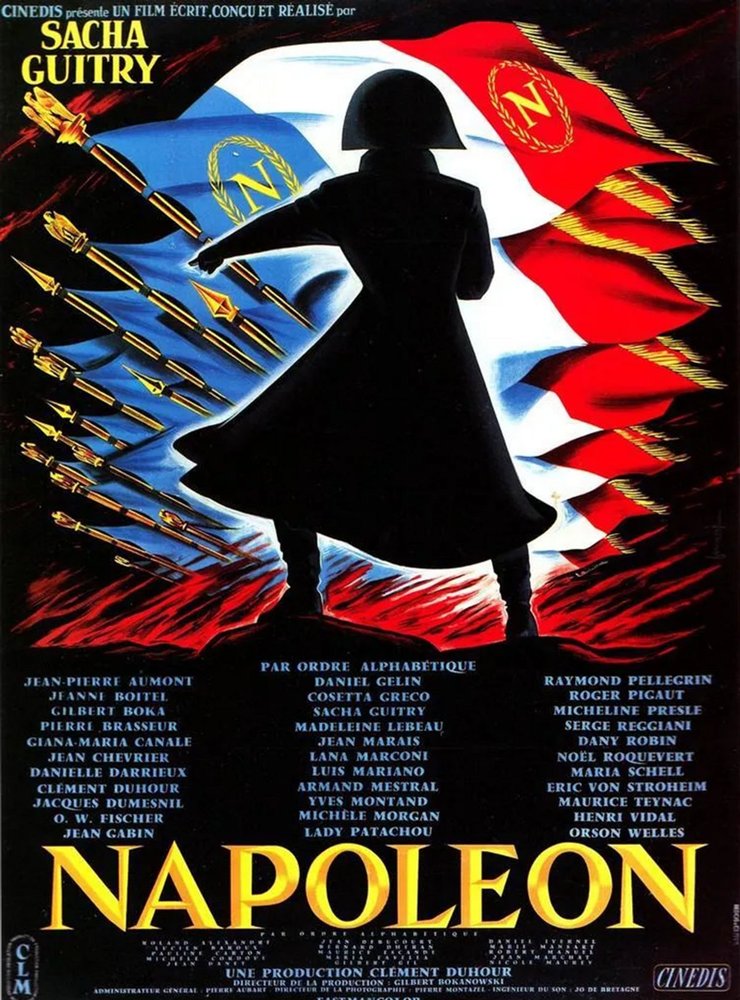
Sacha Guitry wrote and directed Napoléon, a French-Italian historical epic that follows the major events of Napoleon Bonaparte's life. Shooting took place in 1954, and the film reached cinemas in 1955. It is said to have the largest star cast of any French film. The original cut runs 182 minutes, shortened in some versions, and the film is one of three very expensive historical frescoes by Guitry, the others dating from 1953 and 1955.

Two actors play Napoleon: Daniel Gélin as a young man and Raymond Pellegrin in later life, with the switch happening during a scene at a barber's. Guitry himself plays Talleyrand, the controversial diplomat and France's first prime minister, a role he had also taken in 1948. He narrates from a drawing room as if just told of Napoleon's death on Saint Helena in 1821. Yves Montand is Marshal Lefebvre and Maria Schell is Marie-Louise of Austria, with Michèle Morgan and Danielle Darrieux also in the cast. Erich von Stroheim appears briefly as Beethoven and Orson Welles as Napoleon's British jailer, Sir Hudson Lowe.

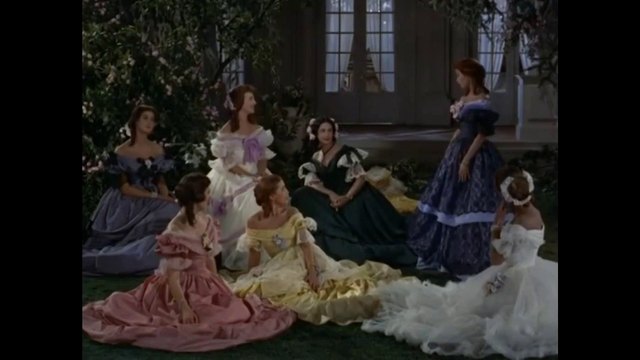
Like the other frescoes, it pairs lavish costume and props with staging in authentic historical locations. An English dub was made as part of the original production but is significantly shorter than the French version.

DirectorSacha Guitry

Reactions

You can pick up to 3 reactions.

Cast

Only cast members with a profile on this site are listed.

Through different eyes

Cinephile Looks at script, editing and directing choices; keeps a distance from formula films.

Guitry's Napoléon rests less on telling a life in depth than on staging a parade of stars. Having Guitry himself play Talleyrand, narrating from a drawing room as if just told of Napoleon's death, is a clever frame, and that narrator gives the film a personal signature. Handing Napoleon from Daniel Gélin to Raymond Pellegrin in a barber's scene, as youth gives way to later life, is an elegant cinematic solution. Yet the stream of famous faces, Orson Welles and Erich von Stroheim among them in brief appearances, breaks the dramatic unity now and then. The 182-minute original cut dazzles with lavish costumes and real historical locations, but it chooses breadth over depth.

History & Society Lens Asks about the period, the social background and what the work reflects.

Napoléon is an interesting record of how France wanted to remember its own towering figure. Telling the story through Talleyrand reminds us that events pass through the filter of a man of power, and a controversial diplomat at that, which turns history from one hero's epic into an interpretation. Scenes staged in real historical locations and lavish costumes make the period tangible. Through roles such as Maria Schell's Marie-Louise of Austria and Orson Welles's British jailer Sir Hudson Lowe, Europe's relationship with Napoleon also enters the frame. That such an expensive historical fresco was made in 1950s France says something about its time in itself.

Action & Thriller Fan Puts pace, tension and set pieces first; little patience for slow drama.

The name Napoleon suggests huge battles and a fast pace, but this film mostly works through the main stops of a life. The original cut is 182 minutes, and the story flows from a drawing room with Talleyrand narrating. Spotting famous faces is fun, there is even Orson Welles. Still, if you are an impatient viewer, plan a break or two.

These are not reader reviews: they are short editorial takes written from different viewer perspectives with AI assistance. Reader reviews are below.

Reviews (0)

Log in Log in to write a review.

Comments