Çıldıran Kadın

The Mad Woman (Çıldıran Kadın) (translated)

Movie · 1948 · 7 people

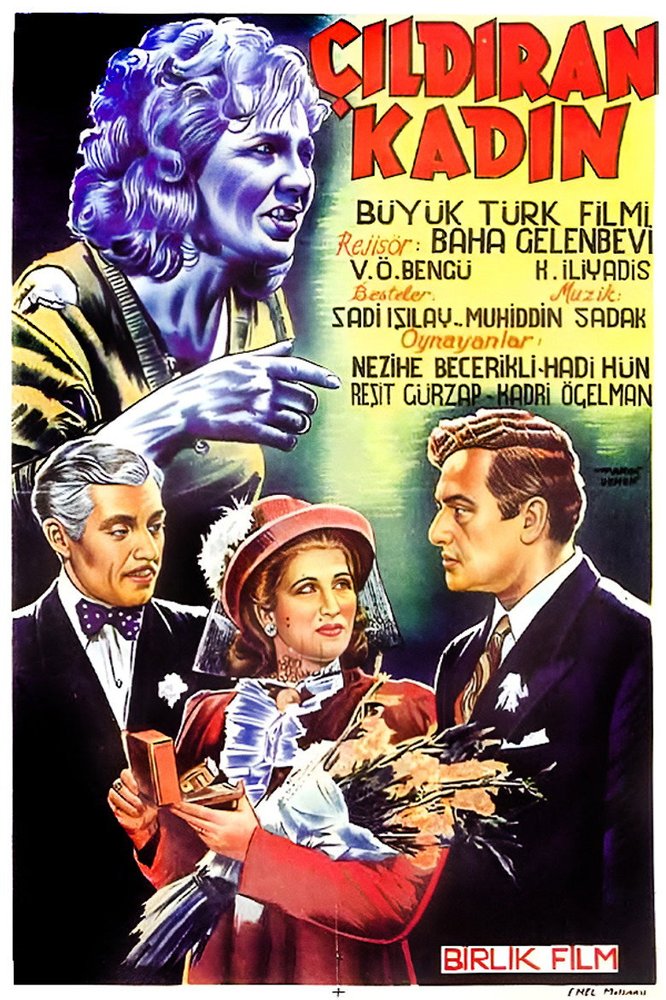
Baha Gelenbevi shot the Turkish family drama Çıldıran Kadın ("The Mad Woman") in black and white in 1948. It is adapted from Bir Yuva Böyle Yıkıldı by the writer Vedat Örfi Bengü, who also wrote the screenplay. İskender Necef produced it for Birlik Film. The film, about 93 minutes long, is remembered as the first Turkish production in which colour was experimented with, which makes it significant in early Turkish film history.

The story is built around two friends who like the same woman. One of them marries her, but when her infidelity comes to light the husband, an engineer, wounds his wife and kills his close friend, and a family falls apart. Besides Reşit Gürzap and Hulusi Kentmen, the cast includes Nezihe Becerikli, Hadi Hün, Atıf Avcı, Feriha Becerikli, Ertuğrul Bilda, Feridun Çölgeçen, Refet Gülerman, Nükban İnci, Beatris Kalfayan, Kadri Ögelman, Eşref Vural, Şaduman Öktener and Eyüp Sabri Gülener.

Kriton İlyadis was the cinematographer, Sadi Işılay composed the score, with Muhittin Sadak in the music team. The songs are performed by Fikriye Şakrakses, Semiha Altun and France Clery. The film is also known as The Women Who Went Mad; it is a family drama.

DirectorBaha Gelenbevi
Production companyBirlik Film

Reactions

You can pick up to 3 reactions.

Cast

Reşit Gürzap Reşit Gürzap Actor · died at 78 Hulusi Kentmen Hulusi Kentmen Actor · died at 82 Nezihe Becerikli Hadi Hün Ertuğrul Bilda Feridun Çölgeçen Kadri Ögelman

Through different eyes

Yeşilçam Nostalgic A viewer raised on the classics, looking for warm storytelling and strong acting.

For most of us, Turkish cinema of the forties is little more than a handful of titles today, which makes Çıldıran Kadın a precious keepsake. Vedat Örfi Bengü bringing his own work to the screen in his own words, the songs that accompany the film and Sadi Işılay's score all carry traces of an era before Yeşilçam even had its name. One thing should be said up front, though: this story of a home torn apart by infidelity and killing is not one to approach expecting a warm family film. It is a bitter, harsh melodrama that delivers its moral lesson loudly.

Cinephile Looks at script, editing and directing choices; keeps a distance from formula films.

Film histories usually remember Çıldıran Kadın under a single heading: the first Turkish production to experiment with colour. That is an intriguing paradox for a film shot in black and white, and it invites us to read the picture merely as a 'first'. To my mind the more interesting question is the shape of the adaptation: Vedat Örfi Bengü scripted his own work, so there is no other interpreter between the literary source and the screen. That tends to bring the talky, explanatory style common to literary adaptations of the period. With Kriton İlyadis's camerawork it is valuable as a document of its era, but it would be no surprise if today's viewers found its rhythm and acting style heavy going.

History & Society Lens Asks about the period, the social background and what the work reflects.

The title of the source work, Bir Yuva Böyle Yıkıldı ("How a Home Was Destroyed"), gives away the story's moral frame from the start: infidelity destroys a home. Seen with today's eyes, what stands out is the gap between who commits the violence and whom the title points at. It is the husband who wounds his wife and kills his friend, yet the word 'mad' in the title is given to the woman. That the husband is an engineer is a telling detail too: not even the modern, educated man of the period is placed outside this rage. The film is an interesting document of the values behind 1940s Turkish stories of honour and marriage, but it is hard to watch today without questioning them.

These are not reader reviews: they are short editorial takes written from different viewer perspectives with AI assistance. Reader reviews are below.

Reviews (0)

Log in Log in to write a review.

Comments