400 Darbe

The 400 Blows (Les Quatre Cents Coups)

Movie · 1959 · 16 people

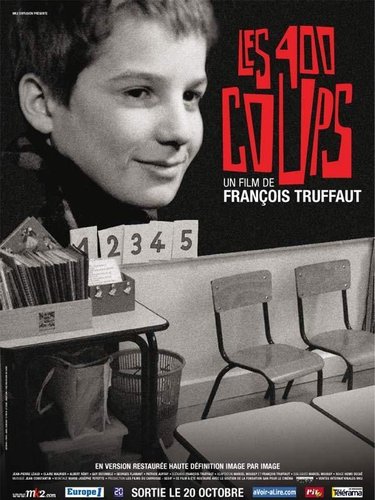
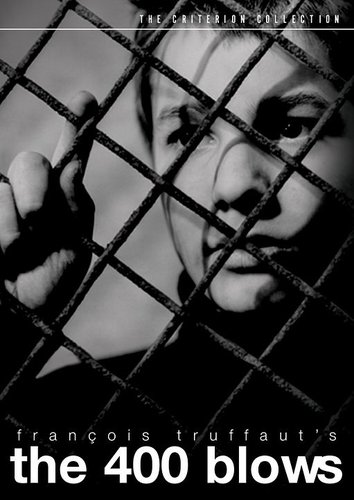
François Truffaut made his feature debut with The 400 Blows (Les Quatre Cents Coups), a 1959 French coming-of-age drama. One of the founding films of the French New Wave, it won the Best Director award at Cannes, was nominated for the Palme d'Or, and earned a 1960 Oscar nomination for Best Original Screenplay. With 4.1 million admissions in France, it is Truffaut's biggest hit at home.

The story follows twelve-year-old Antoine Doinel (Jean-Pierre Léaud) in early-1950s Paris. He finds peace neither at home nor at school: his mother (Claire Maurier) and stepfather (Albert Rémy) are indifferent, and his teacher (Guy Decomble) often humiliates him. After playing truant and lying his way out of trouble, then trying to steal a typewriter for money, Antoine ends up in a detention center for young offenders. The title comes from a French expression for raising hell.

It draws on Truffaut's own childhood; Antoine is seen as his alter ego. Truffaut wrote the script with Marcel Moussy, and the film was shot on location in Paris and Honfleur. Les Films du Carrosse produced it. Léaud continued as Doinel in Antoine and Colette (1962), Stolen Kisses (1968), Bed and Board (1970) and Love on the Run (1979), completing a five-film series.

DirectorFrançois Truffaut
Production companyLes Films du Carrosse
The 400 Blows (Les Quatre Cents Coups) The 400 Blows (Les Quatre Cents Coups)

Reactions

You can pick up to 3 reactions.

Cast

Only cast members with a profile on this site are listed.

Through different eyes

Cinephile Looks at script, editing and directing choices; keeps a distance from formula films.

Truffaut's feature debut still shows plainly why the French New Wave was a break with what came before. Shot on real locations, the streets of Paris and Honfleur have a liveliness free of studio polish; the camera follows Antoine without judging him, simply staying by his side. Rather than building a classic plot, the script piles up truancy and small lies until a child's world visibly narrows. Jean-Pierre Léaud's performance is the load-bearing column of the whole structure, and his naturalness never looks calculated. Some transitions may feel loose to today's viewers, and the rhythm is deliberately unhurried. Still, handling autobiographical material without milking it lifts the film beyond a mere film-school lesson.

History & Society Lens Asks about the period, the social background and what the work reflects.

We see early-1950s Paris not through tourist postcards but from a home without warmth and a harsh classroom. The film calmly lays out a chain: an indifferent mother and stepfather, a teacher who treats humiliation as a method, and finally a centre for young offenders. Its critique of the era's ideas about schooling and correction makes it a valuable document of how childhood was managed in 1950s France. Truffaut drawing on his own childhood lends the story credibility. Antoine's story makes you think about how many adults it actually takes, together, for a child to be branded a "problem".

Family Viewer Asks whether the whole household can watch it; cares about humour and heart.

This isn't a film made for children; it's a film made to understand them. Violence and bad language aren't the issue, but the subject is heavy: an indifferent family, a humiliating teacher, theft and a centre for young offenders. The pace is slow, so younger kids may get bored. It works for high-school-age teens if you talk it over afterwards. For parents, it holds up a useful mirror to their own home.

These are not reader reviews: they are short editorial takes written from different viewer perspectives with AI assistance. Reader reviews are below.

Reviews (0)

Log in Log in to write a review.

Comments