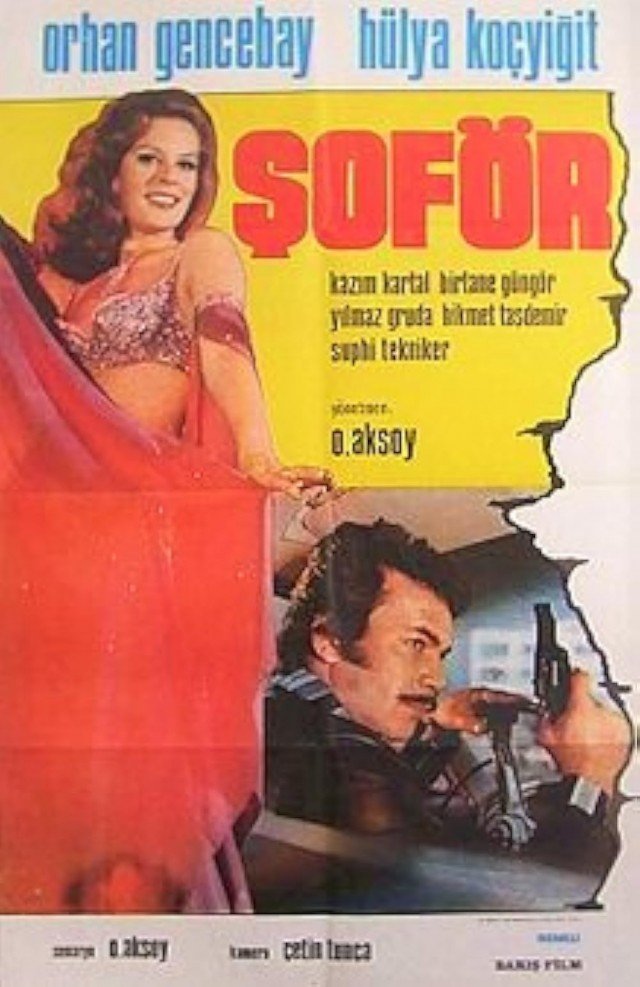
Chauffeur (Şoför)

Chauffeur (Şoför) (translated)

Movie · 1976 · 15 people

Directed by Orhan Aksoy in 1976, the Turkish film Şoför works in the vein of drama, melodrama and arabesk. Aksoy wrote the screenplay with Suphi Tekniker. Gülşah Film made it, with Selim Soydan as producer. Running about 86 minutes, it opened on 1 March 1977. Orhan Gencebay and Hülya Koçyiğit play the leads.

After their father's death, the family's burden has fallen on the older brother Osman, a truck driver. When he is away, Zehra and her sister Fatma look after their mother. After his last trip, Osman is murdered. Suspicion settles on the man the younger sister Fatma loves. Zehra swears to avenge her brother at any price. She needs money to hire a killer, which is why she starts working as a dancer. One day this innocent young girl gets into Haydar's taxi and he falls for her, unaware of any of it.

Orhan Gencebay plays Haydar and Hülya Koçyiğit plays Zehra. Kazım Kartal is Osman and Birtane Güngör is Fatma, with Suphi Tekniker as Mustafa, Nezihe Güler as the mother and Yılmaz Gruda as the policeman. The music is by Fecri Ebcioğlu and the cinematography by Çetin Tunca. Hülya Koçyiğit was dubbed by Jeyan Mahfi Tözüm and Orhan Gencebay by Abdurrahman Palay.

DirectorOrhan Aksoy
Production companyGülşah Film

Reactions

You can pick up to 3 reactions.

Cast

Through different eyes

Yeşilçam Nostalgic A viewer raised on the classics, looking for warm storytelling and strong acting.

Bringing Orhan Gencebay and Hülya Koçyiğit together in one film is an invitation in itself for anyone who loves the cinema of those years. Every element of arabesk is here: an older brother shouldering a fatherless household, a vow of revenge, and a love that fate weaves on a taxi ride. The gap between Zehra's innocence and the path she is forced onto is one of melodrama's oldest veins, and still one of its most effective. Fecri Ebcioğlu's music and the dubbing tradition of the day make the film a living record of its era. A warm return for the old Yeşilçam audience that believed in tears and conscience.

History & Society Lens Asks about the period, the social background and what the work reflects.

The film shows plainly how, in 1970s Turkey, a family's livelihood could rest on one man's shoulders, here a truck driver who spends long stretches on the road. With the brother away, the two sisters take on caring for their mother, a reflection of the gender roles of the time. Zehra having to earn money for revenge and starting work as a dancer is a typical arabesk knot, in which a woman is squeezed between honour and survival. Haydar the taxi driver stands for the city's working man. The film uses this class background as an emotional frame rather than questioning it, but it remains a valuable source for reading how the era saw family and women.

Cinephile Looks at script, editing and directing choices; keeps a distance from formula films.

Orhan Aksoy knows the rules of arabesk well, and Şoför has little intention of stepping outside them. The script's main problem is that it tries to house two separate lines under one roof: a crime drama centred on a brother's revenge, and a romantic melodrama that begins with a taxi ride. What joins them is coincidence, not dramatic necessity. Haydar knowing nothing of what has happened is a good lever for suspense, yet here too the genre looks for tension in the intensity of feeling rather than in the plot. Having the leads voiced by other artists was standard practice at the time; for today's viewer it can open a gap between face and voice.

These are not reader reviews: they are short editorial takes written from different viewer perspectives with AI assistance. Reader reviews are below.

Reviews (0)

Log in Log in to write a review.

Comments