Madame Bovary

Madame Bovary

Movie · 1991 · 3 people

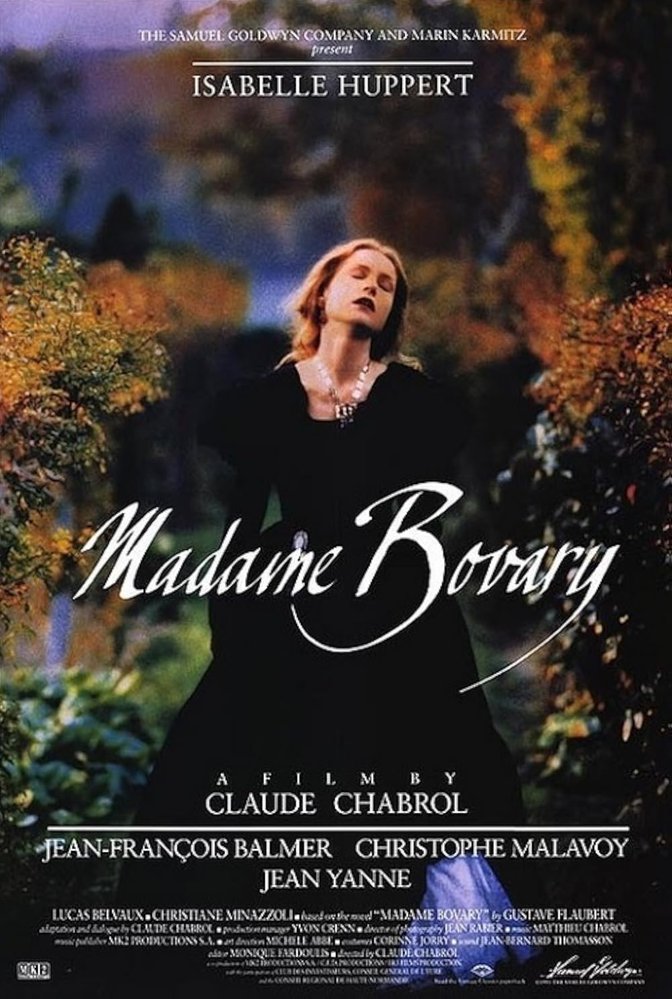
Directed by Claude Chabrol, the 1991 Madame Bovary is a French screen adaptation of Gustave Flaubert's 1857 novel of the same name. It was produced by MK2, and Chabrol wrote the screenplay himself. He claimed to have staged it as Flaubert would have shot it with a camera in place of a pen. The film sits between the New Wave tradition and the period dramas of mainstream Anglo-American cinema. Flaubert's novel had earlier reached the screen through Jean Renoir (1933), Gerhard Lamprecht (1937) and Vincente Minnelli (1949).

The story is set in 1850s Normandy. Emma (Isabelle Huppert), from an ordinary background, longs for a better life and marries the country doctor Charles Bovary (Jean-François Balmer), emotionally as unresponsive as a wall. After the wedding the magic of love fades and Emma seeks new excitement. She drifts into adulterous affairs, among them with Rodolphe Boulanger (Christophe Malavoy) and Léon Dupuis (Lucas Belvaux), while her taste for luxury pushes her into ever-deeper debt, and the path ends in tragedy.

The film runs 142 minutes and was nominated for the Academy Award for Costume Design and for the Golden Globe for best foreign-language film. Huppert won Best Actress at the 17th Moscow International Film Festival for her performance.

DirectorClaude Chabrol
Production companyMK2

Reactions

You can pick up to 3 reactions.

Cast

Only cast members with a profile on this site are listed.
Through different eyes

Yeşilçam Nostalgic A viewer raised on the classics, looking for warm storytelling and strong acting.

For a lover of Flaubert, Chabrol's Madame Bovary is a respectful, meticulous adaptation. Isabelle Huppert carries Emma's longing for a better life without overstatement, with a sorrow that simmers beneath the surface; her Moscow award was well earned. 1850s Normandy fills the eye with its costumes and provincial houses. Still, the film's coolness leaves a chill: you pity Emma, but you never quite weep with her. Anyone hoping for the heart-warming glow of the old melodramas should be ready for a more distant gaze.

Cinephile Looks at script, editing and directing choices; keeps a distance from formula films.

Chabrol said he staged the film as Flaubert would have shot it with a camera in place of a pen, and that claim is both the film's strength and its limit. The camera neither glorifies nor judges Emma; it watches from a cool, observational distance. Huppert uses that distance masterfully, compressing suppressed disappointment into small gestures, while Jean-François Balmer's wall-like Charles gives her the right dead weight to push against. The problem is that such fidelity to the novel sometimes turns the narrative into an illustrated summary. Over 142 minutes the episodes follow one another, but little dramatic momentum builds. Sitting between the New Wave and the classic period drama is an interesting choice, yet the result feels less like a bold cinematic reading than a careful translation.

History & Society Lens Asks about the period, the social background and what the work reflects.

How narrow were the options for a woman from an ordinary family in 1850s Normandy? The film asks this quietly, through Emma's longings. Marriage is almost the only social door open to her, and the life she builds with a country doctor offers no rise, either emotional or social. Her taste for luxury, which drags her into debt, also shows how the wish for a better life could become a trap for the provincial middle class. Chabrol does not turn the affairs into a morality lesson, which keeps the film open to present-day readings. The period detail is careful, though the provincial society around Emma stays somewhat in the background.

These are not reader reviews: they are short editorial takes written from different viewer perspectives with AI assistance. Reader reviews are below.

Reviews (0)

Log in Log in to write a review.

Comments