Comedy of Power

Comedy of Power (L’Ivresse du pouvoir)

Movie · 2006 · 3 people

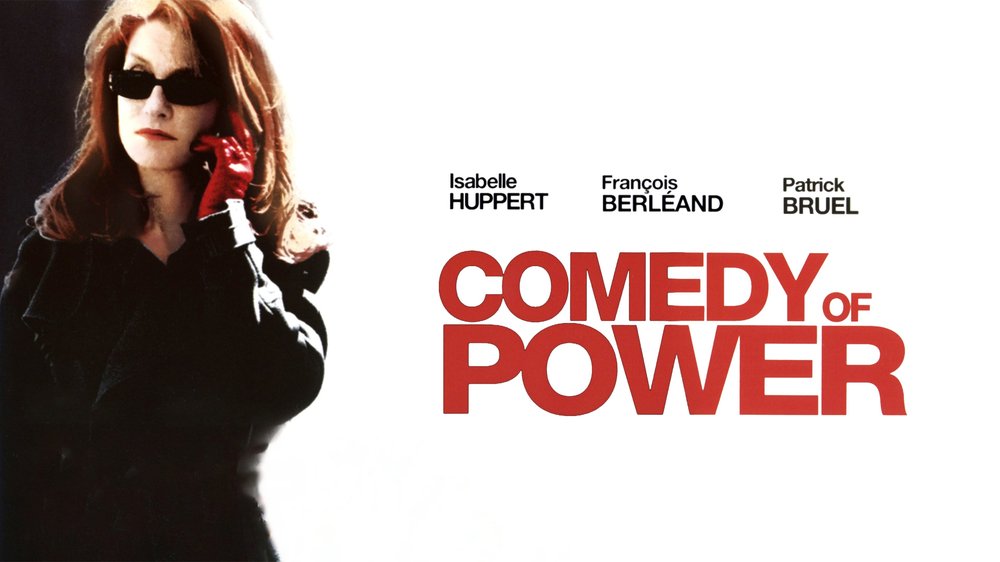
Claude Chabrol directed the 2006 French-German drama L'Ivresse du pouvoir, meaning "drunk with power". Its international title is Comedy of Power; in parts of Latin America it was shown as La comedia del poder, and in Germany as Geheime Staatsaffären. The film is in French and runs 110 minutes. Drawing on real events, it is based on the corruption and bribery scandal around the oil giant Elf Aquitaine that shook France in the mid-1990s.

At its centre is a magistrate determined to expose corruption among powerful business figures, played by Isabelle Huppert. The character is inspired by Eva Joly, the Norwegian-French judge who handled the case. The cast includes François Berléand, Jacky Nercessian and Jacques Boudet, along with Robin Renucci, Marilyne Canto, Maurice Benguigui, Jean-François Balmer and Jean-Christophe Bouvet.

Chabrol wrote the screenplay with Odile Barski. The film premiered in competition at the Berlin International Film Festival on 16 February 2006, with its regular release following on the 22nd and a Spanish release on 11 May 2007. One curious detail is that it opens with an ironic notice saying that everything the viewer is about to see is the product of the director's imagination and that any resemblance to reality is coincidental.

DirectorClaude Chabrol

Reactions

You can pick up to 3 reactions.

Cast

Only cast members with a profile on this site are listed.

Through different eyes

History & Society Lens Asks about the period, the social background and what the work reflects.

Chabrol's film is based on the Elf Aquitaine bribery and corruption scandal that shook France in the mid-1990s. The investigating magistrate played by Isabelle Huppert is inspired by Eva Joly, the judge who handled the case, and is determined to expose the corruption of powerful business figures. The film offers a portrait of an era, questioning the culture of impunity between big corporations and circles of power. Its original title, meaning "drunk with power", hints that its concern is power itself rather than particular individuals. And the ironic opening notice declaring everything to be imaginary turns the tension between real events and fiction into a deliberate game.

Cinephile Looks at script, editing and directing choices; keeps a distance from formula films.

Claude Chabrol approaches the Elf Aquitaine scandal not with documentary rigour but with an ironic distance that earns the word comedy in the title. Opening a film we know is based on real events with a notice that everything is imaginary is a clever move that states the director's attitude from the outset. The screenplay, co-written with Odile Barski, puts Huppert's magistrate at the centre and filters the scandal's complexity through one determined figure. That ironic coolness has a price, though: over 110 minutes the audience can struggle to get close to the characters, and anyone expecting suspense may find the telling too measured. Its selection for the Berlin competition shows, nonetheless, that it was seen as the work of a mature master.

Yeşilçam Nostalgic A viewer raised on the classics, looking for warm storytelling and strong acting.

With Isabelle Huppert as a determined magistrate, this film holds interest for anyone who values fine acting. Its subject matters too: a woman trying to expose the corruption of powerful businessmen. Still, Chabrol's ironic, mocking distance is not to my heart's taste; looking here for the warm moral centre of classic cinema, the heartfelt bond with a character, may be in vain. A cleverly built film that leaves the heart cold. Lovers of political drama will enjoy it more.

These are not reader reviews: they are short editorial takes written from different viewer perspectives with AI assistance. Reader reviews are below.

Reviews (0)

Log in Log in to write a review.

Comments