Laila in Haifa

Laila in Haifa

Movie · 2020 · 9 people

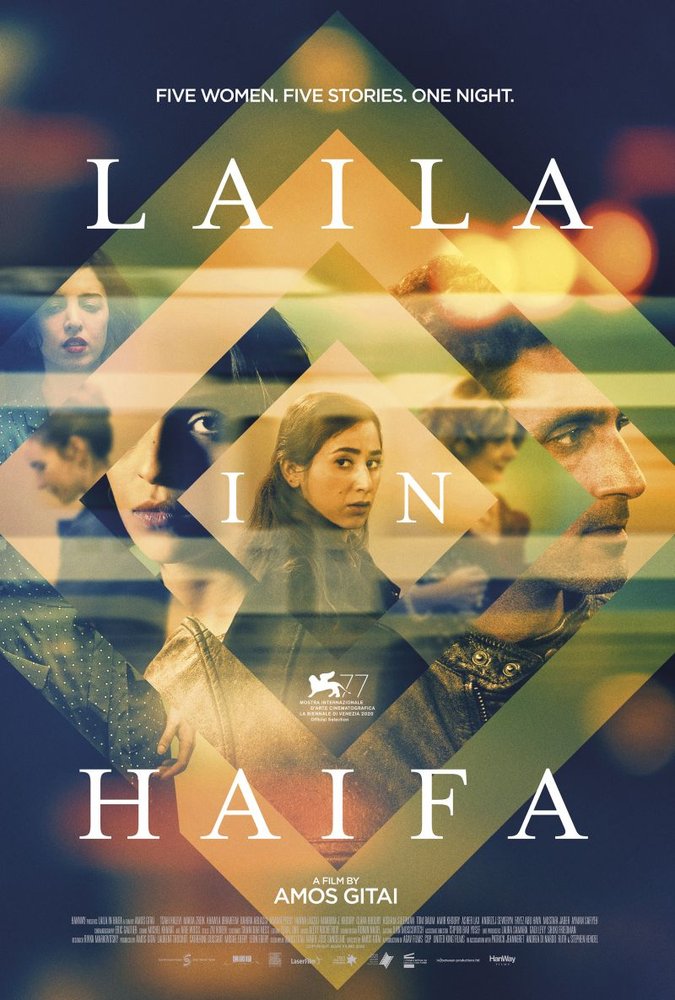
Amos Gitai directed the 2020 Israeli-French film Laila in Haifa. Described as a tragicomedy, it unfolds over a single night in a nightclub in Haifa. The film, which is spoken in Hebrew and Arabic and runs about 99 minutes, was selected for the main competition of the 77th Venice International Film Festival. Its Hebrew title is Layla BeHaifa.

The story follows five Israeli and Palestinian women on a night out at a club called Fattoush in the port city. In the director's own words, the club is a place where men and women, straight and gay, Jews and Arabs, radicals and moderates meet. Maria Zreik plays Laila, Tsahi Halevi plays Gil, Naama Preis plays Naama and Hana Laszlo plays Hanna; Makram Khoury and Clara Khoury are also credited in the cast. Rather than a conventional plot, the film relies on brief encounters that brush against one another through the night. Gitai, who often returns to Israeli-Palestinian coexistence, uses the confined setting to bring out the tension and closeness between people who would seldom otherwise share a room.

Gitai wrote the screenplay, and some listings credit Marie-Jose Sanselme alongside him. The film is a joint effort between France and Israel.

DirectorAmos Gitai

Reactions

You can pick up to 3 reactions.

Cast

Only cast members with a profile on this site are listed.

Makram Khoury Makram Khoury Film actor · 81 years old Clara Khoury Clara Khoury Actor · 49 years old Tsahi Halevi Maria Zreik Hana Laszlo Hisham Sulliman Tom Baum Amir Khoury Andrzej Seweryn
Through different eyes

Cinephile Looks at script, editing and directing choices; keeps a distance from formula films.

In Laila in Haifa, Amos Gitai drops conventional plot in favour of brief encounters that brush against one another over a single night in a single place. The Fattoush club is, in the director's words, a microcosm where Jews and Arabs, radicals and moderates, straight and gay people meet. The confined setting is a smart choice that heightens closeness and tension at once. But the loose structure doesn't always pay off: some encounters are interesting as ideas yet stay on the surface dramatically, and not all five women reach the same depth. A bold but uneven experiment that earned a place in the main competition at Venice.

History & Society Lens Asks about the period, the social background and what the work reflects.

Five Israeli and Palestinian women meeting in the same club on the same night in Haifa sums up the film's real subject in a sentence: coexistence as both possible and tense. Gitai's recurring theme of Israeli-Palestinian coexistence is handled here less through grand political statements than through everyday contact. Even the fact that Hebrew and Arabic are spoken side by side is a stance in itself. The approach is engaging, but squeezing such a layered issue into the atmosphere of one night at a club inevitably leaves the historical depth outside.

Family Viewer Asks whether the whole household can watch it; cares about humour and heart.

Not really one for a family evening. It is set in a nightclub and deals with adult topics such as relationships and different ways of life. There is no classic story; it moves through short encounters, so children and teens may get bored quickly. For adults, it is a thought-provoking film about different people managing to share a space. It is in Hebrew and Arabic, so you will need subtitles.

These are not reader reviews: they are short editorial takes written from different viewer perspectives with AI assistance. Reader reviews are below.

Reviews (0)

Log in Log in to write a review.

Comments