Kuzenler

The Cousins (Les Cousins)

Movie · 1959 · 5 people

In 1959 Claude Chabrol made the drama Les Cousins (English: The Cousins), one of the films that pushed the French New Wave toward its establishment. Chabrol wrote the script together with Paul Gégauff. At the ninth Berlin International Film Festival it took the top prize, the Golden Bear, and gave its director his international breakthrough. Shot in French and running about 108 minutes, it was shown in Germany as Schrei, wenn du kannst.

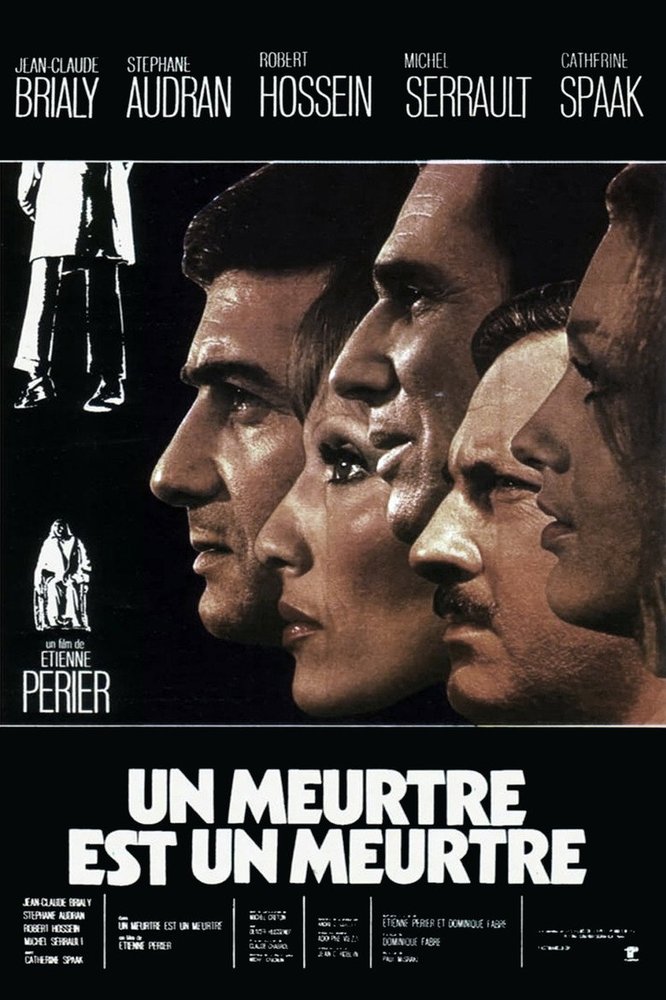
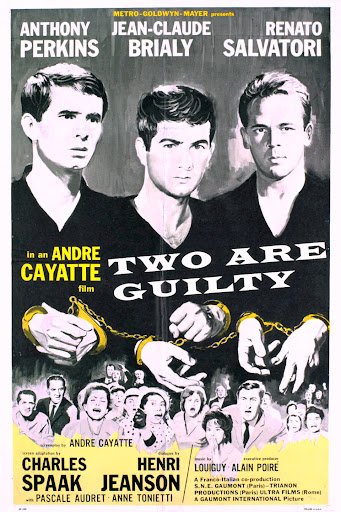
The story rests on the contrast between two cousins sharing one roof. Charles, who has come from the provinces to Paris to read law, is a naive young man absorbed in his studies. Paul, who gives him a room in his home, is used to the capital's fashionable night life and lives decadently; while Charles studies, Paul opens the flat to parties. The two opposed temperaments grow harsher over a woman both of them are drawn to. Gérard Blain plays Charles and Jean-Claude Brialy plays Paul, with Juliette Mayniel among the leads. Geneviève Cluny, Stéphane Audran, Françoise Vatel, Claude Cerval and Guy Decomble also appear, and the cast list further names Clara Gansard, Corrado Guarducci, Gilbert Edard and Jean-Louis Maury.

Blain and Brialy had already shared the lead roles in Chabrol's first feature, Le Beau Serge. The music for Les Cousins is by Paul Misraki.

DirectorClaude Chabrol

Reactions

You can pick up to 3 reactions.

Cast

Only cast members with a profile on this site are listed.

Through different eyes

Cinephile Looks at script, editing and directing choices; keeps a distance from formula films.

Les Cousins shows how controlled a storyteller Chabrol already was while the French New Wave was still proving itself. The script, written with Paul Gégauff, rests on a simple but effective opposition: Charles, the provincial student buried in his books, and Paul, who throws his flat open to parties. The film's real strength is that it works this contrast through space and rhythm rather than slogans. Jean-Claude Brialy gives Paul an attractive, unsettling energy, while Gérard Blain keeps Charles's innocence from turning one-note. The Golden Bear in Berlin was no accident. Still, some of the party scenes run longer than they need to, and the woman caught between the two cousins looks far too schematic by today's standards.

Yeşilçam Nostalgic A viewer raised on the classics, looking for warm storytelling and strong acting.

The naive young man arriving from the provinces is a figure our literature and Yeşilçam know well, and Les Cousins carries that familiar journey to Paris. Chabrol, however, does not look at his characters with the warmth of our classics. Paul's decadent world is skilfully built, yet the film rarely invites you to bond with anyone; a cool, even slightly mocking distance runs through it. Paul Misraki's music and the contrast between the two young leads still stay with you. It is a film that speaks more to the mind than to the heart.

History & Society Lens Asks about the period, the social background and what the work reflects.

Les Cousins offers an interesting window onto generation and class in late-1950s Paris. Charles, who has come from the provinces to study law, stands for an ethic of getting ahead through hard work; Paul, at home in the capital's fashionable night life, stands for an ease built on pleasure and display. Two temperaments under one roof also make visible the distance between provinces and centre in the France of the day. The film shows this through the ordinary running of a household rather than by lecturing. Seen today, though, the way its women serve mostly as instruments in the men's conflict is a reminder of the period's limits.

These are not reader reviews: they are short editorial takes written from different viewer perspectives with AI assistance. Reader reviews are below.

Reviews (0)

Log in Log in to write a review.

Comments