Kerem İle Aslı

Kerem and Asli (Kerem İle Aslı) (translated)

Movie · 1971 · 3 people

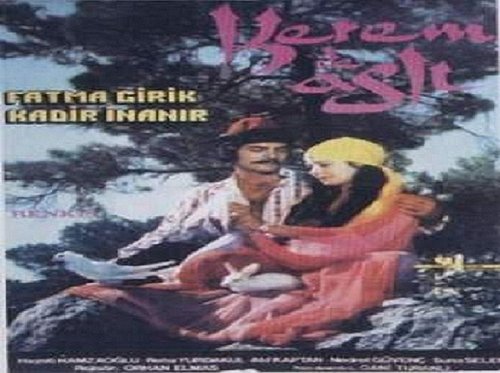
Orhan Elmas wrote and directed Kerem İle Aslı, a 1971 colour Turkish film. A romantic drama, it adapts the legend of Kerem and Aslı, a tale that has passed from tongue to tongue for centuries. Produced by Memduh Ün for Uğur Film, it was released on 1 November 1971.

The story opens in a distant land where the Sultan has no child. He hands the government to his ambitious vizier and withdraws from public life. While out hunting, he meets a white-bearded dervish who promises both him and the chief blacksmith a child, on condition that the people are never oppressed. To force the Sultan to break that condition, the vizier crushes the population, and the Sultan is given a daughter rather than a son. He hides the truth and raises her as a boy under the name Aslan Bey. Born on the same day as Kerem, the young woman grows up beside him unaware of her real identity. Fatma Girik plays Aslı and Kadir İnanır plays Kerem, while Hayati Hamzaoğlu is the Black Vizier who will not give up power.

Gani Turanlı was director of photography and Abdullah Nail Bayşu composed the music, with songs performed by Ayten Şenol and Ömer Şan. The film runs about an hour and ten minutes.

DirectorOrhan Elmas
Production companyUğur Film

Reactions

You can pick up to 3 reactions.

Cast

Through different eyes

Yeşilçam Nostalgic A viewer raised on the classics, looking for warm storytelling and strong acting.

Seeing a folk tale that has passed from tongue to tongue for centuries, like Kerem and Aslı, brought to the screen with Fatma Girik and Kadir İnanır brings you one step closer to that age-old love. The songs sung by Ayten Şenol and Ömer Şan and Abdullah Nail Bayşu's score carry the film's soul, and Hayati Hamzaoğlu's Black Vizier is a true Yeşilçam villain. Yet an hour and ten minutes is too tight for such a great legend; you can feel some emotions being rushed. Even so, the warmth of the tale is right where it should be.

History & Society Lens Asks about the period, the social background and what the work reflects.

The film brings out a layer of the folk tale that often goes unnoticed: how those in power treat the people. The dervish makes the promise of a child conditional on the people never being oppressed, and the vizier crushes the population precisely to force that condition to be broken. This setup reflects an old political morality that ties a ruler's fate to his justice. A daughter raised as a boy under the name Aslan Bey also shows the social weight of the expectation of a son. This 1971 adaptation deserves attention to the extent that it keeps these layers visible alongside the romance.

Family Viewer Asks whether the whole household can watch it; cares about humour and heart.

A colourful adaptation of a well-known folk tale. Grandparents will know the story, which makes it a nice chance to tell it to the children. Fairy-tale elements like the palace, the dervish and the wicked vizier can catch younger viewers' interest too. The vizier does oppress the people, but the film is short, about an hour and ten minutes. The love story may turn sad, so little ones should watch with an adult beside them.

These are not reader reviews: they are short editorial takes written from different viewer perspectives with AI assistance. Reader reviews are below.

Reviews (0)

Log in Log in to write a review.

Comments