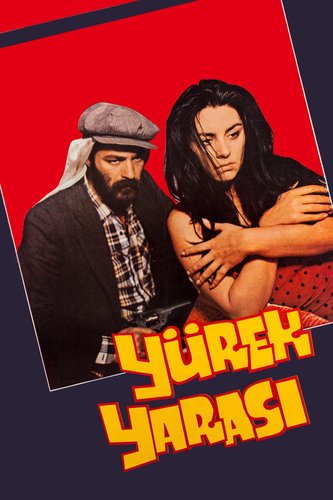
Heart Wound (Yürek Yarası)

Heart Wound (Yürek Yarası) (translated)

Movie · 1982 · 15 people

Orhan Elmas directed Yürek Yarası ("Heart Wound"), a 1982 Turkish drama. Shot in color on 35 mm, it runs 84 minutes and was released on 1 January 1983. Uğur Film produced it, with Memduh Ün credited for screenplay and production and Cahit Berkay for the music.

Davut, who makes his living as a raftsman, loves Zeynep, one of the village's beautiful girls. But Zeynep's heart belongs to Mustafa, son of Haydar Ağa, and since her father Recep is deeply in debt to Haydar Ağa, the closeness suits him as well. When Davut hears that Haydar Ağa has asked for Zeynep's hand, he waits for his chance and abducts her during a village wedding. He does not know she loves Mustafa; once he learns it, he lets her go. But Zeynep's name is already stained, and Haydar Ağa will not accept a girl with such a reputation as a bride.

Kadir İnanır plays Davut and Serpil Çakmaklı plays Zeynep. The cast also includes Reha Yurdakul (Recep Ağa), Talat Gözbak (Haydar Ağa), Bülent Bilgiç (Mustafa), Aliye Rona (Davut's mother), Nuran Aksoy (Sultan) and Sami Hazinses (the peddler). Rafet Şiriner and Gani Turanlı shared the cinematography. The film was dubbed, with Abdurrahman Palay voicing Kadir İnanır.

DirectorOrhan Elmas
Production companyUğur Film

Reactions

You can pick up to 3 reactions.

Cast

Through different eyes

Yeşilçam Nostalgic A viewer raised on the classics, looking for warm storytelling and strong acting.

When Memduh Ün's writing meets Cahit Berkay's music, you recognise at once the sincere world of Yeşilçam's village melodramas: unrequited love, an indebted father and the shadow of the agha. Davut realising his mistake and stepping back is a delicate touch that sets him apart from the usual village tough. Yet an eye raised on our classics will also notice that the familiar pieces are placed in rather too familiar spots. Still, by taking the stain on a girl's name seriously as real drama rather than cheap excitement, the film gains a moral centre.

History & Society Lens Asks about the period, the social background and what the work reflects.

The film asks a question village cinema often asked: how can a woman's name be stained by something beyond her control, and who pays for that stain? Zeynep is the one who was abducted, yet she is the one who bears the stigma. Her father's debt to Haydar Ağa turns the marriage question into a relationship of economic dependence before it is a matter of feeling; the agha system stands even in front of love. Seen from today the picture is harsh, but it has documentary value because it shows plainly the notion of honour and the social pressure on women in rural Turkey at the time.

Cinephile Looks at script, editing and directing choices; keeps a distance from formula films.

Yürek Yarası lines up the familiar building blocks of Yeşilçam melodrama, the abducted girl, the indebted father and the love triangle with the agha's son, neatly but without surprises. My main reservation is the dubbing: Kadir İnanır being voiced by Abdurrahman Palay and Serpil Çakmaklı by Ayşin Atav was common practice at the time, but it splits the performance in two; a gap remains between face and voice, which makes it hard to judge the leads' acting as a whole. The river and the raft offer good material for a rural texture. Still, the script leans on melodrama's conventions instead of questioning them, which leaves the film without a signature to set it apart from its contemporaries.

These are not reader reviews: they are short editorial takes written from different viewer perspectives with AI assistance. Reader reviews are below.

Reviews (0)

Log in Log in to write a review.

Comments