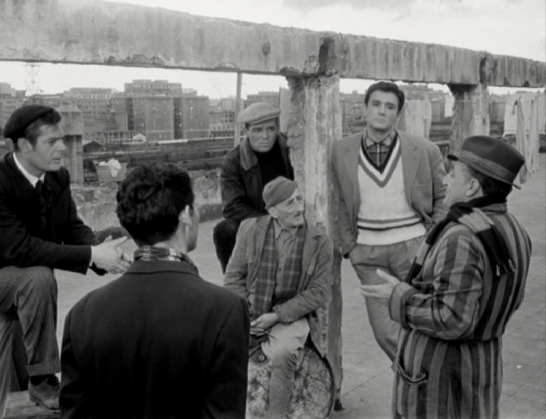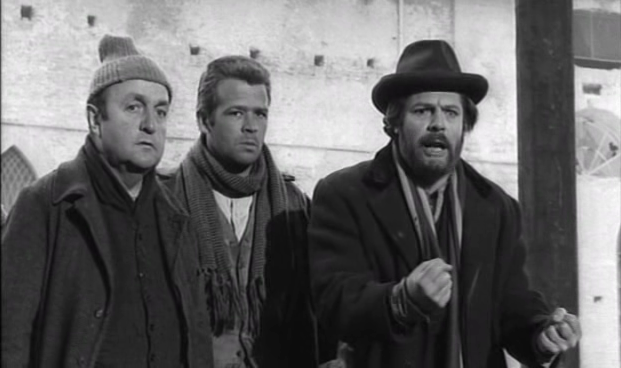
I compagni

The Organizer (I compagni)

Movie · 1963 · 3 people

Mario Monicelli directed I compagni (The Organizer), a drama from 1963. An Italian, French and Yugoslav co-production, it was shot in Italian and runs about 130 minutes. Monicelli wrote the script with the duo Age & Scarpelli, Agenore Incrocci and Furio Scarpelli. Production companies include Lux Film and Vides Cinematografica. In German-speaking countries it was released as Die Peitsche im Genick, and in East Germany as Die Weber von Turin.

The story is set in Turin at the end of the 19th century. Marcello Mastroianni plays Professor Sinigaglia, a labor activist who arrives in the city and throws in his lot with the striking workers of a textile factory. The workers organize against long hours and starvation wages; as the strike drags on and the owners will not yield, their solidarity is tested by hunger, internal divisions and repression. The cast includes Annie Girardot, Renato Salvatori, Folco Lulli, Bernard Blier, Gabriella Giorgelli and François Périer, and Raffaella Carrà also appears.

The film premiered at the 35th Congress of the Italian Socialist Party. It won the Astor d'Oro at the Mar del Plata International Film Festival, was placed among the National Board of Review's top five films of 1963, and its script was nominated for Best Original Screenplay at the 37th Academy Awards.

DirectorMario Monicelli
Production companyLux Film

Reactions

You can pick up to 3 reactions.

Cast

Only cast members with a profile on this site are listed.
Through different eyes

Cinephile Looks at script, editing and directing choices; keeps a distance from formula films.

Monicelli wrote this strike drama with the duo Age & Scarpelli, and the script earned a Best Original Screenplay nomination at the 37th Academy Awards; watching its structure, it is easy to see why. By testing the workers' solidarity with hunger, internal divisions and repression as the strike drags on, it puts the endurance of a community at the centre rather than one hero's triumph. Marcello Mastroianni's Professor Sinigaglia, an outsider who joins that community, brings both momentum and a question mark to the story. But the roughly 130-minute running time weighs on the rhythm, especially in the stretches where the strike drags on; tighter editing could have made it stronger.

History & Society Lens Asks about the period, the social background and what the work reflects.

Set in Turin at the end of the 19th century, the film follows the workers of a textile factory as they organise against long hours and starvation wages. Their solidarity, tested by hunger, internal divisions and repression as the strike drags on, reflects a tension familiar from the history of labour movements. The arrival of an outside intellectual, Professor Sinigaglia, who throws in his lot with the workers, also invites thought about the relationship between intellectuals and working people. That it premiered at a congress of the Italian Socialist Party shows it carried political meaning in its own day as well. A rich text for anyone interested in labour history.

Action & Thriller Fan Puts pace, tension and set pieces first; little patience for slow drama.

Strike, hunger, repression: on paper there is plenty of tension, but the film builds it slowly. It runs about 130 minutes, and for anyone who wants pace the middle stretch is too long. When the workers stand up to the owners there is a real sense of struggle, but getting there takes patience. Give it a go if you love history; if you want something fast, look elsewhere.

These are not reader reviews: they are short editorial takes written from different viewer perspectives with AI assistance. Reader reviews are below.

Reviews (0)

Log in Log in to write a review.

Comments