Bulutlar Arasında Dört Adım

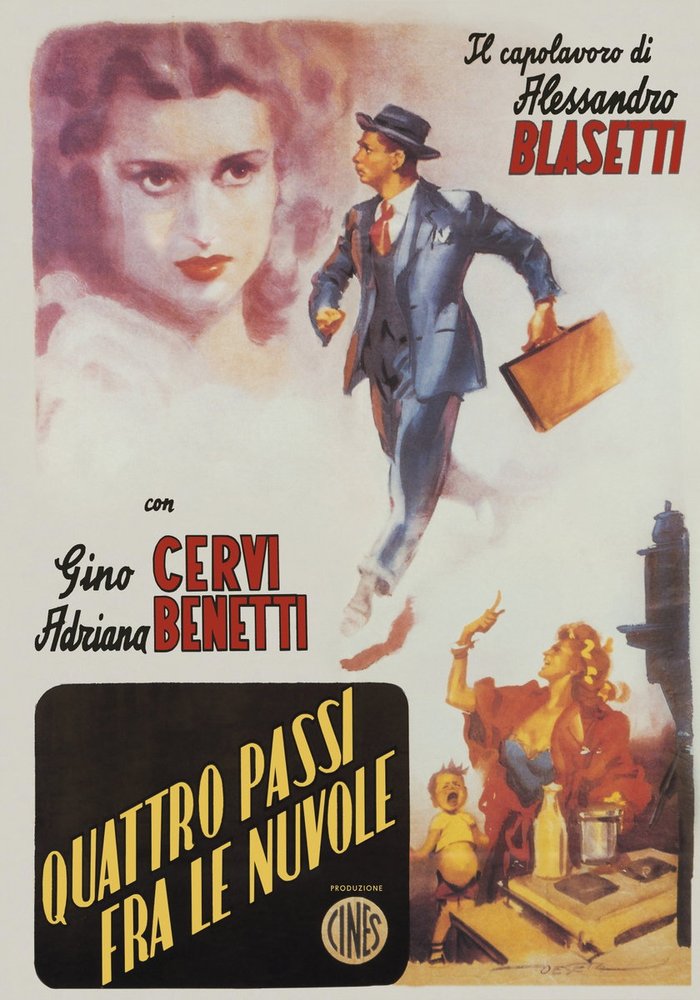
Four Steps in the Clouds (4 passi fra le nuvole)

Movie · 1942 · 15 people

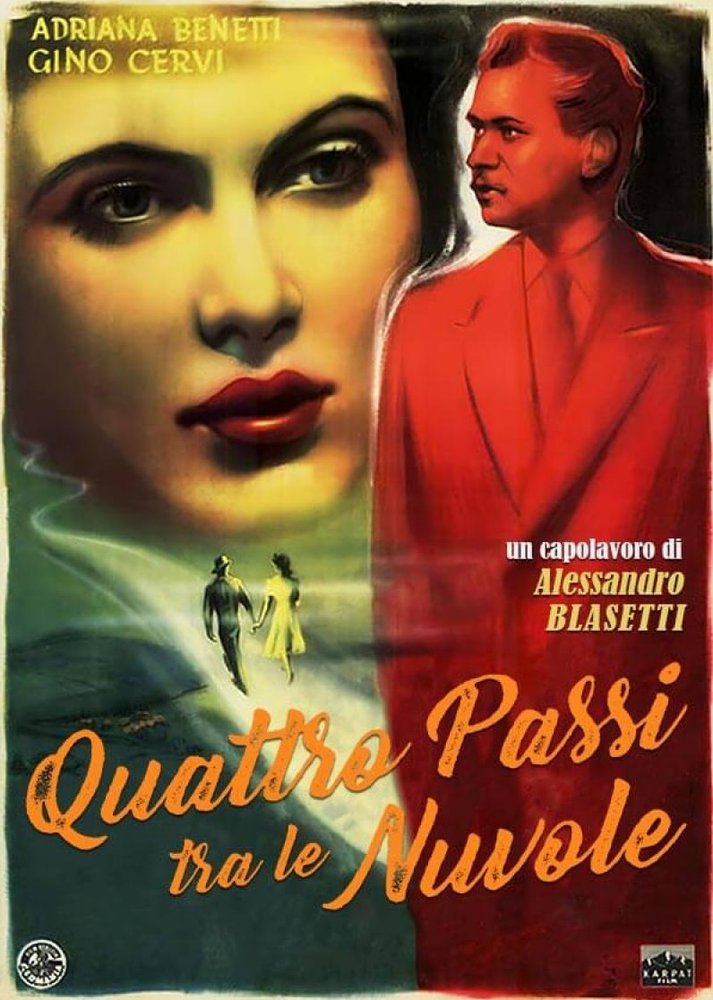
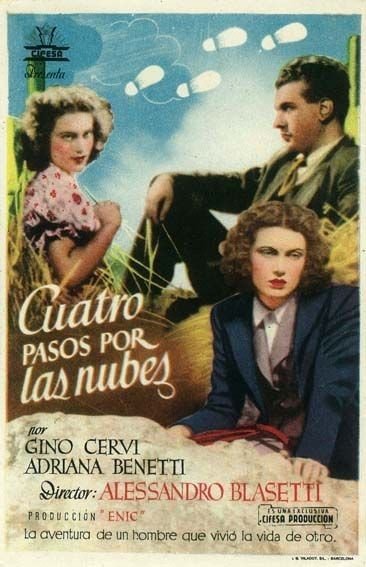
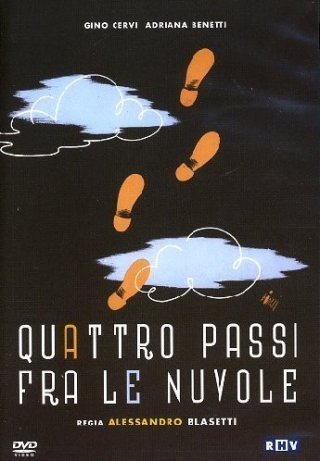
Alessandro Blasetti directed Four Steps in the Clouds (Italian Quattro passi fra le nuvole, Turkish Bulutlar Arasında Dört Adım), a 1942 Italian comedy-drama. A comedy about family relationships that does not shy away from tragic moments, it runs 95 minutes. It tells of a married man who agrees to act as the husband of a young pregnant woman abandoned by her boyfriend. In 2008 it was placed on the Italian culture ministry's list of 100 films to be saved, covering 1942 to 1978, as its oldest title.

Gino Cervi and Adriana Benetti share the leads, with Giuditta Rissone, Carlo Romano and Guido Celano. Blasetti, Cesare Zavattini and the other writers set against the escapist films of fascist-era Italy a view of suburban petty bourgeois and crowded trains. Its outdoor scenes shot on real locations make it resemble the neorealist works after 1943, and it is often called a transitional work toward that movement.

Cines produced it from a screenplay by Blasetti, Aldo De Benedetti and Zavattini. It was shot at Cinecittà in Rome with sets by Virgilio Marchi, and was nominated for the BAFTA for Best Film. It was remade in 1956 and as A Walk in the Clouds in 1995.

DirectorAlessandro Blasetti
Production companyCines
Four Steps in the Clouds (4 passi fra le nuvole) Four Steps in the Clouds (4 passi fra le nuvole) Four Steps in the Clouds (4 passi fra le nuvole)

Reactions

You can pick up to 3 reactions.

Cast

Only cast members with a profile on this site are listed.

Guido Celano Guido Celano Actor · died at 83 Gino Cervi Adriana Benetti Carlo Romano Aldo Silvani Arturo Bragaglia Mario Siletti Margherita Seglin Giuditta Rissone Oreste Bilancia Gildo Bocci Anna Carena Pina Gallini Luciano Manara Armando Migliari

Through different eyes

Cinephile Looks at script, editing and directing choices; keeps a distance from formula films.

Blasetti's film stands on a threshold in film history: a comedy shot at the Cinecittà studios, yet with its exteriors on real locations and its crowded, cramped trains it is counted as a transitional work toward neorealism. Zavattini's presence among the writers suggests that transition was no accident. A married man stepping into the role of another woman's husband is a classic comic device; the film's worth lies in keeping that device open to tragic moments. My reservation is the countryside: showing the villagers as wholly kind-hearted feels too idealised next to the observant realism it turns on suburban life. Still, turning to everyday life at a time dominated by escapist films is no small choice.

History & Society Lens Asks about the period, the social background and what the work reflects.

At a time when cinema in Fascist-era Italy was largely associated with escapist films, Blasetti and his writers showing the suburban petty bourgeoisie, crowded trains and the cramped lives of ordinary people turns the film into a witness to its period. Placing at the centre a pregnant young woman abandoned by her lover hints at how heavy the pressure of family and honour could be for a woman in that society. Setting city against countryside also reflects a longing in the face of modern life's weariness. That the film was remade twice shows these themes have held up across time and place.

Family Viewer Asks whether the whole household can watch it; cares about humour and heart.

A pregnant young woman abandoned by her lover and a married man who plays her husband to help her: the subject may need a little explaining to children. It is a comedy, but it does not shy away from tragic moments. Its focus on kind-hearted people helping one another is a nice message. As an old black-and-white Italian film it is unlikely to hold small children's attention; it suits teenagers and adults better.

These are not reader reviews: they are short editorial takes written from different viewer perspectives with AI assistance. Reader reviews are below.

Reviews (0)

Log in Log in to write a review.

Comments