The Charterhouse of Parma

The Charterhouse of Parma (La Chartreuse de Parme)

Movie · 1948 · 15 people

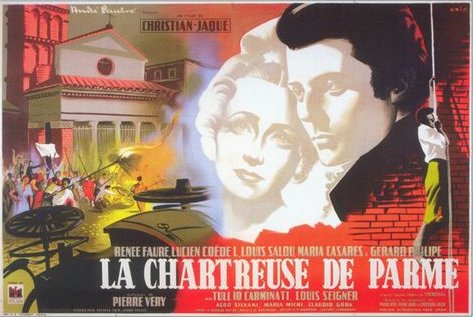
Christian-Jaque directed The Charterhouse of Parma in 1948, a black-and-white historical drama made between France and Italy, where it was titled La Chartreuse de Parme and La Certosa di Parma respectively. Its source is the Stendhal novel of the same name, first published in 1839, and some sources also class the film as a romance. Christian-Jaque wrote the screenplay himself. Produced by André Paulvé, the film opened in Italy on 21 February 1948 and in France on 21 May 1948.

Gérard Philipe, Renée Faure and Maria Casarès lead the cast, which also includes Tina Lattanzi, Attilio Dottesio, Aldo Silvani, Tullio Carminati, Enrico Glori and Louis Seigner. The film runs about 170 minutes and is in French.

The production was made at the Cinecittà Studios in Rome, with location work in Italy around Milan and Lake Como. The sets were by art directors Jean d'Eaubonne and Ottavio Scotti, the costumes by Georges Annenkov and the music by Renzo Rossellini. It competed at the 1948 Locarno International Film Festival, where it was awarded for best cinematography. That year it was the most popular French film at the French box office, and in Italy it earned around 166 million lira on release.

DirectorChristian-Jaque
Production companyScalera Film

Reactions

You can pick up to 3 reactions.

Cast

Only cast members with a profile on this site are listed.
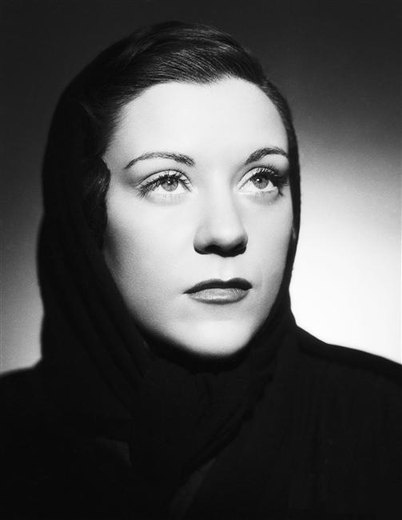
Maria Casarès Maria Casarès Actor · died at 74 Albert Rémy Actor · died at 55 Gérard Philipe Tina Lattanzi Attilio Dottesio Aldo Silvani Tullio Carminati Enrico Glori Nerio Bernardi Evelina Paoli Emilio Cigoli Claudio Ermelli Claudio Gora Jone Salinas Renato Chiantoni

Through different eyes

Yeşilçam Nostalgic A viewer raised on the classics, looking for warm storytelling and strong acting.

Gérard Philipe's name alone is enough to call up the romantic heroes of old cinema. This black-and-white adaptation, bringing the work of a great novelist like Stendhal to the screen, belongs to an era when literature and cinema walked hand in hand. The location shooting around Lake Como and Renzo Rossellini's score give it the elegance you would hope for from a costume drama. Its running time of about 170 minutes may feel long to today's viewers, but it rewards patience with the warmth of classical storytelling. Those who have read the novel will find a pleasure of their own in comparing the two.

Cinephile Looks at script, editing and directing choices; keeps a distance from formula films.

Christian-Jaque's adaptation shows clearly how hard it is to bring a novelist like Stendhal, who leans on his characters' inner lives, to the screen. Writing the screenplay himself gives the film a consistent point of view, but in my view it tends to line up events rather than translate the novel's psychological layers into visual language. Its real strength is visual: studio work at Cinecittà blends well with location shooting around Milan and Lake Como, and the cinematography prize at Locarno rewards exactly that. Jean d'Eaubonne and Ottavio Scotti's sets and Georges Annenkov's costumes build a solid period atmosphere. Visually rich, dramatically it stays in the novel's shadow.

History & Society Lens Asks about the period, the social background and what the work reflects.

That France and Italy came together on a costume drama in 1948, right after the war, is remarkable in itself: the film industries of two countries that had stood on opposite sides a few years earlier meet over a shared European literary heritage. The fact that it was the most-watched French film in France that year also raises a question about what post-war audiences needed: an escape into a lavish historical world, far from the pain of the recent past. Takings of about 166 million lire in Italy point to a similar appetite. It is an interesting window onto the audiences of the time, though it offers a romantic panorama more than a deep treatment of its historical background.

These are not reader reviews: they are short editorial takes written from different viewer perspectives with AI assistance. Reader reviews are below.

Reviews (0)

Log in Log in to write a review.

Comments