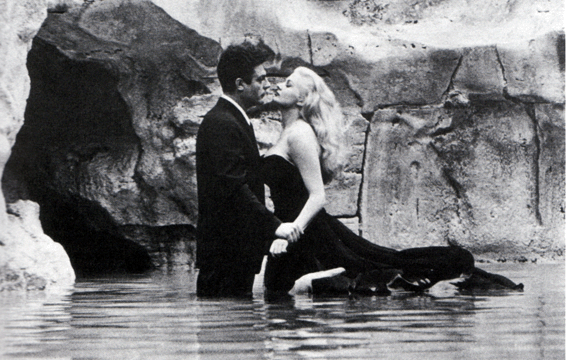
Tatlı Hayat

La Dolce Vita

Movie · 1960 · 15 people

Federico Fellini directed La Dolce Vita (Turkish title Tatlı Hayat, "the sweet life"), a 1960 black-and-white satirical comedy-drama and French-Italian co-production first released in France as La Douceur de vivre. It opened in Italy on 5 February 1960, won the Palme d'Or at Cannes and took the Oscar for costume design, credited to Piero Gherardi, with further nominations for directing, original screenplay and art direction.

The film follows the tabloid journalist Marcello Rubini (Marcello Mastroianni) through seven days and nights in Rome. Assigned to write gossip about high society, he drifts from party to party, searching in vain for love and happiness. He meets the Hollywood star Sylvia (Anita Ekberg), Emma (Yvonne Furneaux) and Maddalena (Anouk Aimée). The screenplay is divided into a prologue, seven long episodes broken by an intermezzo, and an epilogue. The press photographer Paparazzo (Walter Santesso) is the origin of the word "paparazzi".

Fellini, Ennio Flaiano, Tullio Pinelli and Brunello Rondi wrote the screenplay and Nino Rota composed the music. After L'Osservatore Romano called it obscene, it was banned in some countries and reached Spain only in 1980. It was a critical and commercial success and in 2008 joined Italy's list of 100 films to be saved.

DirectorFederico Fellini
Production companyPathé

Reactions

You can pick up to 3 reactions.

Cast

Only cast members with a profile on this site are listed.
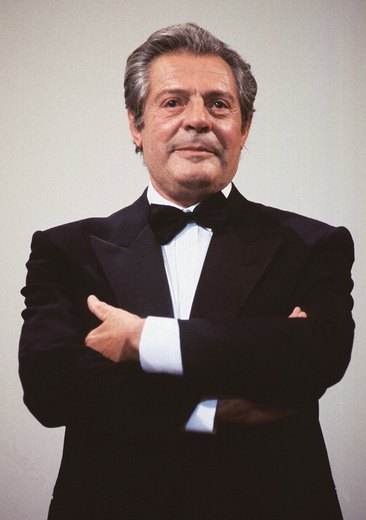
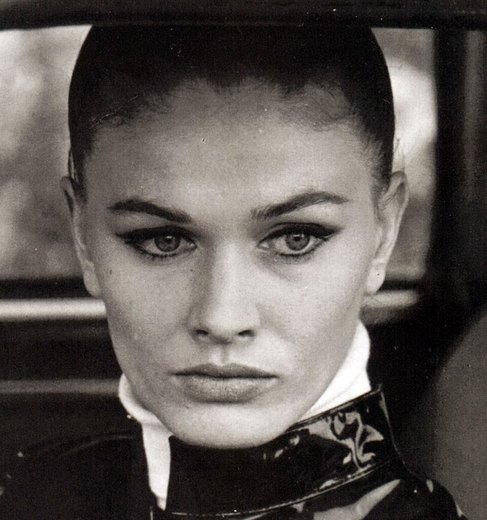
Marcello Mastroianni Marcello Mastroianni Actor · died at 72 Ida Galli Ida Galli Film actor · born 1939 Anita Ekberg Anouk Aimée Yvonne Furneaux Magali Noël Alain Cuny Annibale Ninchi Walter Santesso Valeria Ciangottini Riccardo Garrone Laura Betti Lex Barker Gianni Baghino Polidor
Through different eyes

Cinephile Looks at script, editing and directing choices; keeps a distance from formula films.

The daring of La Dolce Vita lies less in its subject than in its form. Instead of a classical plot, a prologue, seven long episodes broken by an intermezzo and an epilogue turn the hero's drift from party to party into the shape of the story itself: like Marcello, the film wanders without arriving. Nino Rota's music lends this sprawl rhythm and irony. The choice has a cost; for viewers who expect dramatic progress, the long episodes can be tiring, and the film demands patience. But few works in modern cinema match narrative and a character's state of mind so closely; the structure explains the Palme d'Or.

History & Society Lens Asks about the period, the social background and what the work reflects.

The film catches the rise of celebrity culture and the gossip press at its very start. It is no accident that the word paparazzi comes from a supporting character's name: La Dolce Vita foresaw, with almost documentary instinct, a media order in which glamorous lives are photographed and sold. The emptiness and search for meaning behind post-war Rome's glittering surface is also a strong observation about the spirit of the age. That the Vatican newspaper called it obscene and some countries banned it shows where the moral limits of those years lay; those limits have moved since, but the film's question has not aged.

Family Viewer Asks whether the whole household can watch it; cares about humour and heart.

Not a film to watch with children. It is about the adult world, its parties and relationships, and in its day it was called obscene and banned in some countries. It is also made of long, slow-moving episodes that may test even teenagers' patience. For adults with an interest in cinema; older teenagers curious about film history could watch it with their parents and talk it over afterwards.

These are not reader reviews: they are short editorial takes written from different viewer perspectives with AI assistance. Reader reviews are below.

Reviews (0)

Log in Log in to write a review.

Comments