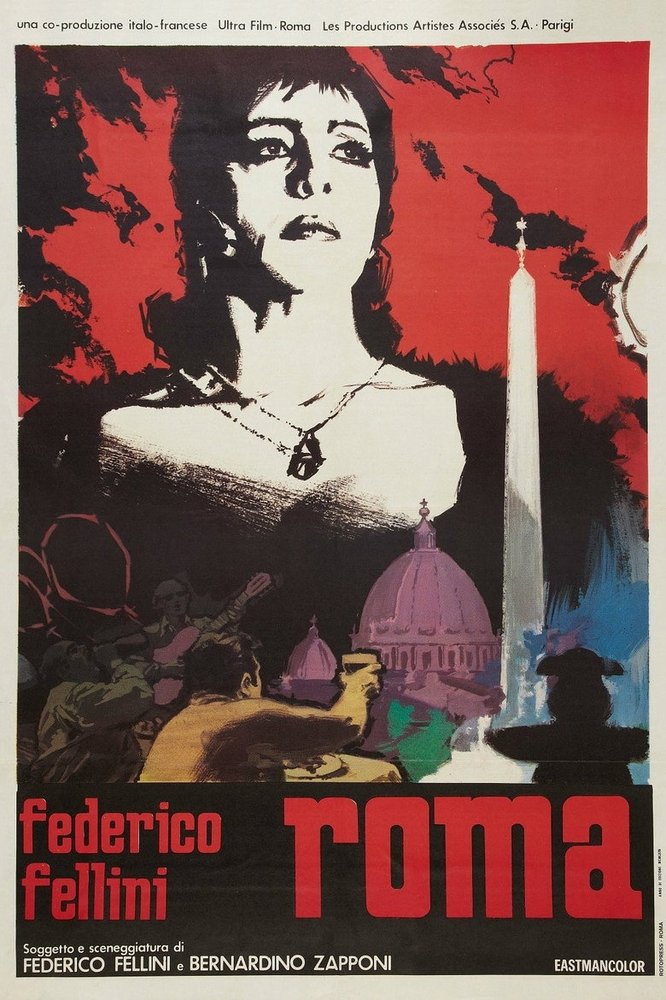
Roma, 1972 filmi

Roma

Movie · 1972 · 15 people

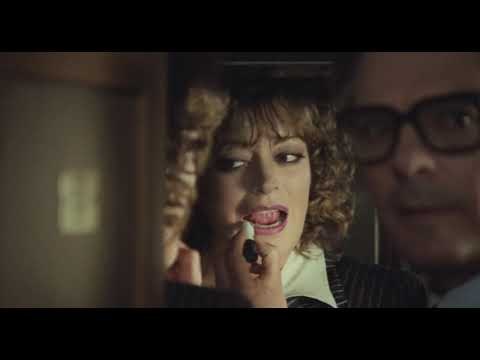
Federico Fellini wrote the 1972 Italian-French semi-autobiographical comedy-drama Roma, also known as Fellini's Roma, together with Bernardino Zapponi. It starts from the director's move as a young man from his native Rimini to Rome and pays homage to the city in loosely connected episodes from Rome's past and present. The 128-minute film was shown out of competition at the 25th Cannes Film Festival, with music by Nino Rota.

The plot is minimal, and the only character to develop significantly is Rome itself. Scenes include the young man's arrival at Termini station, brothels of the Mussolini era, an ecclesiastical fashion show, subway digging that uncovers archaeological treasures, the free love of the hippie generation, a giant traffic jam on the ring road, a variety show during the bombings, a night-time motorcycle procession and scenes of the filming itself. The style shifts from lyricism to satire without a break. Peter Gonzales plays the young Fellini, Pia De Doses is Princess Domitilla and Renato Giovannoli is Cardinal Ottaviani. Marcello Mastroianni, Alberto Sordi and Gore Vidal appear briefly; the rest are mostly newcomers.

United Artists is the production company. One viewer likened it to a sketchbook of Fellini's imagined city.

DirectorFederico Fellini
Production companyUnited Artists

Reactions

You can pick up to 3 reactions.

Cast

Only cast members with a profile on this site are listed.

Marcello Mastroianni Marcello Mastroianni Actor · died at 72 Alberto Sordi Alberto Sordi Film actor · died at 82 Elisa Mainardi Galliano Sbarra Alfredo Adami Ennio Antonelli Feodor Chaliapin Gianluigi Chirizzi Dennis Christopher Franco Citti Ada Crostona Rolando De Santis Marcella Di Folco Francesco Di Giacomo Giovanna Di Vita
Through different eyes

Cinephile Looks at script, editing and directing choices; keeps a distance from formula films.

Roma refuses to tell a story in the classic sense and embraces that not as a lack but as a method. With the city as the only real character, Fellini sets past and present side by side in loose episodes and, by putting the filming itself in the frame, deliberately blurs the line between documentary and dream. The style's unbroken slide from lyricism to satire is the film's most original quality. The same freedom, however, makes the episodes uneven: some sequences carry a great visual exuberance while others never get beyond a sketch, and with no dramatic through-line to carry them, the rhythm sags at times. For anyone not ready to surrender to Fellini's imagination, it is a long journey.

History & Society Lens Asks about the period, the social background and what the work reflects.

The film tells a city's history not in chronological order but in layers. When the brothels of the Mussolini era and a variety show in the years of the bombings meet the free love of the hippie generation and a giant traffic jam on the ring road, Rome's modernisation appears not as a story of progress but as the old and the new piled on top of each other. The archaeological treasures uncovered by the subway digging are perhaps the clearest symbol of this view. One thing to remember, though: this is not a history but a semi-autobiographical memory. We see each era through the director's personal filter and his satirical lens.

Family Viewer Asks whether the whole household can watch it; cares about humour and heart.

This film is not for children. The sections set in Mussolini-era brothels and those given over to the hippie generation's free love make it hard to watch as a family. With no clear story, it may also test teenagers' patience. For adults curious about cinema, though, it is one to watch alone or with a partner, and it will start a long conversation afterwards.

These are not reader reviews: they are short editorial takes written from different viewer perspectives with AI assistance. Reader reviews are below.

Reviews (0)

Log in Log in to write a review.

Comments