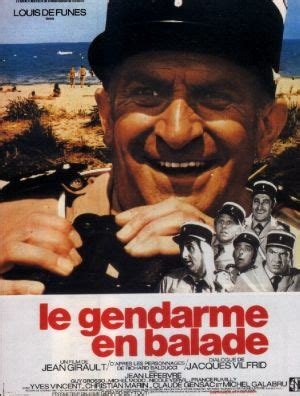
Tatlı Bela New York'ta

Gendarme in New York (Le Gendarme à New York)

Movie · 1965 · 15 people

Jean Girault directed Gendarme in New York (Le Gendarme à New York), a French-Italian comedy from 1965. It follows the unexpected 1964 hit The Troops of St. Tropez and is the second of six films about the Saint-Tropez gendarmes. Louis de Funès suggested a trip abroad so the sequel would feel different from the first.

De Funès returns as the short-tempered yet likeable gendarme Ludovic Cruchot. He and his brigade head to New York for an international gendarmerie congress, not knowing that his daughter Nicole has slipped into the party uninvited. Geneviève Grad plays Nicole. The brigade includes Michel Galabru, Jean Lefebvre, Christian Marin and the double act Grosso and Modo, while France Rumilly reappears as a nun.

The trip let De Funès salute silent-film greats he admired, such as Charlie Chaplin and Harold Lloyd, and a ballet sequence between policemen and street thugs sends up West Side Story. The Atlantic crossing was shot aboard the liner France, other scenes in New York and at the Billancourt studios. Paul Mauriat and Raymond Lefèvre wrote the score. Critics were divided, but it sold 5.4 million tickets in France, a respectable result for a sequel. The series continued with Le Gendarme se marie in 1968.

DirectorJean Girault
Production companySociété nouvelle de distribution

Reactions

You can pick up to 3 reactions.

Cast

Only cast members with a profile on this site are listed.

Michel Galabru Michel Galabru Film actor · died at 93 Dominique Zardi Actor · died at 79 Louis de Funès Mario Pisu Tiberio Murgia Geneviève Grad Jean Lefebvre Christian Marin Guy Grosso Michel Modo Alan Scott Albert Augier Alexander Scourby Billy Kearns France Rumilly

Through different eyes

Family Viewer Asks whether the whole household can watch it; cares about humour and heart.

Louis de Funès's short-tempered yet likeable gendarme is the kind of character who can make viewers of any age laugh. His daughter Nicole, who joins the trip without his knowledge, adds family warmth to the story. The subject is light; everyone from grandparents to grandchildren can watch together. My one caution: as an older comedy, some of its jokes may feel slow to today's kids.

Cinephile Looks at script, editing and directing choices; keeps a distance from formula films.

The classic problem of sequels is that they cannot repeat the surprise of the first film; De Funès's suggestion to take the story abroad is a deliberate way around it. The trip gives him the chance to salute silent-film masters he admired, such as Charlie Chaplin and Harold Lloyd, and the ballet sequence between policemen and street thugs that sends up West Side Story is the film's most cinephile moment. Still, the structure leans, in my view, on a sketch logic of gags strung one after another, so the critics' divided response is understandable. Valuable for anyone interested in the history of physical comedy, loose for anyone wanting a tight narrative.

History & Society Lens Asks about the period, the social background and what the work reflects.

The film works as a playful reflection of 1960s Europe's fascination with America: the Saint-Tropez gendarmes travel to New York for an international congress, and people from a small seaside town are set against the big city. Shooting the Atlantic crossing aboard the liner France also brings post-war France's images of modernity and prestige into the frame. Selling 5.4 million tickets in France suggests audiences enjoyed seeing these local types in a foreign setting. The cultural comparison has limited depth; the film can be watched as a light document of the outlook of its time.

These are not reader reviews: they are short editorial takes written from different viewer perspectives with AI assistance. Reader reviews are below.

Reviews (0)

Log in Log in to write a review.

Comments