Barfuss

Barfuss

Movie · 2005 · 15 people

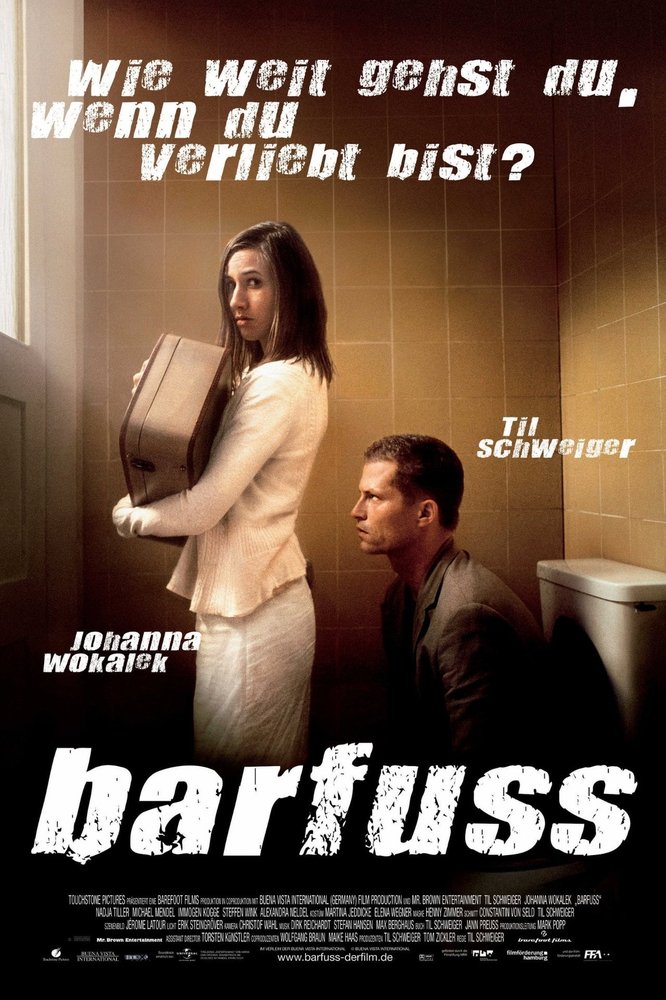
Actor and director Til Schweiger made Barfuss (Barefoot in English, "Pieds nus" in French), a 2005 German romantic comedy-drama with a tragicomic streak. It is in German, runs 110 minutes and was released in Germany on 31 March 2005. Schweiger is at the centre of the production: he plays the lead, directed, co-produced and co-wrote the script. The film's tagline asks how far you would go when you are in love.

Nick Keller, played by Schweiger, is a hedonistic bachelor with no wish to commit. His life changes when he meets Leila, a young woman who has escaped from a psychiatric hospital. He starts to help her and gradually falls in love with her. Johanna Wokalek plays Leila, and the cast also includes Nadja Tiller, Michael Mendl, Michael Gwisdek and Steffen Wink, with Alexandra Neldel, Axel Stein, Armin Rohde and Jürgen Vogel also listed.

Schweiger wrote the screenplay with Nika von Altenstadt and Jann Preuss, working from an original screenplay and story called Barefoot by the American writer Stephen Zotnowski. An American remake with the same title followed in 2014.

DirectorTil Schweiger

Reactions

You can pick up to 3 reactions.

Cast

Only cast members with a profile on this site are listed.

Michael Mendl Michael Mendl Actor · 82 years old Michael Gwisdek Michael Gwisdek Film actor · died at 78 Til Schweiger Johanna Wokalek Alexandra Neldel Nadja Tiller Steffen Wink Janine Kunze Axel Stein Markus Maria Profitlich Éric Judor Mark Keller Imogen Kogge Armin Rohde Jürgen Vogel

Through different eyes

Cinephile Looks at script, editing and directing choices; keeps a distance from formula films.

Barfuss is Til Schweiger's film from start to finish: he plays the lead and is also director, co-producer and co-writer. That concentration gives it a personal consistency but tips the balance too; the story serves Nick's transformation at almost every turn. A man who runs from commitment and is changed by meeting an unusual woman is one of romantic comedy's oldest formulas, and the film chooses to polish it rather than question it. The tragicomic tone works in places, but inside a structure short on surprises. That an American remake with the same title followed in 2014 shows how readily the idea fits the mould.

History & Society Lens Asks about the period, the social background and what the work reflects.

The film's starting point is the growing closeness between a young woman who has escaped from a psychiatric hospital and a man who runs from commitment. The setup recalls a common use of mental illness in cinema, where the condition works less as the character's own story than as something that changes someone else's life. Told in a romantic-comedy key, serious questions about institutional care, escape and responsibility can easily slip into the background. Still, it should be granted that the film argues, in good faith, for showing closeness to someone pushed to society's margins.

Family Viewer Asks whether the whole household can watch it; cares about humour and heart.

It may look like a romantic comedy, but the subject isn't light: a young woman who has escaped from a psychiatric hospital and a man who helps her. I don't think it's for small children, since mental health is something that needs explaining. High-school teens and adults can watch it together, and it's a chance to talk about what love and responsibility really mean.

These are not reader reviews: they are short editorial takes written from different viewer perspectives with AI assistance. Reader reviews are below.

Reviews (0)

Log in Log in to write a review.

Comments