Banyo

The Bathroom (Banyo)

Movie · 2005 · 3 people

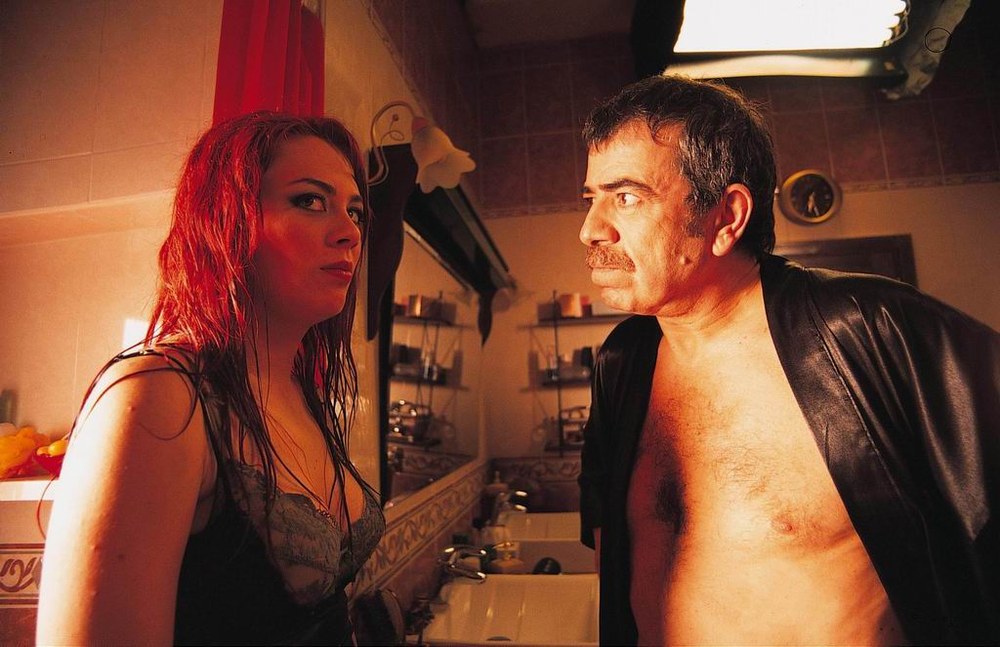
Mustafa Altıoklar directed Banyo (The Bathroom), a Turkish comedy from 2005 whose erotic and crime-tinged edge sets it apart from plain comedy. Released on September 2, 2005, it runs about 87 minutes. Altıoklar wrote the script from Gül Abus Semerci's stage play of the same name. The producers are Mehmet Altıoklar, Şahin Alparslan and Emine Altıoklar, and the film was the first release from the director's family production company.

Its defining choice is location: the whole story unfolds in three bathrooms. Two belong to adjoining apartments, and the third looks straight at them from across the way. Through this narrow frame, which looks into the most private corner of a home, the secrets of three separate couples intertwine with the story of an art student who, while researching a project, passes for a peeping young man. Male-female clashes, concealed betrayals and quietly growing selfishness reach the screen through this window. The cast includes Selçuk Yöntem, Burak Sergen and Demet Evgar, together with Seray Sever and Janset as Nesrin.

Altıoklar had made his big breakthrough with İstanbul Kanatlarımın Altında and has since been one of Turkish cinema's prolific names. One critic found the film middling, giving it 2.5 and a pass, while viewers rated it 2.0 across 619 votes.

DirectorMustafa Altıoklar
The Bathroom (Banyo) The Bathroom (Banyo)

Reactions

You can pick up to 3 reactions.

Cast

Through different eyes

Cinephile Looks at script, editing and directing choices; keeps a distance from formula films.

The most interesting thing about Banyo is its formal idea on paper: confining the whole story to three bathrooms and setting up one of them as a vantage point looking straight into the others. Since voyeurism is tied directly to the act of watching films, the device promises something meta. Yet the adaptation of Gül Abus Semerci's play never settles its tone between comedy, erotic tension and crime. As the secrets of three couples are woven together with the art student's story, the narrative comes across as scattered. There are strong performers such as Selçuk Yöntem and Demet Evgar, but the narrow frame often seems to confine them to a single note.

Family Viewer Asks whether the whole household can watch it; cares about humour and heart.

This is not a family film. It has erotic tension, betrayal and crime, and at its heart is the act of peeking into people's most private moments. Watching it in the same room as children or grandparents could be awkward. Adults who want to watch it on their own can expect a mix of comedy and serious subjects.

History & Society Lens Asks about the period, the social background and what the work reflects.

By turning the most private room of the home into a stage, Banyo tries to expose hidden tensions, betrayals and quietly growing selfishness in relationships between men and women. How close and yet how estranged people living side by side and face to face in apartment blocks can be is the film's most interesting idea from a social point of view. What it says about the couples, though, often stays on the surface; rather than digging into a timely subject like privacy and surveillance, it opts to escape into comedy. Still, it is worth a look for how Turkish cinema of the mid-2000s viewed marriage and fidelity.

These are not reader reviews: they are short editorial takes written from different viewer perspectives with AI assistance. Reader reviews are below.

Reviews (0)

Log in Log in to write a review.

Comments