Prisoner of Love (Aşk Mahkumu)

Prisoner of Love (Aşk Mahkumu) (translated)

Movie · 1973 · 15 people

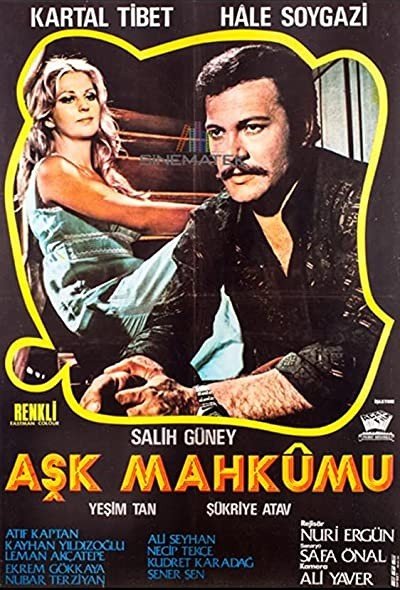
A Turkish drama from 1973, Aşk Mahkumu ("Prisoner of Love") opened on 1 October 1973. It was directed by Nuri Ergün from a screenplay by Safa Önal, produced by Berker İnanoğlu for Er Film. Shot in colour on 35 mm and running about 82 minutes, it stars Kartal Tibet and Hale Soygazi.

At its centre is Orhan (Kartal Tibet), the irresponsible, womanizing son of a rich family. His distant relative Selma (Hale Soygazi) loses her ability to speak from the trauma of losing both parents in a car accident, and takes shelter in Orhan's family home. Selma falls in love with Orhan, but in a moment he cannot control himself and wrongs her badly. The shock loosens her tongue, and she leaves the house. Once she is gone, Orhan realizes that he loves her and has treated her unjustly, and he sets out to find her.

The cast also includes Salih Güney as Kenan, Yeşim Tan as Tülay, Leman Akçatepe as Şaziye and Atıf Kaptan as Rıfat, with Şener Şen, Kayhan Yıldızoğlu and Nubar Terziyan as doctors. Ali Yaver was the director of photography.

DirectorNuri Ergün
Production companyEr Film

Reactions

You can pick up to 3 reactions.

Cast

Through different eyes

Yeşilçam Nostalgic A viewer raised on the classics, looking for warm storytelling and strong acting.

Written by Safa Önal and pairing Kartal Tibet with Hale Soygazi, this is a typical colour melodrama of the seventies. A woman fallen silent through grief and an irresponsible, womanizing rich man's son: Yeşilçam worked this contrast many times, and a familiar melody plays here too. An eye raised on the classics will find some warmth in that familiarity. Still, resting the whole weight of the story on Orhan's belated remorse feels a little too easy today; it never quite reaches the moral depth of the period's best melodramas.

History & Society Lens Asks about the period, the social background and what the work reflects.

The film follows a pattern common in Turkish melodrama of the seventies: a man who has badly wronged a woman realizes he loves her only after she leaves, and sets out after her. Seen from today, that structure is troubling; Orhan's wrong is used as a step in his own transformation, and Selma's ordeal risks being pushed into the background. The vulnerability of a woman who loses her parents and takes shelter with well-off relatives also says something about family and patronage ties of the period. Read as a document of how those years looked at women, the film has more to say.

Family Viewer Asks whether the whole household can watch it; cares about humour and heart.

This is not a film to watch with children. The story involves a woman who loses her family in an accident and her ability to speak, and a man who does her a grave wrong. The subject is heavy. Older family members may enjoy seeing Kartal Tibet and Hale Soygazi again. But it is better watched among adults, after the little ones are in bed.

These are not reader reviews: they are short editorial takes written from different viewer perspectives with AI assistance. Reader reviews are below.

Reviews (0)

Log in Log in to write a review.

Comments