Paris Memories

Paris Memories (Revoir Paris)

Movie · 2022 · 6 people

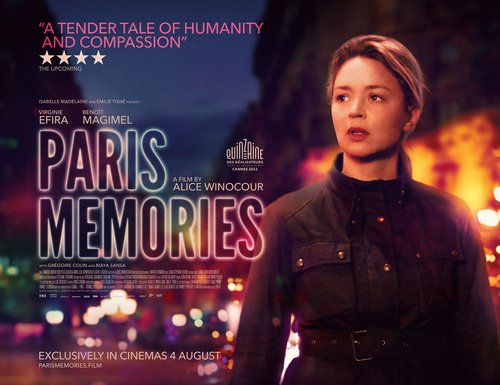
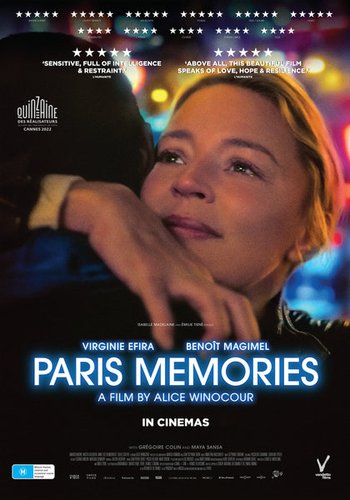
A woman coping with the aftermath of surviving a terrorist attack is at the heart of Paris Memories (original French title Revoir Paris), which tells her story through the slow piecing together of fragments of memory. Alice Winocour wrote and directed this 2022 French drama. Both French and English are spoken. The film had its world premiere on 21 May 2022 in the Directors' Fortnight at Cannes and reached Turkish cinemas on 21 July 2023.

On an autumn evening Mia, a translator, goes to a restaurant in Paris and is caught up in an attack. Three months later she is still in shock and holds only broken images of that night. Wanting her old life back, she starts looking into the event and the other victims, trying to reassemble her memories. Virginie Efira plays Mia, with Benoît Magimel as Thomas, Grégoire Colin as Vincent and Maya Sansa as Sara. Amadou Mbow, Nastya Golubeva, Anne-Lise Heimburger, Sofia Lesaffre and Clarisse Makundul also appear.

Winocour wrote the screenplay with Jean-Stéphane Bron and Marcia Romano, and Dharamsala produced. The film runs about an hour and forty-five minutes, and the following year Efira won the César for Best Actress at the 48th César Awards for her performance.

DirectorAlice Winocour
Production companyDharamsala
Paris Memories (Revoir Paris) Paris Memories (Revoir Paris)

Reactions

You can pick up to 3 reactions.

Cast

Only cast members with a profile on this site are listed.

Grégoire Colin Grégoire Colin Film actor · 51 years old Virginie Efira Benoît Magimel Maya Sansa Amadou Mbow Nastya Golubeva Carax

Through different eyes

Cinephile Looks at script, editing and directing choices; keeps a distance from formula films.

Winocour's smartest decision is to build the attack not as a thriller set piece but as scattered fragments of memory. As the narrative moves along the gaps in Mia's mind, the viewer turns less to the event itself than to the moments that are missing, an elegant way of avoiding the trap of turning trauma into spectacle. The risk lies in the structure itself: an edit built on slotting pieces back one by one is prone to repetition in its later stretches and can dilute the emotional impact. In a design like this most of the weight falls on the lead, and Efira's César for the role suggests the film was entrusted to someone able to carry it.

History & Society Lens Asks about the period, the social background and what the work reflects.

The film takes terrorism out of the headlines and looks at the lives left behind after an attack, which to me is its real value. Mia tracing the other victims who were there that night raises the question of how a shared wound can turn strangers into a kind of community. Making her a translator hardly seems accidental: someone whose job is to carry other people's words is now searching for words to tell what happened to her. English sitting alongside French in the dialogue reflects the mixed texture of a cosmopolitan city. For anyone interested in the lasting mark violence leaves on individuals, it is a measured piece of work.

Family Viewer Asks whether the whole household can watch it; cares about humour and heart.

The subject is heavy: a terrorist attack and the trauma that follows. So this is not a film for young children. Don't expect a fast story either; it lingers mostly in one woman's inner world and her struggle to piece her memories together. It suits adults and older teenagers who can handle the theme. It is the kind of film people may need to talk about afterwards, so put it on at home with that in mind.

These are not reader reviews: they are short editorial takes written from different viewer perspectives with AI assistance. Reader reviews are below.

Reviews (0)

Log in Log in to write a review.

Comments