Augustine

Augustine

Movie · 2012 · 15 people

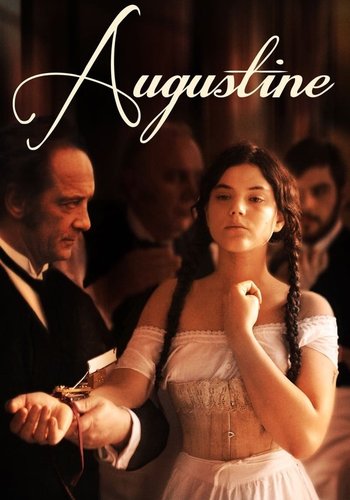
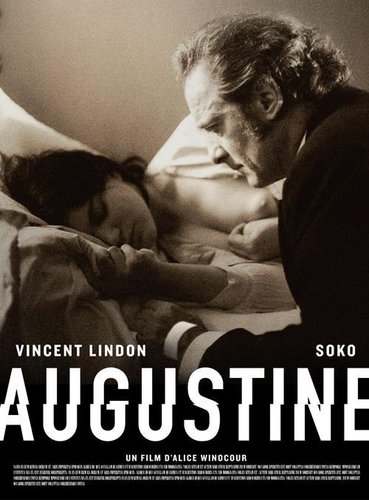
Alice Winocour made her feature debut as a director with Augustine, a French historical drama from 2012 that she also wrote, with an erotic streak running alongside the drama. Running about 102 minutes and shot entirely in French, it draws on real people to tell of the closeness between a physician and his patient.

The story is set in nineteenth-century France. The neurologist Jean-Martin Charcot treats Louise Augustine Gleizes, a young woman working as a kitchen maid who has been diagnosed with hysteria and, after a violent seizure, is partly paralysed down her left side. The patient is known as "Augustine" or "A." The film imagines a deepening passion between the two, although the sources say that in reality no such relationship existed. The cast is led by Vincent Lindon, Grégoire Colin, Soko and Chiara Mastroianni, with Grégory Gadebois, Olivier Rabourdin and Sophie Cattani also appearing.

The film first met an audience in the Special Screenings section of the 2012 Cannes Film Festival and then played in the Discovery section of the Toronto International Film Festival. It opened in French cinemas on 7 November 2012 and reached a limited number of screens in the United States on 17 May 2013 through Music Box Films.

DirectorAlice Winocour
Augustine Augustine

Reactions

You can pick up to 3 reactions.

Cast

Only cast members with a profile on this site are listed.

Grégoire Colin Grégoire Colin Film actor · 51 years old Vincent Lindon Vincent Lindon Actor · 67 years old Soko Aurore Broutin Chiara Mastroianni Déborah Révy Frans Boyer Grégory Gadebois Jean-Claude Baudracco Lise Lamétrie Olivier Rabourdin Roxane Duran Sophie Cattani Stéphan Wojtowicz Audrey Bonnet

Through different eyes

Cinephile Looks at script, editing and directing choices; keeps a distance from formula films.

Winocour's first feature is a tightly controlled film that frames the doctor-patient relationship as a regime of looking. By centring the gaze of a physician who observes and classifies his patient, it knowingly risks making the viewer complicit in that gaze; to me that is the film's boldest and most uncomfortable side. Having one person write and direct gives the idea a consistent frame. But as the script builds up a passion between the two, it drifts away from this sharp approach towards a more familiar historical-romance line. That the sources say no such relationship existed makes the choice all the more debatable.

History & Society Lens Asks about the period, the social background and what the work reflects.

The film is at its strongest when it centres the question of who received a diagnosis of 'hysteria' in nineteenth-century France, and how. A young woman working as a kitchen maid becoming a famous physician's research subject shows how class and gender relations seeped into medicine. Yet building an imagined passion between real people who, according to the sources, had no such relationship blurs that historical critique. Anyone wanting to learn about Charcot and his patient should treat the film as a free interpretation, not a record.

Family Viewer Asks whether the whole household can watch it; cares about humour and heart.

This isn't one for the family. It has an erotic streak and shows heavy subjects such as illness, seizures and paralysis openly. I wouldn't find it suitable for watching with children or with grandparents, and it may be too heavy for teenagers as well. Adults who like historical dramas are better off watching it on their own.

These are not reader reviews: they are short editorial takes written from different viewer perspectives with AI assistance. Reader reviews are below.

Reviews (0)

Log in Log in to write a review.

Comments