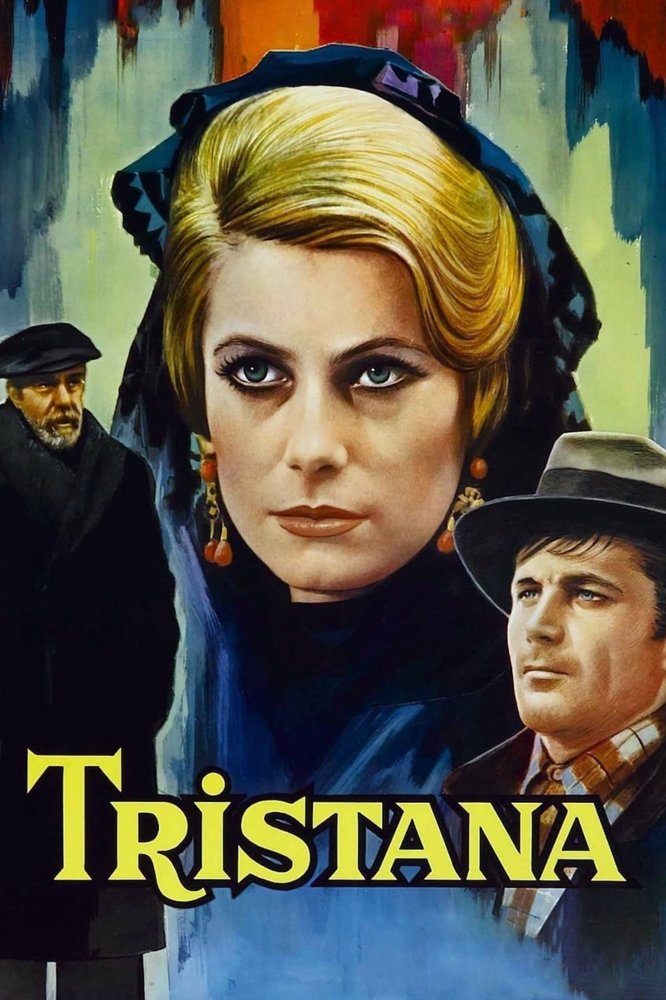
Gündüz Güzeli

Belle de Jour

Movie · 1967 · 3 people

Luis Buñuel directed the 1967 French-Italian surrealist erotic psychological drama Belle de Jour (Turkish title Gündüz Güzeli). Buñuel and Jean-Claude Carrière adapted Joseph Kessel's 1928 novel, and the film counts among Buñuel's most successful and famous works. It won the Golden Lion and the Pasinetti Award for Best Film at Venice that year and brought Catherine Deneuve a BAFTA nomination for Best Actress. For Deneuve it was her second acclaimed success after The Umbrellas of Cherbourg.

Deneuve plays Séverine Serizy, a young bourgeois woman married to Pierre (Jean Sorel), a wealthy and handsome doctor. Her marriage looks untroubled, yet she cannot shake her fantasies. On certain afternoons she begins working under the pseudonym 'Belle de jour' in an upscale brothel run by Madame Anaïs (Geneviève Page). The line between reality and fantasy keeps blurring. The cast also includes Michel Piccoli, Francisco Rabal, Pierre Clémenti, Francis Blanche and Georges Marchal. The title plays on 'belle de nuit', the French term for a prostitute, and on a flower that blooms only by day.

The film was Buñuel's first in color, and Yves Saint Laurent designed many of the costumes. Martin Scorsese promoted a limited US re-release and a 2002 DVD edition.

DirectorLuis Buñuel

Reactions

You can pick up to 3 reactions.

Cast

Only cast members with a profile on this site are listed.

Through different eyes

Cinephile Looks at script, editing and directing choices; keeps a distance from formula films.

There is good reason it counts among Buñuel's most famous works. The screenplay, adapted from Joseph Kessel's novel with Jean-Claude Carrière, keeps blurring the line between reality and fantasy, leaving the viewer unsure of what is actually happening. Catherine Deneuve's Séverine carries the tension beneath a seemingly flawless bourgeois marriage with cool elegance. Being Buñuel's first colour film, with many costumes by Yves Saint Laurent, it turns its polished surface into a deliberate mask. Its Golden Lion at Venice comes as no surprise. One caveat, though: a structure that so deliberately preserves ambiguity may leave viewers who want a clear-cut story out in the cold.

Family Viewer Asks whether the whole household can watch it; cares about humour and heart.

This is not one for family viewing. It is about a young married woman who starts working some afternoons in an upscale brothel. It's an erotic psychological drama, and its adult themes run all the way through. It is not suitable for children or teenagers. Adults who love classic cinema should watch it on their own. Just because it's a famous film doesn't mean you should put it on in front of everyone.

History & Society Lens Asks about the period, the social background and what the work reflects.

Belle de Jour looks behind the closed doors of the 1960s French bourgeoisie. The inner life of Séverine, married to a wealthy, handsome doctor and leading a life that looks peaceful from the outside, exposes the gulf between social respectability and repressed desire. Even the title carries this duality, tying a term that belongs to the night to the daytime and to a flower that blooms only by day. For its time, it is a bold text on female sexuality, the institution of marriage and class hypocrisy. Watched today, some aspects of its approach may seem open to debate, and it is worth remembering that a woman's fantasies are told largely through the eyes of male creators.

These are not reader reviews: they are short editorial takes written from different viewer perspectives with AI assistance. Reader reviews are below.

Reviews (0)

Log in Log in to write a review.

Comments