Tristana

Tristana

Movie · 1970 · 15 people

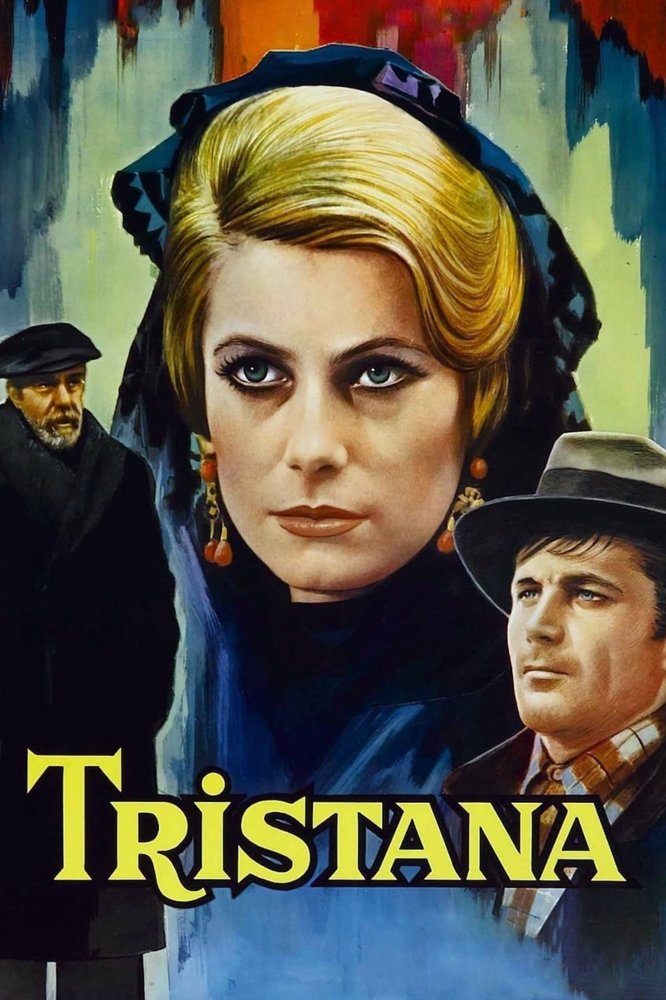
Directed by Luis Buñuel from Benito Pérez Galdós's 1892 novel, Tristana arrived as a drama in 1970. A Spanish-French-Italian co-production, it is Buñuel's second Galdós adaptation after Nazarín. It was nominated for Best Foreign-Language Film at the 43rd Academy Awards, screened out of competition at Cannes, and in 1996 was voted the tenth best Spanish film of all time.

The story unfolds in Toledo at the end of the nineteenth century. Fernando Rey plays Don Lope, an aging nobleman who raises the young Tristana (Catherine Deneuve) in his house and later claims her for himself. What begins as protectiveness hardens into possessive control. Tristana turns to art and, after meeting the young painter Horacio (Franco Nero), leaves the household, though her search for freedom takes an unexpected course. Lola Gaos appears as the servant Saturna.

Buñuel made the film on his return to his native country after years working abroad. He co-wrote the screenplay with Julio Alejandro and produced it himself. Deneuve and Nero, who did not speak Spanish, were dubbed in Spanish. As in many of his films, Buñuel criticises Christianity and the bourgeoisie, sometimes through symbols and sometimes openly.

DirectorLuis Buñuel
Production companyLes Films Corona

Reactions

You can pick up to 3 reactions.

Cast

Only cast members with a profile on this site are listed.

Catherine Deneuve Catherine Deneuve Film actor · 83 years old Aldo Sambrell Aldo Sambrell Film actor · died at 79 Fernando Rey Franco Nero Lola Gaos Antonio Casas Jesús Fernández José Calvo Fernando Cebrián Antonio Ferrandis José María Caffarel Cándida Losada Joaquín Pamplona Mary Paz Pondal Juanjo Menéndez

Through different eyes

Cinephile Looks at script, editing and directing choices; keeps a distance from formula films.

Tristana is one of the mature examples of Buñuel's skill at slipping symbols into a realistic narrative. The story could have been told as a straight melodrama: an ageing guardian, a young woman, an escape. But because Buñuel follows, with cool detachment, the process by which attention hardens into pressure and protection into possession, the film doesn't let viewers identify easily with its characters. That distance may feel cold to some; anyone looking for an emotional peak may not find it. Dubbing Deneuve and Nero into Spanish also leaves the performances partly behind a veil. Yet the critique of Christianity and the bourgeoisie, sometimes through symbols and sometimes openly, shows the director's signature is as sharp as ever.

History & Society Lens Asks about the period, the social background and what the work reflects.

Set in late nineteenth-century Toledo, the film examines the dominance that a man, wealth and religion exert over a woman's life. Don Lope's guardianship turning into possession plainly shows how few options a woman dependent on a man's protection had in that society. Tristana's turn to art reads like a sign of how narrow the door to freedom was for a woman of that era. Buñuel returning to his country with this story after many years working abroad also lets the film be read as a reckoning with the order of Spain's own past.

Family Viewer Asks whether the whole household can watch it; cares about humour and heart.

This is not a family-night film. An old man trying to bind to himself the young woman he raised in his house makes for a heavy story about pressure and possession. It is not suitable for children, and teenagers may find the subject disturbing too. It is better for adults to watch on their own or with friends who are interested in cinema.

These are not reader reviews: they are short editorial takes written from different viewer perspectives with AI assistance. Reader reviews are below.

Reviews (0)

Log in Log in to write a review.

Comments