Günahsızlar

The Innocent (Günahsızlar) (translated)

Movie · 1944 · 8 people

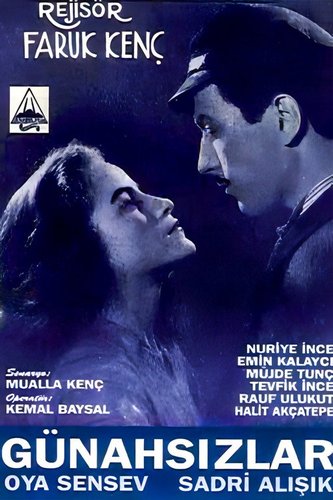
Faruk Kenç directed and produced Günahsızlar, a black-and-white Turkish drama shot in 1944. It was made for İstanbul Film and reached theaters on December 5, 1945. Mualla Kenç wrote the screenplay, Kemal Baysal was the cinematographer and Sadi Işılay supplied the music, with folk songs performed by Aziz Şenses and songs by Müzeyyen Senar. Made before Yeşilçam's studio order had settled, it is an early Turkish film.

The story takes place in a fishing village. When a woman cast out by society is killed, her daughter is left alone in the world. The village headman entrusts the girl to a fishing family he trusts. The family's young son gradually falls in love with her. Sadri Alışık plays the fisherman, and the cast also includes Oya Sensev, Nuriye İnce, Emin Kalaycı, Müjde Tunç, Tevfik İnce, Rauf Ulukut, Halit Akçatepe, Eyüp Sabri, Ahmet Güldürür, Ferdi Merter and Sabahat Denker.

By the director's later account, the censors would not allow a love for such a woman's daughter. Kenç said that such marriages happened in real life but were unacceptable on screen, and that he rewrote the script during shooting and put other characters in between to save the film.

DirectorFaruk Kenç
Production companyİstanbul Film

Reactions

You can pick up to 3 reactions.

Cast

Sadri Alışık Actor · died at 69 Halit Akçatepe Halit Akçatepe Actor · died at 78 Oya Sensev Nuriye İnce Emin Kalaycı Müjde Tunç Tevfik İnce Rauf Ulukurt

Through different eyes

Yeşilçam Nostalgic A viewer raised on the classics, looking for warm storytelling and strong acting.

Made before Yeşilçam's studio system had taken shape, this modest film now stands as a document of beginnings. An orphaned girl being entrusted to a fisherman's family puts the feeling our old cinema loved best, compassion, at the heart of the story from the very early years. That chain of care, running from the village headman to the fisherman's household, carries a moral warmth the later classics would return to again and again. It is natural for it to look dated technically today; it should be weighed on its own terms, not against the great melodramas that followed.

History & Society Lens Asks about the period, the social background and what the work reflects.

The most instructive thing about the film is the censorship story behind it. According to the director, the censorship board would not allow a romance with the daughter of a woman pushed to society's margins, so Kenç had to rework the script during shooting and add new characters. It shows how, in 1940s Turkey, a morality built on lineage and reputation could ban on screen even what was possible in real life. The title is telling in this light: it implies the girl cannot be held responsible for her mother's life. In other words, while it was still being made, the film ran into its own question of whether stigma passes from one generation to the next.

Cinephile Looks at script, editing and directing choices; keeps a distance from formula films.

For an early production, what makes Günahsızlar interesting is how it puts music at the centre of the storytelling: Aziz Şenses in the folk songs and Müzeyyen Senar in the popular songs add a layer that brings in the popular taste of the day. It can be read as an early trace of the song-driven pattern that would become common in Yeşilçam melodrama. On the other hand, a script reworked during shooting, with characters slotted in, struggles to keep its dramatic unity; patches like that tend to dilute the central conflict and break the rhythm. Less a masterpiece than a valuable source for Turkish film history.

These are not reader reviews: they are short editorial takes written from different viewer perspectives with AI assistance. Reader reviews are below.

Reviews (0)

Log in Log in to write a review.

Comments