Coriolanus

Coriolanus

Movie · 2011 · 3 people

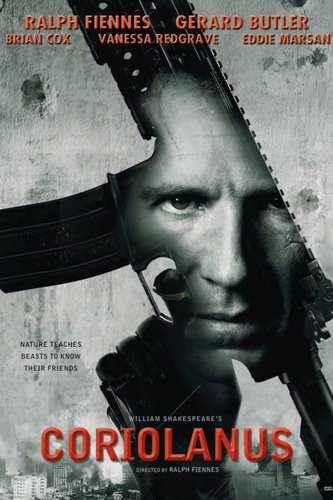
With Coriolanus, a 2011 political thriller and war drama, Ralph Fiennes took his first step behind the camera. Adapting William Shakespeare's play, it keeps the text and plot but moves the setting to an imagined modern Balkan state recalling the Yugoslav Wars. John Logan wrote the script for this British-American co-production from Icon Productions and BBC Film.

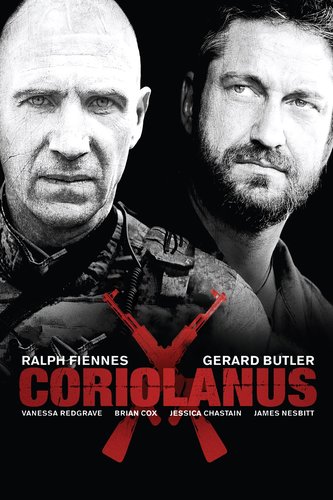
Caius Martius, Rome's gifted commander, defeats the enemy besieging the city and wins over the senate, yet he scorns the common people; rejected at the ballot, he cannot contain his anger and is exiled. He allies with Rome's old adversary Tullus Aufidius to take revenge on the city. Fiennes plays the lead, with Gerard Butler as Aufidius, Vanessa Redgrave as Volumnia, Brian Cox as Menenius and Jessica Chastain as Virgilia.

Shooting began on 17 March 2010 in Serbia, including Belgrade, and continued in Montenegro. The film had its world premiere on 14 February 2011 in the main competition of the 61st Berlin International Film Festival, was nominated for the Golden Bear, and opened in the UK and US on 20 January 2012. Reviews were positive; Fiennes earned a BAFTA nomination for Outstanding Debut, and the film won a British Independent Film Award for best supporting actress.

DirectorRalph Fiennes
Production companyIcon Productions
Coriolanus Coriolanus

Reactions

You can pick up to 3 reactions.

Cast

Only cast members with a profile on this site are listed.

Through different eyes

Action & Thriller Fan Puts pace, tension and set pieces first; little patience for slow drama.

Don't expect a dull stage play just because it's Shakespeare. Ralph Fiennes moves the story to a modern Balkan state that recalls the Yugoslav Wars: a city under siege, war, a commander who can't control his rage. The rivalry between Fiennes and Gerard Butler's Aufidius keeps the tension alive. The only catch is that the text stays in Shakespeare's language, and the long speeches sometimes cut into the pace.

Cinephile Looks at script, editing and directing choices; keeps a distance from formula films.

Fiennes's first outing as a director keeps Shakespeare's text but moves the action into a contemporary Balkan war, building a daring tension. John Logan's script uses that mismatch as a weapon: the friction between classical verse and modern images of war makes what it says about power, crowds and pride feel timeless. Fiennes is strong in front of the camera too, playing Caius Martius's contempt for the people from a place that is repellent yet understandable. Vanessa Redgrave's Volumnia is among the film's most striking performances. The weak spot is that the blend of the two worlds doesn't convince equally in every scene; some passages feel less like cinema than filmed theatre. Even so, the BAFTA nomination for Outstanding Debut is no surprise.

History & Society Lens Asks about the period, the social background and what the work reflects.

Moving Coriolanus to a Balkan state that evokes the Yugoslav Wars brings the play's class conflict very close to the present. An elite commander who scorns the people, is rejected at the ballot and, once exiled, joins his old enemy lays bare the tension between democracy, popular anger and military heroism in stark terms. Shooting in Serbia and Montenegro makes the region's recent past feel even more concrete. Still, it does not depict a specific historical conflict; through an imagined state it offers a universal debate about power. For viewers unused to Shakespeare's language it can be demanding at times.

These are not reader reviews: they are short editorial takes written from different viewer perspectives with AI assistance. Reader reviews are below.

Reviews (0)

Log in Log in to write a review.

Comments