The Cop

The Cop (Un condé)

Movie · 1970 · 15 people

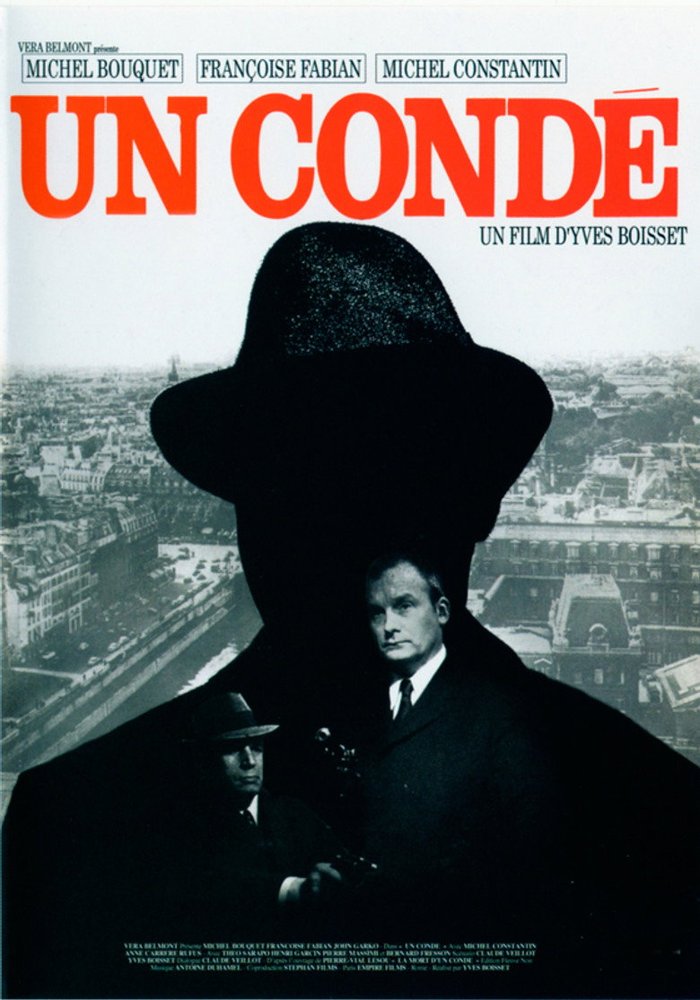
Yves Boisset's third feature as director was the 1970 French-Italian crime film The Cop (French: Un condé). Running about 97 minutes, it is known for its clash with the censors over its harsh portrait of the police. In Italy it was released as L'uomo venuto da Chicago, in Germany as Ein Bulle sieht rot and in Russia as Politseyskiy.

At its centre is Favenin, a committed inspector in a crooked police force, played by Michel Bouquet. His friend and colleague, played by Bernard Fresson, is shot dead while working a drugs case. Favenin concludes that the killers will go unpunished and, to avenge him, is ready to break the law and use the criminals' own methods, beatings and gunfire. Françoise Fabian appears as Hélène Dassa, Michel Constantin, Rufus and Gianni Garko have notable roles, with Adolfo Celi also in the cast.

Boisset, Sandro Continenza and Claude Veillot wrote the screenplay, which draws on Pierre-Vial Lesou's novel Mort d'un flic. The film's treatment of the police and its hero's ruthless violence drove Interior Minister Raymond Marcellin to try to have it banned, without success. The publicity helped the film find a public. It opened in France on 7 October 1970 and played in German-speaking countries from 6 May 1971.

DirectorYves Boisset

Reactions

You can pick up to 3 reactions.

Cast

Only cast members with a profile on this site are listed.

Rufus Rufus Actor · 83 years old Michel Peyrelon Michel Peyrelon Actor · died at 66 Michel Bouquet Françoise Fabian Gianni Garko Michel Constantin Théo Sarapo Adolfo Celi Serge Nubret Henri Garcin Bernard Fresson Anne Carrère Georges Montant Henri Poirier Jean-Claude Bercq
Through different eyes

Action & Thriller Fan Puts pace, tension and set pieces first; little patience for slow drama.

Favenin putting the law aside and answering the criminals with their own methods gives the film a dangerous tension from start to finish. The hero's ruthlessness is genuinely striking for its time; the ministry moving to ban it was no accident. If you are used to today's fast-cut crime thrillers the pace may drag in places, but a revenge cop film this dark is not easy to find.

Cinephile Looks at script, editing and directing choices; keeps a distance from formula films.

Un condé is a French polar that tries to turn a revenge story into a portrait of an institution. Boisset's target is not a single villain but the crooked force itself, which breaks the genre's familiar scheme of good cop and bad criminal. Yet this is also where the film is most contentious: when Favenin's ruthless methods are presented both as a product of the system under attack and as the choices of a hero the audience is expected to stand by, the line between critique and glorification grows thin. I think the film carries that ambiguity on purpose, but not every viewer will read it the same way. The hard, spare line of the novel adaptation helps it leave its moral question open.

History & Society Lens Asks about the period, the social background and what the work reflects.

What happened around the film tells as much about its era as the film itself. Interior Minister Raymond Marcellin's attempt to have it banned shows how sensitive the on-screen image of the police was for the state. That the attempt failed, and that the controversy brought the film an audience, is an instructive example of how censorship so often backfires. A work so fiercely debated at home also went on to play in German-speaking countries soon after, a reminder of how cinema's right to criticise institutions was being tested in those years, and of the interest that right drew beyond national borders.

These are not reader reviews: they are short editorial takes written from different viewer perspectives with AI assistance. Reader reviews are below.

Reviews (0)

Log in Log in to write a review.

Comments