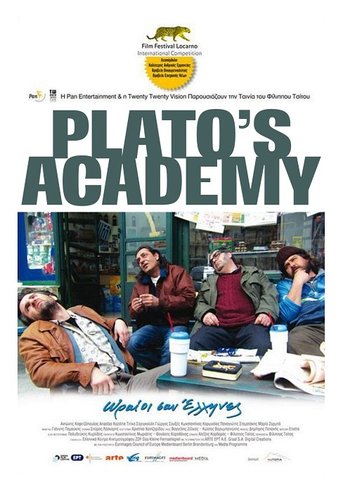
Plato's Academy

Plato's Academy

Movie · 2009 · 7 people

Filippos Tsitos directed Plato's Academy (Greek: Akadimia Platonos), a 2009 Greek-German comedy-drama, and co-wrote the screenplay with Alexis Kardaras. It was made with ZDF and ARTE in Greek and Albanian. It was shown in Germany as Kleine Wunder in Athen and in France as 100 % grec, opening in Germany on 22 July 2010.

The story takes place in a small Athens neighbourhood with three shops and one dog. Stavros (Antonis Kafetzopoulos) has been left by his wife and must look after his elderly mother day and night. Three friends idle in his shop all day; they pass the time watching Chinese newcomers open shops opposite and betting on whether the dog will bark at passing Albanians. One day an Albanian, at whom the dog does bark, turns up and claims that Stavros's mother is really his own, and Stavros starts to question who he is. Anastasis Kozdine plays the Albanian, Marenglen. The cast also includes Titika Sarigouli, Giorgos Souxes, Kostas Koronaios, Maria Zorba (as Dina) and Panayiotis Stamatakis.

The film had its world premiere at the 2009 Locarno Film Festival, where Kafetzopoulos won the Silver Leopard for best actor. It was reportedly a 2010 Lux Prize finalist. Critics were divided: some praised its humane view of multicultural society, others found the comedy weak.

DirectorFilippos Tsitos

Reactions

You can pick up to 3 reactions.

Cast

Only cast members with a profile on this site are listed.
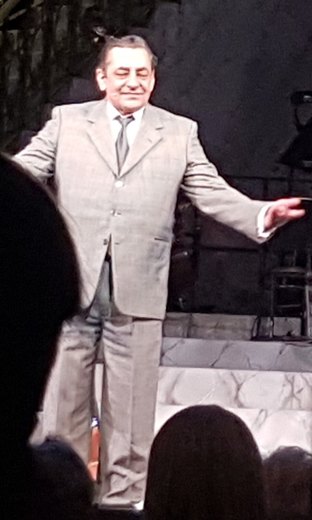
Andon Kafecopulos Andon Kafecopulos Actor · 75 years old Anastasis Kozdine Titika Sarigouli Giorgos Souxes Kostas Koronaios Maria Zorba Panayiotis Stamatakis
Through different eyes

Cinephile Looks at script, editing and directing choices; keeps a distance from formula films.

Plato's Academy turns a cramped neighbourhood of three shops and a dog into something close to a laboratory. The bet on whether the dog will bark at passing Albanians sums up both the film's dry humour and its argument: prejudice here is a habit, even a pastime. That is why Antonis Kafetzopoulos winning the Silver Leopard for best actor at Locarno makes sense; the film rests much of its weight on the cracking of Stavros's sense of who he is. The weak spot, as some critics noted, is the dose of comedy. I think Tsitos chooses stillness as a deliberate style, but for viewers waiting to laugh that calm can turn into a rather long wait.

History & Society Lens Asks about the period, the social background and what the work reflects.

The film builds an Athens neighbourhood changing through migration with almost laboratory simplicity: Chinese newcomers opening shops across the street, Albanians passing by, and local men sitting in a shop all day watching it all. Its real cleverness is questioning prejudice from the inside rather than the outside. Once Stavros starts to doubt his own origins, the line between 'us' and 'them' turns out to be very fragile. It is a theme Turkish viewers who know how intertwined identities and families are in the Balkans will recognise. Shooting in both Greek and Albanian quietly underlines the place of language in identity; it makes you think without preaching.

Family Viewer Asks whether the whole household can watch it; cares about humour and heart.

Going by the story, this is not about violence or adventure but about prejudice, family and identity. It is a good chance to watch with teenagers and then talk about who we call a 'foreigner'. For young children, though, it is too calm and talky; the comedy is quiet, and anyone expecting big laughs may get bored. I would say it suits high-school age and up.

These are not reader reviews: they are short editorial takes written from different viewer perspectives with AI assistance. Reader reviews are below.

Reviews (0)

Log in Log in to write a review.

Comments