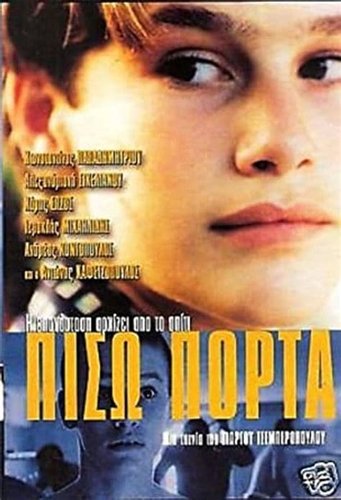
Piso Porta

Piso Porta

Movie · 2000 · 4 people

Giorgos Tsemberopoulos directed Piso Porta (English Backdoor) as his third feature, a Greek period film from 2000 and a coming-of-age drama. He wrote the screenplay together with Dennis Iliadis. The film runs about 105 minutes; it first met an audience at a special screening at Cine Aphrodite on May 29, 2000, and its official showing came that September within the Premiere Nights International Film Festival.

The story is set in 1960s Greece. Dimitris, thirteen and newly fatherless, has to carry his grief while accepting the new man who has come into his mother's life, and he must also deal with the ordinary difficulties of growing up. Dimitris is played by Konstandinos Papadimitriou, who was twelve at the time. The cast includes Alexandriani Sikelianou, Haris Sozos, Andreas Kontopoulos, Ieroklis Michaelidis, Antonis Kafetzopoulos and Maria Solomou, along with Elisavet Moutafi, Efi Papatheodorou, Katerina Tsavalou, Eleni Kokkidou and Akindynos Gikas.

Platon Andronidis was the cinematographer, Antonis Daglidis the production designer and Marios Strofalis the composer; the title song is sung by Christos Thivaios. The producers were Fenia Kosovitsa, Amanda Livanou and Irakli Mavroeidis. Ideefixe, the Greek Film Centre, Alpha TV, Netmed and Filmiki Productions joined as co-producers, with JBA Productions from France and Filmex from Romania, and the European Script Fund and Eurimages gave support.

DirectorGiorgos Tsemberopoulos

Reactions

You can pick up to 3 reactions.

Cast

Only cast members with a profile on this site are listed.
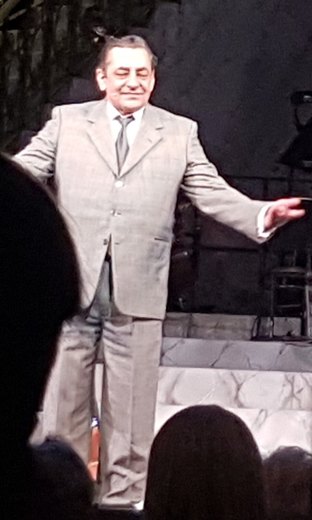
Andon Kafecopulos Andon Kafecopulos Actor · 75 years old Alexandriani Sikelianou Ieroklis Michaelidis Maria Solomou

Through different eyes

Cinephile Looks at script, editing and directing choices; keeps a distance from formula films.

Piso Porta uses the familiar skeleton of the coming-of-age film: a loss, a new figure in the family and the pains of leaving childhood behind. The script by Tsemberopoulos and Dennis Iliadis tries to tie these three axes together, and the film's strength comes from keeping the narrative tightly bound to Dimitris's point of view. Filtering grief and the acceptance of a new man through a child's perception keeps the drama's tone measured. But this genre is a crowded field in European cinema; the more the film leans on period atmosphere and familiar emotional stops, the harder it finds it to sharpen its own distinctiveness. Putting the whole load on a young actor's shoulders is also a risky choice; how convincing the film is depends largely on that performance.

History & Society Lens Asks about the period, the social background and what the work reflects.

The story is set in 1960s Greece and looks at a family shaken by the loss of the father within the family structure of the time. The father's absence, a new man entering the mother's life and the son's resistance to that change are not easy matters in a society where traditional family roles were still strong. It is familiar ground for Turkish viewers too: in the same years, on this side of the sea, a widow rebuilding her life was also tested by the gaze of those around her. Rather than foregrounding this social background, the film focuses on a child's inner world; viewers curious about the period may have to fill in part of the context themselves.

Family Viewer Asks whether the whole household can watch it; cares about humour and heart.

Subjects such as losing a father and a new person entering the mother's life can mean something to families going through a similar time. But this is not a children's film; it is a drama made for adults, and grief and the pains of growing up are told in a serious way. It may be heavy for young children. Those thinking of watching with older children would do well to check the content first.

These are not reader reviews: they are short editorial takes written from different viewer perspectives with AI assistance. Reader reviews are below.

Reviews (0)

Log in Log in to write a review.

Comments