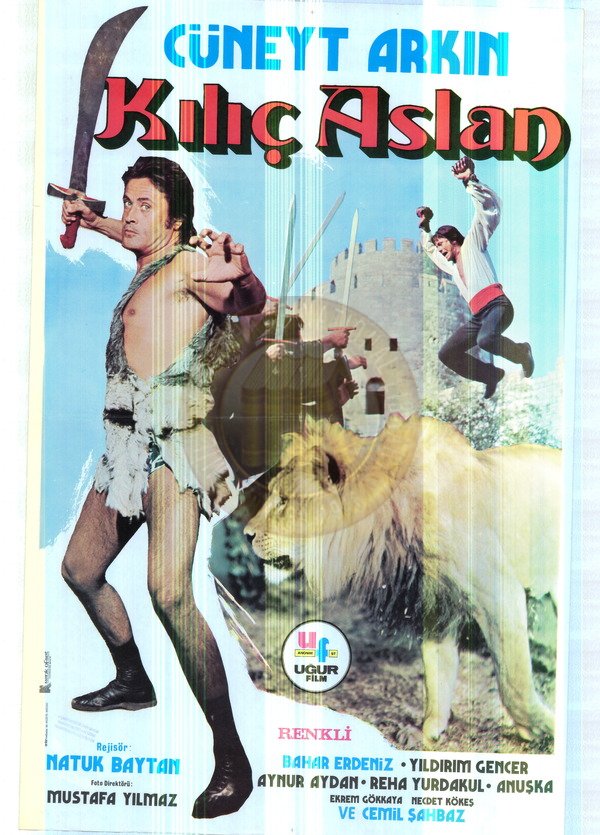
Kılıç Aslan

The Lion Man (Kılıç Aslan)

Movie · 1975 · 3 people

Natuk Baytan directed the 1975 Turkish film Kılıç Aslan. A historical adventure and action picture that listings also tag as a war film, it was made by Uğur Film and runs roughly 82 to 85 minutes. It dramatises the Seljuk-Byzantine struggle around Anatolia. Abroad it is known as The Lion Man, and in Germany as Lion Man – Die Todeskralle aus Istanbul. The screenplay is by Duygu Sağıroğlu.

The story opens in 1217. The Seljuk Sultan Süleyman Şah wins a great victory over Byzantium in Anatolia and forces the beaten knights and commanders to sign a treaty he has drafted. The knight Antuan cannot swallow the humiliation: he hatches a secret plan to push the Turks out of Anatolia and seize the land with help from the Christian world. Maria, a Greek princess at the Sultan's side, tries to prevent it without success, and Süleyman Şah is lured into a trap and killed. Now Maria's son by the Sultan, the grown warrior Kılıç Aslan, steps in and goes to war against the Byzantines to avenge his father.

Cüneyt Arkın plays both Süleyman Şah and Kılıç Aslan. Yıldırım Gencer plays Antuan, Aynur Aydan Princess Maria and Bahar Erdeniz Ayla; Cemil Şahbaz and Reha Yurdakul also appear. The producer was Memduh Ün and the cinematographer Mustafa Yılmaz.

DirectorNatuk Baytan
Production companyUğur Film

Reactions

You can pick up to 3 reactions.

Cast

Through different eyes

Action & Thriller Fan Puts pace, tension and set pieces first; little patience for slow drama.

Cüneyt Arkın playing both father and son in the same film is reason enough to be curious. Seljuk-Byzantine war, knights, a trap and revenge: everything a historical adventure needs is here. At roughly 82 to 85 minutes, the story hardly gets the chance to sag. If you can forgive seventies sword-and-shield fights that may look naive today, it's a fun adventure.

Yeşilçam Nostalgic A viewer raised on the classics, looking for warm storytelling and strong acting.

Kılıç Aslan, produced by Memduh Ün and directed by Natuk Baytan, is a typical example of that historical-adventure tradition. Seeing Cüneyt Arkın first as Sultan Suleiman Shah and then as the son seeking revenge for his father would have been a double treat for audiences of those years. Yıldırım Gencer's Antuan sits comfortably among Yeşilçam's memorable villains. For me the heart of the film is Princess Maria; the helplessness of a woman caught between two worlds gives the story emotional depth. Even so, the narrative too often surrenders to heroic fervour, becoming a loud epic rather than a subtle drama.

History & Society Lens Asks about the period, the social background and what the work reflects.

The film tells the Seljuk-Byzantine struggle through the idea of defending Anatolia, and it captures the spirit of mid-seventies historical adventure cinema well. It should not, however, be watched as a history lesson; events and figures appear to be shaped quite freely to fit the heroic narrative of the period. Opening the story in 1217 and binding everything into a chain of revenge serves the rules of the genre more than history. The interesting figure is the Greek princess Maria, who brings into the story the permeability between two worlds and the ties forged through marriage. As a document of how its own era wanted to remember the past, the film is valuable.

These are not reader reviews: they are short editorial takes written from different viewer perspectives with AI assistance. Reader reviews are below.

Reviews (0)

Log in Log in to write a review.

Comments