Gente di Roma

Gente di Roma

Movie · 2003 · 15 people

The Italian master Ettore Scola mixes comedy with the mockumentary form in Gente di Roma, a film from 2003. The Italian capital itself is the lead: a series of self-contained episodes follows a single day from the early hours of the morning to late at night. This episodic structure recalls Federico Fellini's Roma. In Turkish it is also known as Roma İnsanları ("People of Rome").

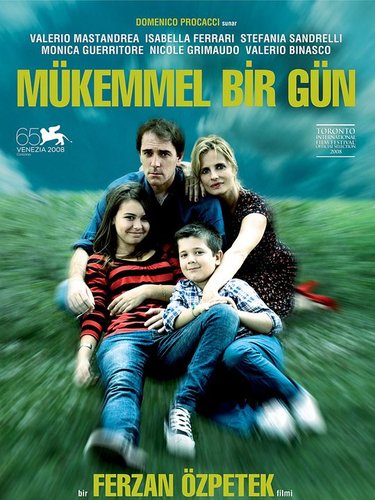
The film interweaves fiction with documentary elements. The stories of key characters played by amateurs come first, and scenes with professional actors then heighten the drama. The cast includes Giorgio Colangeli, Antonello Fassari, Fabio Ferrari, Fiorenzo Fiorentini, Arnoldo Foà, Sabrina Impacciatore, Rolando Ravello and Edoardo Leo, alongside Valerio Mastandrea and Stefania Sandrelli. Nanni Moretti and Ivano De Matteo also appear.

Scola is a director who stands out not only for his realistic approach but also for his political outlook. He co-wrote the script with his daughter Silvia Scola. The film is dedicated to Alberto Sordi: Scola had wanted him as a nobleman in the final scene, but the actor died before shooting. It was filmed in Italian, in colour, on 35 mm.

DirectorEttore Scola

Reactions

You can pick up to 3 reactions.

Cast

Only cast members with a profile on this site are listed.

Valerio Mastandrea Valerio Mastandrea Actor · 54 years old Stefania Sandrelli Stefania Sandrelli Actor · 80 years old Giorgio Colangeli Antonello Fassari Fabio Ferrani Fiorenzo Fiorentini Arnoldo Foà Sabrina Impacciatore Salvatore Marino Rolando Ravello Augusto Fornari Nanni Moretti Alessandra Costanzo Ivano De Matteo Edoardo Leo
Through different eyes

Cinephile Looks at script, editing and directing choices; keeps a distance from formula films.

Ettore Scola's mix of amateurs and professionals, fiction and documentary elements is a bold formal choice. Leading with the amateurs' stories and then heightening the drama with trained actors builds a deliberate passage between authenticity and artifice. Yet the mockumentary, episodic form naturally produces an uneven rhythm; some segments land while others may remain mere observations. The unavoidable comparison with Fellini's Roma also sets the bar very high. In my view this should be read as a late-career notebook from a great master: not a unified masterpiece, but a careful sketch of a city.

History & Society Lens Asks about the period, the social background and what the work reflects.

The lead here is not a person but the city itself: a single day from the early hours to late at night shows Rome through its ordinary people. That Scola, known for his political outlook, wrote it with his daughter Silvia Scola also suggests a view spanning generations. The dedication to Alberto Sordi, whom Scola had wanted for the final scene, carries its own weight: it can be read as a farewell to a generation that brought Rome to the screen. A valuable cross-section for anyone curious about the capital's daily life, its classes and its types.

Family Viewer Asks whether the whole household can watch it; cares about humour and heart.

There is no single story to follow here; short episodes come one after another. Children may find that structure boring, and it needs subtitles too. It suits adults who enjoy city life and watching people. Not one for family night, more for a quiet evening among grown-ups. Teenagers will enjoy it only if they are curious about city stories.

These are not reader reviews: they are short editorial takes written from different viewer perspectives with AI assistance. Reader reviews are below.

Reviews (0)

Log in Log in to write a review.

Comments