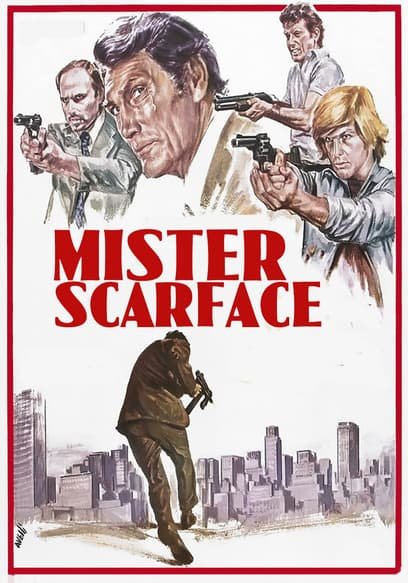
Mister Scarface

Mister Scarface (l Padroni della città)

Movie · 1976 · 14 people

Mister Scarface, known in Italian as I padroni della città ("The rulers of the city"), is a 1976 Italian-German production directed by Fernando Di Leo. A specimen of the poliziottesco, the hard-edged Italian crime cinema of the 1970s, it is also described as a noir-flavoured action thriller. Made in English and running about 98 minutes, it was written by Di Leo together with Peter Berling. In Spanish it is also known as Reglas de la Ciudad.

The hero is Tony (Harry Baer), a collector for a mafia loan shark. Unhappy with his lot, he keeps dreaming of settling in Brazil with his brother. The wish for easy money pulls him into organized crime, and he works his way up the organization on his own merits, with a mob agitator named Napoli at his side. Together they hatch a plan to get rich, but the organization's boss, Manzari (Jack Palance), is not going to let it happen.

Besides Jack Palance and Harry Baer, the cast features Al Cliver, Gisela Hahn, Edmund Purdom and Vittorio Caprioli. Peter Berling, Nello Pazzafini, Bruno Di Luia, Salvatore Billa and Gilberto Galimberti also appear in the cast listing.

DirectorFernando Di Leo
Production companyTroma Entertainment

Reactions

You can pick up to 3 reactions.

Cast

Only cast members with a profile on this site are listed.

Edmund Purdom Edmund Purdom Film actor · 1924 – 2009 Nello Pazzafini Nello Pazzafini Actor · died at 62 Jack Palance Al Cliver Vittorio Caprioli Gisela Hahn Peter Berling Harry Baer Bruno Di Luia Salvatore Billa Gilberto Galimberti Fulvio Mingozzi Pietro Ceccarelli Rosario Borelli
Through different eyes

Action & Thriller Fan Puts pace, tension and set pieces first; little patience for slow drama.

An ordinary debt collector climbing the ranks of the organisation on his own is an engine that always works in crime films, and the scheme to get rich under the nose of Jack Palance's Manzari keeps the tension alive throughout. If you like the hard-edged Italian crime cinema of the 1970s, this is exactly that flavour. But anyone who knows the genre's patterns may sense where the story is heading early on.

History & Society Lens Asks about the period, the social background and what the work reflects.

The most interesting idea under the surface is a debt collector's dream of easy money. Tony lives by collecting other people's debts while dreaming of a new life in Brazil, so the criminal world becomes his ticket out. To my mind that reflects a feeling the genre feeds on: the ordinary man seeing organised crime as the only shortcut up the class ladder. The film shows the allure of that dream more than it criticises it, while the boss's determination to block the plan clearly marks the limits the system sets on rising from below.

Cinephile Looks at script, editing and directing choices; keeps a distance from formula films.

Di Leo blends the poliziottesco's toughness with a noir mood here. He builds a classic crime story from familiar elements: the small man on the rise, the boss who will not look the other way, a dangerous scheme. That simplicity is the story's strength. Jack Palance brings international weight and works well as the face of authority. But the script leans on the mechanics of the plot rather than deepening its characters' motives; Tony's dream of Brazil never gains emotional depth beyond a motive. The result is a solid example for genre fans that does not push past its limits.

These are not reader reviews: they are short editorial takes written from different viewer perspectives with AI assistance. Reader reviews are below.

Reviews (0)

Log in Log in to write a review.

Comments