Les Uns et les Autres

Les Uns et les Autres

Movie · 1981 · 4 people

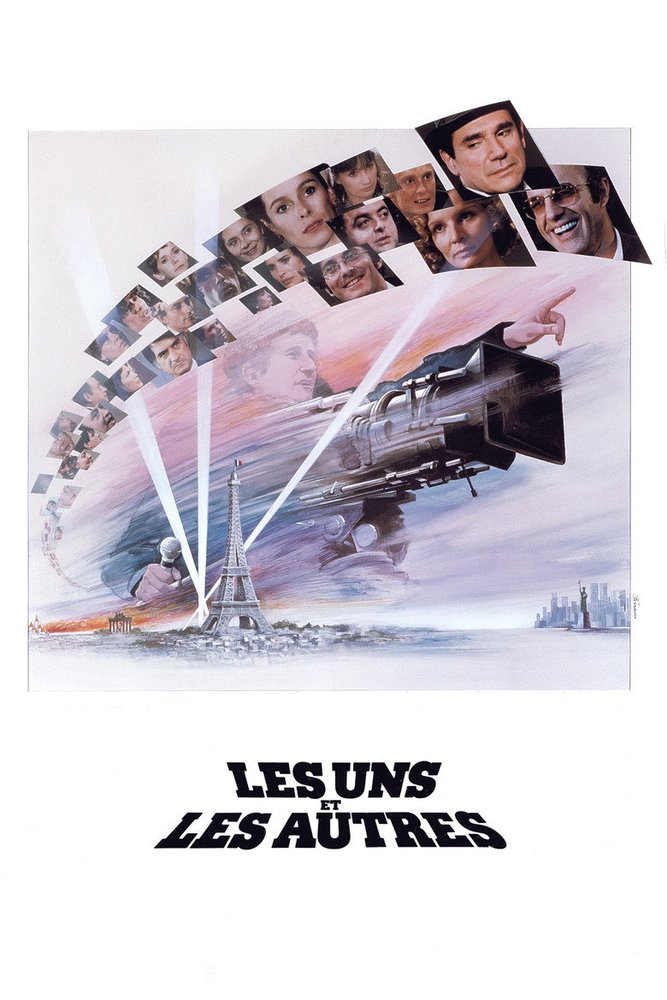
Les Uns et les Autres (The Ones and the Others) comes from Claude Lelouch, who wrote and directed this French musical epic of 1981. It follows fifty years of European history, from the 1930s to the 1980s, across generations. Many critics rate it, with Un Homme et une Femme, as Lelouch's best work. It won the Technical Grand Prize at the 1981 Cannes Film Festival and drew 3,234,549 admissions in France, making it the sixth most-seen film of its year. In the United States it was distributed as Boléro, after the Maurice Ravel orchestral piece used in its music.

The story follows four families from different countries whose destinies touch under the shadow of the Second World War. Ravel's Boléro is the film's recurring motif, and music and dance become the shared language of characters linked across generations. The cast is large and international: Robert Hossein, Nicole Garcia, Geraldine Chaplin, Daniel Olbrychski, Fanny Ardant, James Caan, Jacques Villeret, Richard Bohringer, Évelyne Bouix, Jean-Claude Brialy and Alexandra Stewart are among them.

Spoken in French and German, the film runs about 184 minutes. Two years later a version nearly twice as long was broadcast as a six-part television film.

DirectorClaude Lelouch

Reactions

You can pick up to 3 reactions.

Cast

Only cast members with a profile on this site are listed.

Through different eyes

Cinephile Looks at script, editing and directing choices; keeps a distance from formula films.

Here Lelouch sets out to tell fifty years of European history through the crossing fates of four families, and the ambition of the structure deserves credit. Ravel's Boléro is not just a choice of music but the film's dramaturgical spine: its repeating, ever-swelling form becomes an editing principle that ties the generations together. The Technical Grand Prize at Cannes acknowledges that formal daring. Yet balancing so large a cast across 184 minutes is no easy task; some storylines are left in the shadow of others, and the transitions can wear the viewer out. Still, the idea of making music and dance the characters' shared language lifts the film above the ordinary period epic.

Yeşilçam Nostalgic A viewer raised on the classics, looking for warm storytelling and strong acting.

Lives that touch across generations to the strains of Ravel's Boléro... This film is like a great symphony about how music and dance bind people together. Bringing names like Geraldine Chaplin, James Caan and Fanny Ardant into one story is a special joy for lovers of older cinema. Families living in the shadow of the Second World War, people seeking beauty even amid suffering: there is a humanism here that touches the heart. Its running time of more than three hours does ask for patience, though; it is best watched unhurried and with a rested mind.

History & Society Lens Asks about the period, the social background and what the work reflects.

Les Uns et les Autres tries to read European history from the 1930s to the 1980s through the lives of four families from different countries. The Second World War is not mere background here but a shared wound that knots the generations' fates together. That the film is spoken in both French and German reflects a wish to bring the two sides of the war into a single story. Its use of music and dance as a common language that crosses national borders can be read alongside post-war Europe's search for reconciliation. Gathering so long a period into one film, however, also risks leaving some historical turning points on the surface.

These are not reader reviews: they are short editorial takes written from different viewer perspectives with AI assistance. Reader reviews are below.

Reviews (0)

Log in Log in to write a review.

Comments