La Reine Margot (film, 1994)

La Reine Margot

Movie · 1994 · 4 people

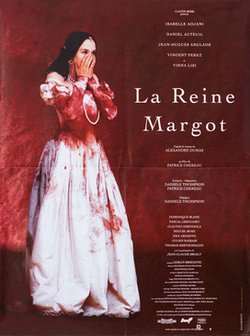
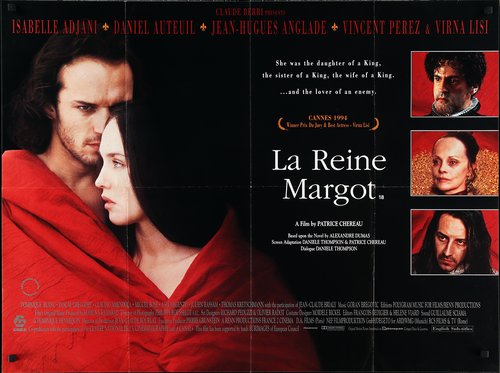
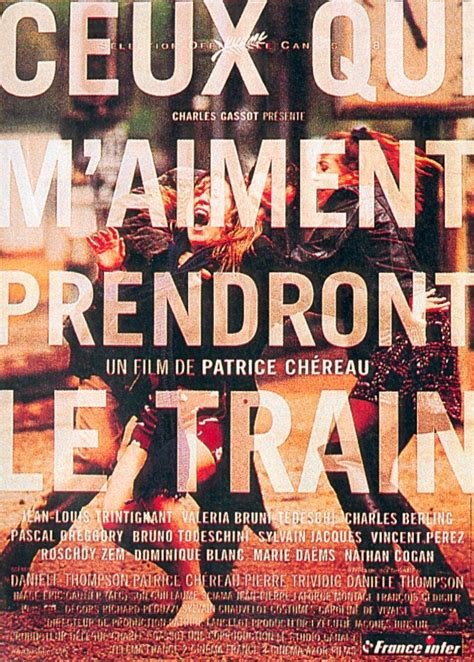
Patrice Chéreau directed La Reine Margot, a Franco-Italian-German historical drama running 162 minutes. Chéreau wrote the screenplay with Danièle Thompson, adapting Alexandre Dumas's 1845 novel. It competed at Cannes in 1994, winning the Jury Prize, with Virna Lisi taking the Best Actress award. It won five Césars, with Isabelle Adjani named best actress, Jean-Hugues Anglade best supporting actor and Lisi best supporting actress, and was nominated for an Oscar for costume design.

The story takes place in 16th-century France, in the run-up to and aftermath of the St Bartholomew's Day Massacre, during the war between Catholics and Protestants. To calm the conflict, the king's sister Margot (Adjani) is married to the Huguenot Henri de Navarre (Daniel Auteuil), but the match leads to bloodshed. Anglade plays the weak King Charles IX, Lisi his mother Catherine de Médicis, and Vincent Perez plays Margot's lover La Môle. Dominique Blanc, Asia Argento and Jean-Claude Brialy are also in the cast.

Shooting took over six months in France and Portugal in 1993, on a budget of 140 million francs. Bregović composed the music. Critics found it theatrical, but it drew over two million viewers in France, the biggest audience of any Chéreau film.

DirectorPatrice Chéreau
Production companyRenn Productions
La Reine Margot La Reine Margot

Reactions

You can pick up to 3 reactions.

Cast

Only cast members with a profile on this site are listed.

Through different eyes

History & Society Lens Asks about the period, the social background and what the work reflects.

La Reine Margot centres on the war between Catholics and Protestants in 16th-century France and the St Bartholomew's Day Massacre, a period film that shows how religious division intertwines with politics, and politics with marriage. Margot being married off to Henry of Navarre to calm the sectarian conflict lays bare how women's lives were used as bargaining chips by dynasties. Since it is adapted from Alexandre Dumas's novel, it is worth remembering that this is a literary interpretation, not a historical record. Even so, a peace effort that turns to bloodshed gives strong material to anyone wanting to think about how violence in the name of religion works.

Cinephile Looks at script, editing and directing choices; keeps a distance from formula films.

Patrice Chéreau turns Dumas's novel, through a screenplay co-written with Danièle Thompson, into an ambitious period film. The Jury Prize at Cannes, five Césars and an Oscar nomination for costume design show that the ambition paid off. The award-winning performances of Isabelle Adjani, Virna Lisi and Jean-Hugues Anglade form its backbone, and Lisi's Catherine de' Medici, honoured at both Cannes and the Césars, carries particular weight. Goran Bregović's score feeds the atmosphere. The theatricality critics pointed to is understandable: staging on this scale is willing to flirt with excess. The 162-minute running time also risks a sagging pace as subplots multiply. Still, its scale and nerve make it stand out among European historical films.

Action & Thriller Fan Puts pace, tension and set pieces first; little patience for slow drama.

A religious war, palace intrigue and a huge massacre: on paper, a high-tension story. A marriage meant to bring peace turning to bloodshed gives the drama a real sense of danger. But 162 minutes is a long haul, and this is a historical drama, not a war movie. If you're after speed, it demands patience. Anyone thinking of watching with family should factor in the level of violence too.

These are not reader reviews: they are short editorial takes written from different viewer perspectives with AI assistance. Reader reviews are below.

Reviews (0)

Log in Log in to write a review.

Comments