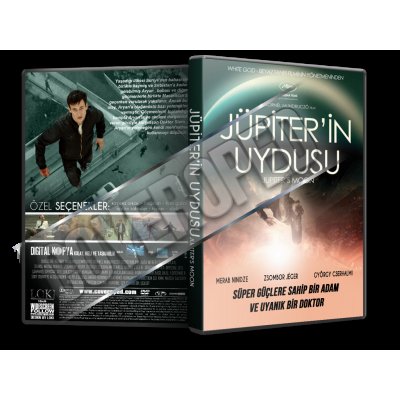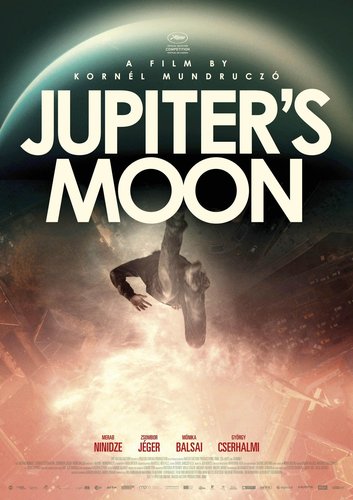
Jüpiter'in Uydusu

Jupiter's Moon (Jupiter holdja)

Movie · 2017 · 15 people

Hungarian director Kornél Mundruczó made Jupiter's Moon (Hungarian: Jupiter holdja) in 2017, a fantasy drama and co-production of Hungary, Germany and France that runs about 100 minutes. It blends a realistic refugee story with a supernatural premise. Mundruczó wrote the screenplay with Kata Wéber. The title refers to Europa, the cold, icy fourth-largest moon of Jupiter.

The story begins when Aryan, a young Syrian, is shot by a police officer at the Hungarian border while fleeing with his father. Surviving against the odds, he finds he can levitate. As he tries to settle into his new life in Budapest, his path crosses that of Stern, a discredited doctor who wants to profit from the miracle. Zsombor Jéger plays Aryan and Merab Ninidze plays Stern, with György Cserhalmi as László, Mónika Balsai as Vera and Can Togay also in the cast. Shooting took place in Hungary.

The film had its world premiere in the main competition of the Cannes Film Festival on May 19, 2017, contending for the Palme d'Or. It won the Sitges Film Festival award for best feature and the Grand Prix Nouveau Genre at L'Étrange Festival. It opened in Hungary on June 8, 2017 and in Turkey on December 1, 2017.

DirectorKornél Mundruczó
Jupiter's Moon (Jupiter holdja)

Reactions

You can pick up to 3 reactions.

Cast

Only cast members with a profile on this site are listed.
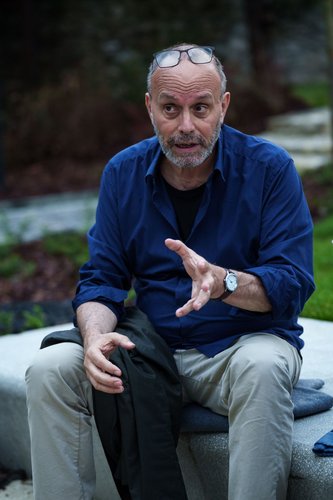
Can Togay Can Togay Actor · 71 years old Zsombor Jéger Merab Ninidze György Cserhalmi Mónika Balsai Sándor Terhes Ákos Birkás István Fillár Alexandra Horváth Farid Larbi Tünde Majsai-Nyilas Judit Meszléry Enikő Mihalik Zoltán Mucsi Hella Roszik

Through different eyes

Cinephile Looks at script, editing and directing choices; keeps a distance from formula films.

Mundruczó takes a risky path by combining a realistic refugee story with a supernatural premise. A young man who can levitate is a visually powerful metaphor, and the film turns it into a moral question via the border, flight and a doctor who wants to profit from the miracle. The allegory sometimes speaks too loudly, though: symbols like the Europa reference in the title leave the viewer little room for their own reading. Competing for the Palme d'Or at Cannes and winning best feature at Sitges show that this bold balance between genre and art cinema found its audience.

History & Society Lens Asks about the period, the social background and what the work reflects.

The film goes straight at Europe's refugee question: a young Syrian shot at the Hungarian border struggles to build a new life even after surviving. Its most striking point is showing that even a miracle can become a chance for profit; the discredited doctor Stern stands for how vulnerable people can be turned into tools. Being made in 2017 makes the film a mirror of that period's migration debates. That it opened in Turkey the same year is a reminder of how close the subject sits to audiences here.

Family Viewer Asks whether the whole household can watch it; cares about humour and heart.

A serious film about refugee life that opens with a young man being shot by police at the border. There is violence and the subject is heavy; not suitable for young children. The levitation idea may catch teenagers' interest, but this is not an adventure film. High-school-age teens could watch it with family and talk about migration afterwards.

These are not reader reviews: they are short editorial takes written from different viewer perspectives with AI assistance. Reader reviews are below.

Reviews (0)

Log in Log in to write a review.

Comments