Güzel Şoför

Beautiful Driver

Movie · 1970 · 12 people

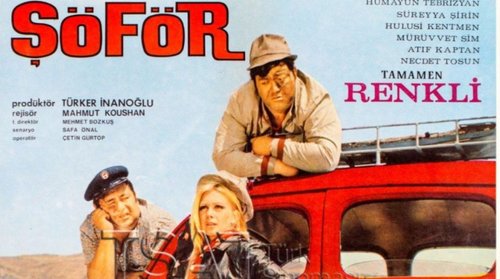
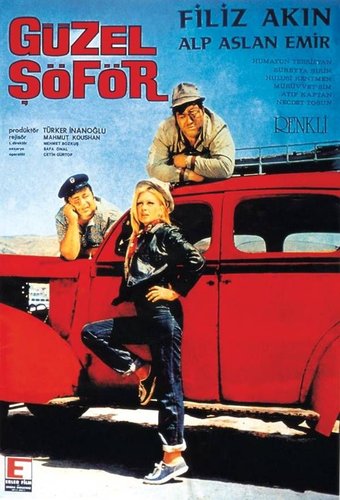
Drama and romance with comic touches mix in Güzel Şoför (Beautiful Driver), a 1970 Turkish-Iranian co-production. Mahmoud Koushan and Mehmet Bozkuş share the directing credit; Safa Önal wrote the script. Esmail Koushan and Türker İnanoğlu produced it for Erler Film. In colour and 92 minutes long, it is spoken in Persian and Turkish, with Filiz Akın in the lead.

The story follows Fatma (Filiz Akın), a young Tehran woman who loses her family in an accident. With her friend Mehmet (Humayun Tebrizyan) she goes to Istanbul after her uncle Fahri (Atıf Kaptan), who seized her inheritance; he refuses to return it and makes her a servant. The uncle's son Ali (Alparslan Emir) falls for her and they plan to marry, but the family objects and sends Ali to Iran over burned factories in Tehran. Fatma learns she is pregnant while he is away and is thrown out. After her son is born she drives the shared taxi of the jailed Mehmet. Returning a bag of money to the old industrialist Kamil Koray (Hulusi Kentmen) changes her luck: he takes mother and son in and leaves them his fortune.

Years later, running the business, Fatma moves her uncle's family into the outbuildings and employs Ali, who fails to recognise her. Necdet Tosun and Diclehan Baban also appear.

DirectorMahmoud Koushan, Mehmet Bozkuş
Production companyErler Film
Beautiful Driver Beautiful Driver

Reactions

You can pick up to 3 reactions.

Cast

Filiz Akın Filiz Akın Film actor · died at 82 Humayun Tebrizyan Humayun Tebrizyan Actor · died at 88 Amir Fakhreddin Atıf Kaptan Diclehan Baban Necdet Tosun Actor · died at 48 Mürüvvet Sim Hulusi Kentmen Hulusi Kentmen Actor · died at 82 Sorayya Beheshti Renan Fosforoğlu Zeki Alpan Aynur Aydan
Through different eyes

Yeşilçam Nostalgic A viewer raised on the classics, looking for warm storytelling and strong acting.

A Yeşilçam melodrama from Safa Önal's pen, carried on Filiz Akın's shoulders: the orphaned young woman, the uncle who seizes her inheritance, the mother thrown out of the house and, at last, fortune turning around. It is a pattern my generation knows well, a story shape with a firm moral centre in which goodness is seen and injustice sooner or later meets its answer. What makes it more interesting is the bridge between Tehran and Istanbul and two languages meeting on the same screen. A small treasure for anyone curious about the co-productions of the period.

Cinephile Looks at script, editing and directing choices; keeps a distance from formula films.

Güzel Şoför plays honestly with the conventions of melodrama, but to today's eye those conventions show too plainly. Turns such as luck changing with a bag of money, or Ali failing to recognise Fatma years later, rest on coincidence rather than cause; the plot moves by fate's moves, not by the characters' choices. A co-production with two directors and two languages also risks an uneven tone, and bringing drama, romance and comedy together in one film is no easy task. Still, the middle section in which the woman takes the wheel is the most interesting idea, the one that lifts it above an ordinary revenge story.

History & Society Lens Asks about the period, the social background and what the work reflects.

A young woman driving a shared taxi in a 1970 film is a notable choice in terms of how the era saw women's work. Fatma's story shows how an inheritance changes hands among the men of a family, and how pregnancy outside marriage could push a woman out of the house overnight. The reversal of the class order at the end, with the servant becoming the boss and the masters living in the outbuildings, is a justice fantasy Yeşilçam loved. As a Turkish-Iranian co-production it also opens a small window onto the cultural closeness between the two countries in those years.

These are not reader reviews: they are short editorial takes written from different viewer perspectives with AI assistance. Reader reviews are below.

Reviews (0)

Log in Log in to write a review.

Comments