Chouchou

Chouchou

Movie · 2003 · 13 people

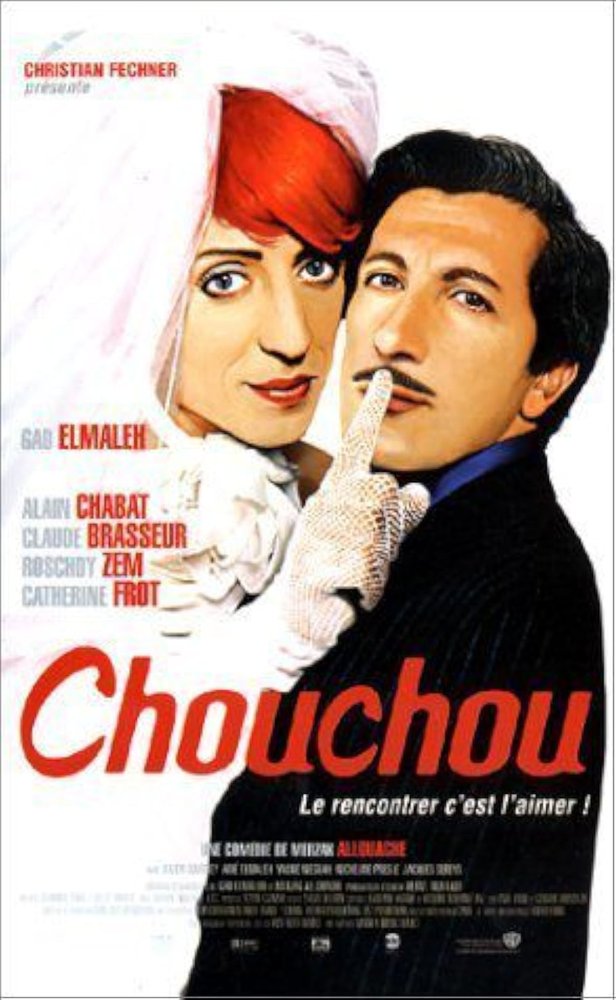
Around four million tickets were sold in France for Chouchou, Merzak Allouache's 2003 comedy made with producer Christian Fechner, and Gad Elmaleh's turn in the title role earned him a nomination for the César Award for Best Actor. Running about 105 minutes, the French film reached Turkey on 13 August 2004 under the title Gönül Çelen.

It follows Chouchou, a slightly eccentric young Maghrebi immigrant new in Paris from North Africa and living there illegally, who has come to find his nephew. To get through the night he poses as a refugee and finds the kind Father Leon, who takes him in for a few days and gets him work as a cleaner for the psychologist Dr Milovavich. Asked what he wants most in life, Chouchou says he would like to be a woman from head to toe, and the doctor tells him he may come to work dressed as one from the next day. So Chouchou arrives as a pleasant-looking woman with the right body language, until someone grows suspicious. Alain Chabat plays Stanislas, a confused man who falls for Chouchou at first sight. Roschdy Zem, Catherine Frot, Claude Brasseur, Anne Marivin and Micheline Presle are also in the cast.

Allouache wrote the screenplay with Gad Elmaleh.

DirectorMerzak Allouache

Reactions

You can pick up to 3 reactions.

Cast

Only cast members with a profile on this site are listed.

Jacques Sereys Actor · died at 94 Julien Courbey Julien Courbey Actor · 50 years old Gad Elmaleh Alain Chabat Claude Brasseur Anne Marivin Arié Elmaleh Catherine Frot Jean-Paul Comart Michel Such Micheline Presle Roschdy Zem Stéphane Boucher

Through different eyes

Cinephile Looks at script, editing and directing choices; keeps a distance from formula films.

Chouchou uses every tool of popular French comedy and draws most of its strength from its lead. Gad Elmaleh co-wrote the part that earned him a César nomination with Allouache, which suggests the character was tailored to him from the start, and the film feeds on that fit more than anything else. The weak point is how heavily the structure leans on the familiar patterns of the comedy of misunderstanding: in my view the question of who will notice what, and when, drives the scenes more than the characters' inner lives do. Supporting figures such as Alain Chabat's Stanislas therefore sometimes amount to little more than a function. Still, around four million tickets sold in France show plainly that the formula found its audience.

History & Society Lens Asks about the period, the social background and what the work reflects.

The film puts at its centre an undocumented immigrant newly arrived in Paris from North Africa, a notable choice for a mainstream comedy. Chouchou first passes himself off as a refugee to get through the night, then goes to work as the woman he has always wanted to be, and the film shows lightly how migration and identity become entangled. Father Leon taking him in and the psychologist opening the door to that identity underline a solidarity that reaches out to someone on the margins. The comedy does not always go deep into these subjects, but seeing a person on society's edge as a likeable, dignified hero has real value.

Family Viewer Asks whether the whole household can watch it; cares about humour and heart.

It is a warm, cheerful comedy, but its subject is identity and gender. Chouchou's wish to be a woman from head to toe sits at the heart of the film. Small children may ask questions, so be ready for them. Romantic misunderstandings are also a big part of the story. In my view it suits teenagers and adults better, and it can be a good starting point for families open to talking about these topics.

These are not reader reviews: they are short editorial takes written from different viewer perspectives with AI assistance. Reader reviews are below.

Reviews (0)

Log in Log in to write a review.

Comments