Anne ve Fahişe

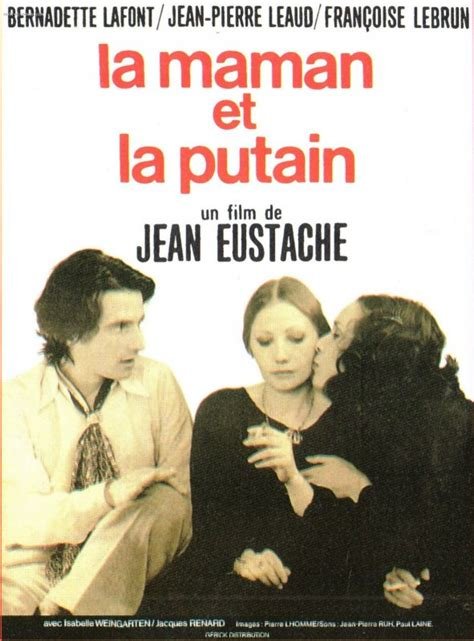
The Mother and the Whore (La Maman et la Putain)

Movie · 1973 · 15 people

The Mother and the Whore (La Maman et la Putain) is Jean Eustache's 1973 feature, widely counted among the defining works of post-New Wave French cinema. Shot in black and white and running 3 hours 40 minutes, this drama turns talk itself into the plot: its characters argue about love, relationships, men and women with near desperation. It screened at the 1973 Cannes Film Festival, where it won the Grand Prix. Critics were divided on release, but later opinion shifted; Cahiers du cinéma named it the most important French film of the 1970s.

The story unfolds in Paris in the wake of May 1968. We meet Alexandre (Jean-Pierre Léaud), a philosophically inclined idler who spends his days drinking in cafés and talking literature and cinema. He lives in an open arrangement with Marie (Bernadette Lafont), which both partners knowingly accept. After meeting a young nurse, Véronika (Françoise Lebrun), at a café in Saint-Germain-des-Prés, he drifts between the two women, and eventually he must choose.

Eustache wrote the screenplay from his own relationships and filmed it between May and July 1972. It was his first feature, generally regarded as his masterpiece. Its success let him finally put his second feature, Mes petites amoureuses (1974), into production.

DirectorJean Eustache

Reactions

You can pick up to 3 reactions.

Cast

Only cast members with a profile on this site are listed.

Bernadette Lafont Bernadette Lafont Actor · died at 74 Jean-Pierre Léaud Jean-Pierre Léaud Film actor · 82 years old Françoise Lebrun Jean Eustache André Téchiné Bernard Eisenschitz Berthe Granval Caroline Loeb Douchka Geneviève Mnich Isabelle Weingarten Jacques Renard Jean Douchet Jean-Claude Biette Noël Simsolo
Through different eyes

Cinephile Looks at script, editing and directing choices; keeps a distance from formula films.

A black-and-white film that runs three hours and forty minutes and rests almost entirely on talk is not an easy recommendation. That is exactly where Eustache's daring lies: he turns dialogue itself into the plot and, refusing to trim scenes, leaves the audience alone with the characters' endless arguments. The length looks like a deliberate choice, meant to make you feel relationships wearing thin; still, it has to be said that not every monologue carries the same weight and some stretches repeat themselves. It is no surprise that it split critics on release and was reassessed later. For those willing to be patient, it is one of the most exposed portraits of a relationship in post-New Wave cinema.

History & Society Lens Asks about the period, the social background and what the work reflects.

The film is set in Paris after May '68, and in my view its greatest value is the way it catches, in conversations at café tables, what was left of that generation's big hopes. The endless debates about free unions, love, men and women can be read as a record of how the rhetoric of sexual revolution did, or did not, translate into everyday life. The contrast between Alexandre, who spends his time on philosophy and talk, and Véronika, a young nurse, also hints at the gap between intellectual idleness and working life. Placing the women around one man's indecision may look troubling today; even so, it is a rich source for anyone curious about the gender debates of the period.

Yeşilçam Nostalgic A viewer raised on the classics, looking for warm storytelling and strong acting.

A film so preoccupied with literature, conversation and love is hard for a literary eye to ignore. For someone used to the warmth of the classics, though, The Mother and the Whore can be tiring: the characters argue about their feelings more than they live them, there is no moral centre to steer by, and the despairing tone of the talk leaves little room for warmth. Don't look here for the heartfelt reunions and partings of the Yeşilçam love stories we cherish. Still, anyone curious about a masterpiece that has earned its place in film history can give it a chance, provided they accept its length and its bleakness.

These are not reader reviews: they are short editorial takes written from different viewer perspectives with AI assistance. Reader reviews are below.

Reviews (0)

Log in Log in to write a review.

Comments