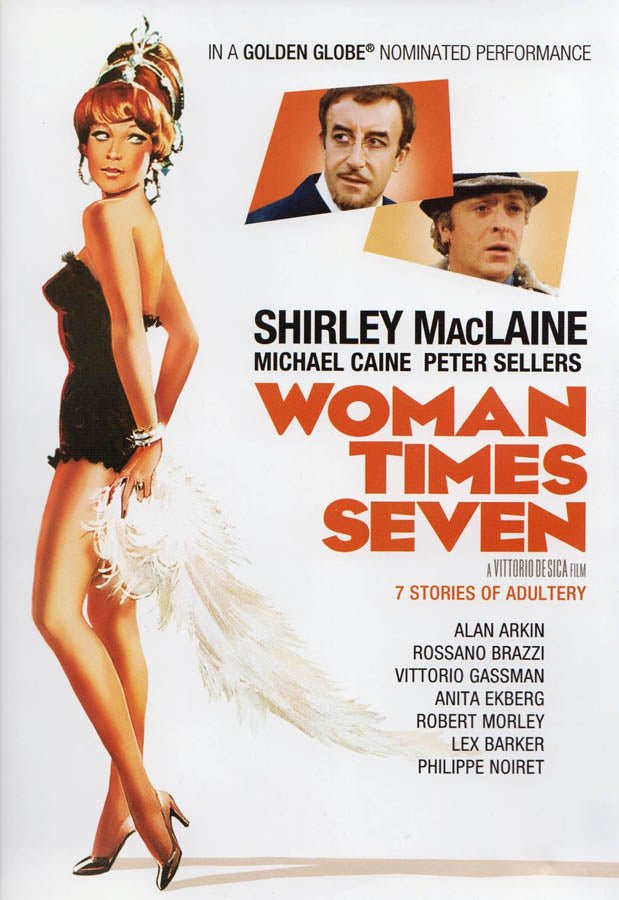
Woman Times Seven

Woman Times Seven

Movie · 1967 · 15 people

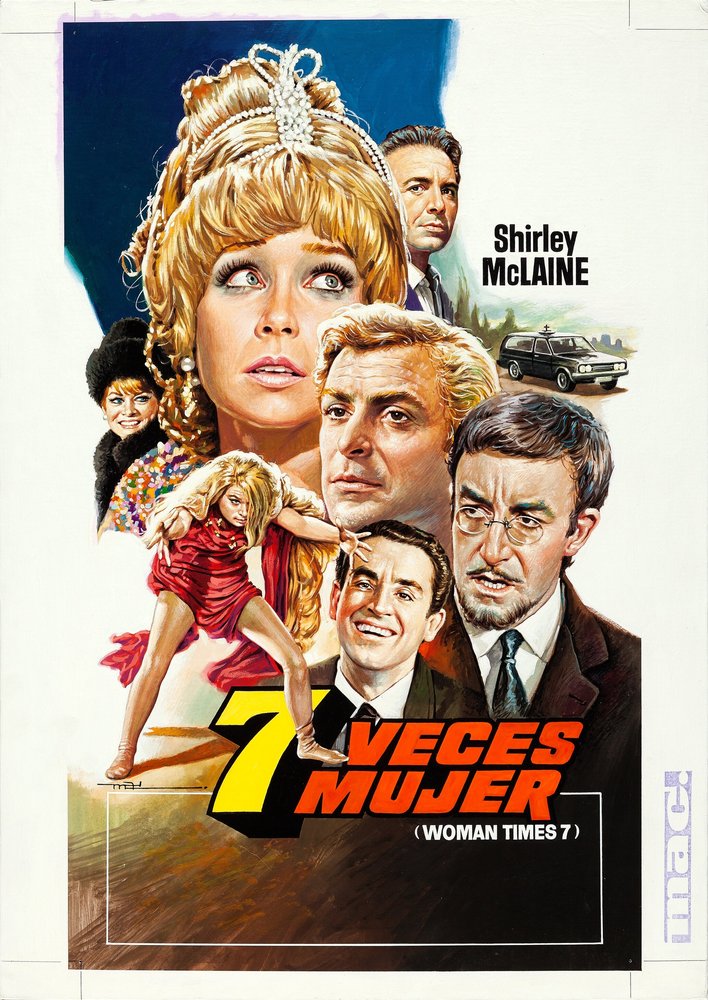
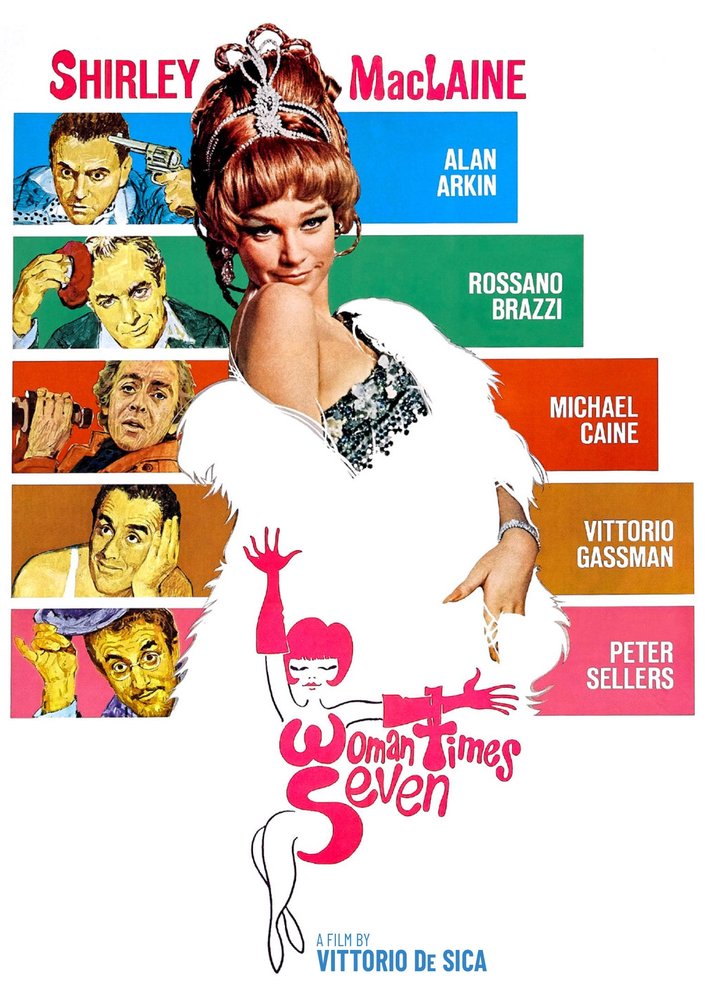
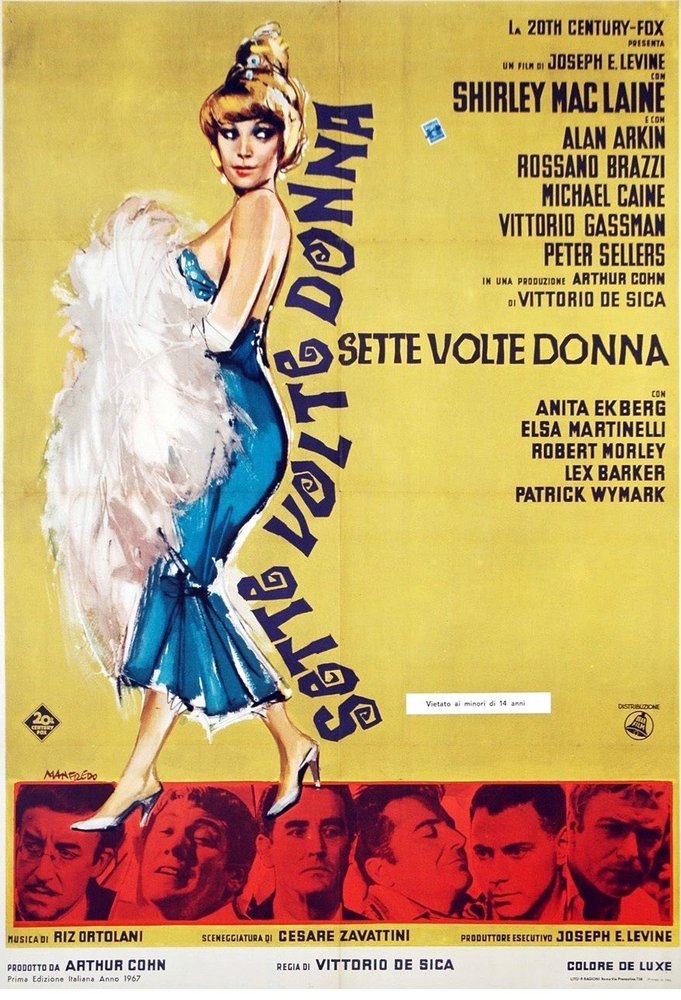
Woman Times Seven (Italian: Sette volte donna) is a 1967 sex-comedy anthology directed by Vittorio De Sica. An Italian, French and American co-production, it is built from seven unconnected short segments in which Shirley MacLaine plays a different woman each time. Most of the episodes deal with adultery and marital trouble. The film, about 100 minutes long, was made in English; in France it is known as Sept fois femme and in Germany as Siebenmal lockt das Weib.

All set in Paris, the seven portraits range from the romantic to the capricious and the realistic. MacLaine plays, in order, Paulette (Funeral Procession), Maria Teresa (Amateur Night), Linda (Two Against One), Édith (Super Simone), Ève (At the Opera), Marie (The Suicides) and Jean (Snow). She is joined by Peter Sellers, Michael Caine, Rossano Brazzi, Lex Barker, Vittorio Gassman, Anita Ekberg, Elsa Martinelli, Alan Arkin and Philippe Noiret.

Cesare Zavattini wrote the screenplay, with Peter Baldwin and Sergio Donati also credited. The film opened in the United States on 27 June 1967, in West Germany on 29 September 1967 and, in its Spanish version, in Madrid on 18 September 1972.

DirectorVittorio De Sica
Woman Times Seven Woman Times Seven Woman Times Seven

Reactions

You can pick up to 3 reactions.

Cast

Only cast members with a profile on this site are listed.

Judith Magre Judith Magre Actor · 99 years old Jacques Legras Jacques Legras Actor · died at 82 Shirley MacLaine Peter Sellers Rossano Brazzi Lex Barker Alan Arkin Adrienne Corri Robert Morley Michael Caine Anita Ekberg Elsa Martinelli Philippe Noiret Michael Brennan Patrick Wymark
Through different eyes

Cinephile Looks at script, editing and directing choices; keeps a distance from formula films.

The anthology format is both this film's strength and its weakness. Casting Shirley MacLaine as seven different women builds a wide showcase for a single performer; types ranging from the romantic to the capricious to the realistic test her ability to shift tone. But seven segments with no story link between them inevitably make an uneven whole, and since most of them revolve around infidelity and marital trouble, a sense of repetition sets in after a while. Names like Peter Sellers, Michael Caine and Vittorio Gassman, spread across short segments, often end up at the level of guest appearances. In my view, Vittorio De Sica's name is not enough to keep every segment at the same height.

History & Society Lens Asks about the period, the social background and what the work reflects.

The film opens an interesting window on the shifting gender roles of the late 1960s: across seven segments women are presented as a catalogue of types, from romantic to capricious, and most of the stories are built on infidelity and marital trouble. That the writing and directing credits belong entirely to men also raises the question of whose eyes these portraits are drawn through. Setting every segment in Paris recalls a time when the city was cast, for international audiences, as the stage for fantasies of romance and escapades. Seen today, the film reads like a time capsule of how an era on the threshold of sexual liberation looked at marriage.

Family Viewer Asks whether the whole household can watch it; cares about humour and heart.

This one isn't for family viewing. It is an erotic comedy, and most of its segments deal with cheating and marriage problems. Don't expect something to watch comfortably with the kids or the grandparents. Adults can enjoy it among themselves as a period comedy. And because it is made of seven separate stories, it may tire viewers who like to stay with a single story.

These are not reader reviews: they are short editorial takes written from different viewer perspectives with AI assistance. Reader reviews are below.

Reviews (0)

Log in Log in to write a review.

Comments